Should You Put Your Prices on Your Website? The Pros and Cons for Service Pros
Torn between showing your prices or keeping them hidden? Here's everything service professionals need to know about pricing transparency on their websites.
Penny · Feb 19, 2026 · 7 min read
- pricing strategy
- service business
- website tips
- lead generation
- transparency
If you've spent any time in service business groups online, you've seen this debate a thousand times. Should you list your prices on your website, or keep them hidden until potential clients reach out?
It's one of those questions that keeps service pros up at night. Show your prices and you might scare people away. Hide them and you might look like you're, well, hiding something.
Let's be honest: there's no universal right answer. But there is a right answer for your business, and figuring that out means understanding what you're actually trading when you make this choice.
Why So Many Service Pros Hide Their Prices 🙈
The fear is real and it's valid. Here's what keeps business owners from putting numbers on their websites:
"I'll scare away potential clients." This is the big one. You worry that someone will see your price, decide it's too expensive, and bounce before they understand the value you deliver. And that happens sometimes, no question about it.
"My competitors will undercut me." Once your prices are public, anyone can see what you charge and adjust their strategy accordingly. If you're competing mainly on price (which you probably shouldn't be, but that's another conversation), this feels risky.
"Every job is different." If you're in HVAC, landscaping, or any field where project scope varies wildly, putting a single number on your site feels impossible. A bathroom remodel costs different from a kitchen remodel. A lawn care service for a quarter-acre is nothing like maintaining two acres of commercial property.
"I want to have a conversation first." Many pros believe that once they get someone on the phone, they can demonstrate value, build rapport, and justify their rates in a way a website never could.
These concerns aren't irrational. They're based on real experiences. But they're only half the picture.

The Case for Pricing Transparency 💡
Here's what happens when you do show your prices, and why more service businesses are choosing transparency:
It Builds Trust Immediately
Think about the last time you landed on a website that made you jump through hoops just to find out what something costs. Annoying, right?
When you display pricing upfront, you're signaling something important: I have nothing to hide, and I respect your time. That matters more than most business owners realize. Transparency builds credibility before you ever have a conversation.
Your SEO Gets a Boost 📈
People search for "cost of [your service]" constantly. "How much does house cleaning cost," "HVAC installation prices," "landscaping service rates", these are high-intent searches from people ready to buy.
If your website has actual pricing information (or even pricing ranges), you're more likely to rank for those searches. Your competitors with vague "contact us for pricing" pages? They're missing out.
You Pre-Qualify Your Leads
This is huge, and it's actually a feature, not a bug. When you show prices, people who can't afford your services won't waste your time, or theirs.
Yes, you might get fewer inquiries. But the inquiries you do get are from people who've already self-selected based on budget. You're not spending 30 minutes on the phone explaining your rates to someone who was hoping to pay half that amount.
One cleaning service owner told me she cut her quote-to-booking ratio in half after adding her pricing page, but her actual bookings went up because she was spending time with serious prospects instead of tire-kickers.
It Speeds Up Decision-Making
Some clients, even high-end clients, prefer to evaluate options independently before reaching out. They want to compare your services and pricing against competitors on their own timeline, without pressure.
Making them contact you just to learn basic pricing adds friction. Every extra step in the decision process is another chance for them to say "eh, maybe later" and never come back.

The Middle Ground: Smart Pricing Strategies 🎯
If you're not ready to commit to full price transparency (or if your services truly vary too much to pin down), there are smarter ways to handle pricing than "contact us for a quote."
Starting-At Pricing
"Starting at $150" or "Packages from $299" gives people a realistic baseline without boxing you into a rigid price structure. It sets expectations while leaving room for customization based on scope.
Price Ranges
"Most projects fall between $500-$2,000" works well for services with variable complexity. It's honest about the fact that every job is different while still giving prospects a ballpark.
Tiered Packages
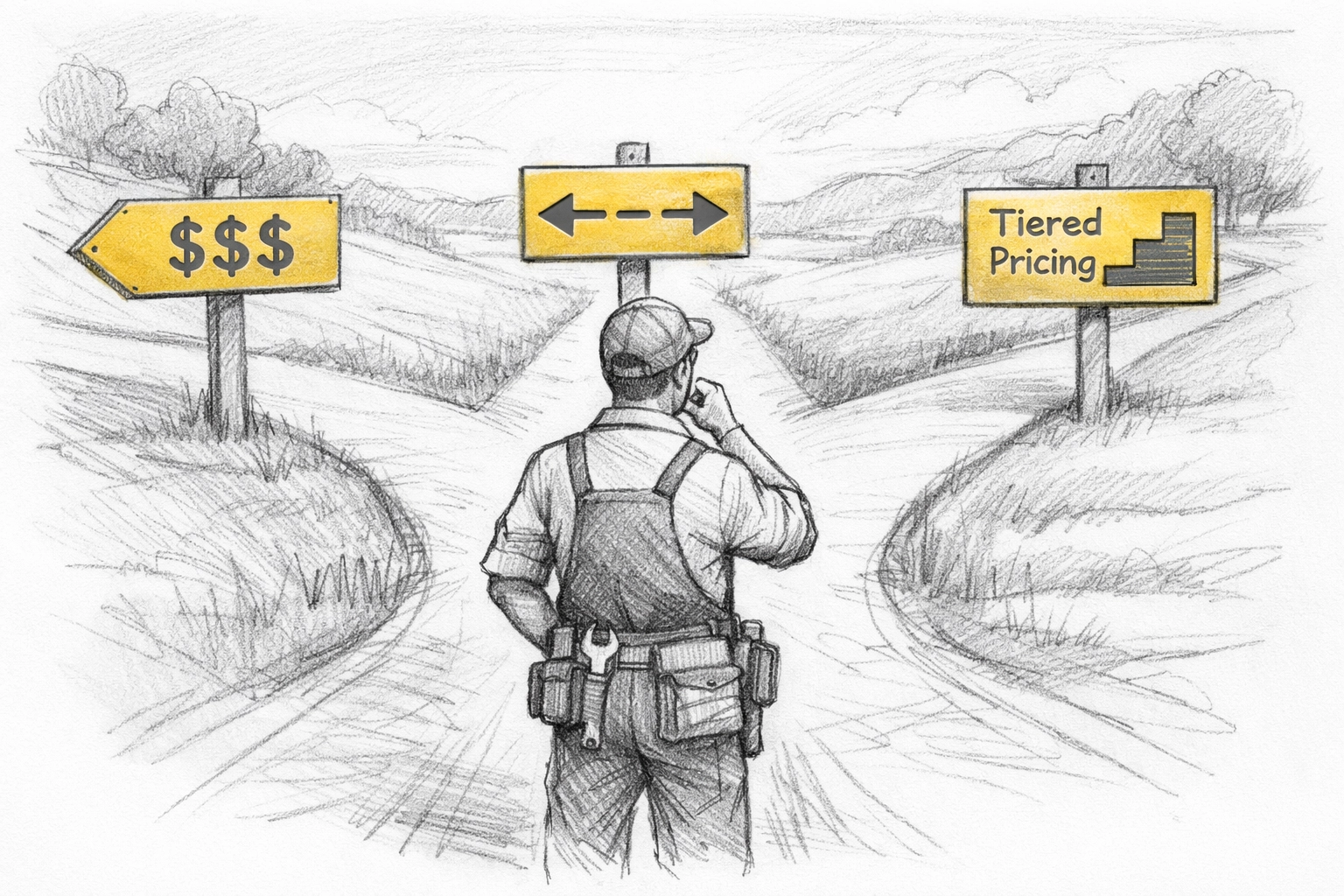
Offer three clear packages: Basic, Professional, Premium: with transparent pricing for each. This works brilliantly for services that can be standardized, like recurring cleaning, lawn care, or maintenance contracts.
Even if clients need customization, they now have anchor points for understanding your value.
Quote Forms Instead of Contact Forms
Here's where a tool like Kejoola comes in handy. Instead of a generic "Contact Us" form, you can build a custom quote calculator that asks relevant questions about project scope and gives an instant estimate.
The client feels informed. You've pre-qualified them. And when they do reach out, you're already halfway through the sales conversation because they understand your pricing structure.
When to Show Prices vs. When to Hide Them
Let's make this practical. Here's how to decide what's right for your business:
Show your prices if:
- You offer standardized services or packages
- Your pricing is competitive and you're confident in your value
- You're tired of fielding calls from people who can't afford you
- You want to rank for cost-related search terms
- You're targeting clients who prefer to research independently
Consider hiding prices if:
- Every project is truly custom with massive scope variation
- You're in a premium market where exclusivity is part of your brand
- Your services require extensive consultation to price accurately
- You're competing in a race-to-the-bottom price market (and honestly, consider fixing that problem first)
Use a middle-ground approach if:
- You want transparency but need flexibility
- Your services have some standardization but room for customization
- You're testing what works and want to gather data first
How to Do Pricing Right on Your Website
If you decide to show prices: or even price ranges: here's how to do it effectively:
Pair prices with value. Don't just list a number. Explain what's included, what problems you solve, and why your service is worth the investment. Context matters.
Update regularly. Nothing looks worse than outdated pricing. If your prices change seasonally or you run promotions, make sure your site reflects current rates.
Make it easy to find. Don't bury your pricing page three clicks deep. Put it in your main navigation where people expect to find it.
Offer an easy next step. Whether it's booking a consultation, requesting a custom quote, or scheduling directly, give people a clear path forward after they've reviewed your pricing.
With Kejoola, you can build pricing pages, quote forms, and booking systems that make this whole process seamless: without needing to code or patch together a dozen different tools.

The Real Question You Should Be Asking 🤔
Here's the thing: the pricing transparency debate is really a proxy for a bigger question: are you confident in your value?
If you're afraid to show your prices because you think people will immediately click away, that's worth examining. Maybe your prices are too high for what you deliver. Or maybe you're just not communicating your value effectively.
If you're hiding your prices because you want to "sell" people over the phone first, ask yourself: why do they need convincing? Could you address those objections on your website instead?
The businesses that thrive aren't necessarily the cheapest or the most secretive about pricing. They're the ones that clearly communicate what they do, who they do it for, and what it costs: then let the right clients self-select.
The Takeaway
Should you put your prices on your website? Here's my take: if you can, you probably should.
Transparency builds trust. It improves SEO. It filters out price-shoppers so you can focus on serious prospects. And it respects your potential clients' time and intelligence.
But if your services are genuinely too complex or variable to price clearly, at least offer something: ranges, starting prices, tiered packages, or an intelligent quote form that gives people a realistic idea of costs.
The worst thing you can do is make prospects fill out a contact form, wait for a response, and play email tag just to learn that you're out of their budget. That wastes everyone's time and makes your business look unnecessarily opaque.
Whatever you decide, make it strategic. Test different approaches. Pay attention to which leads convert. And remember: the goal isn't to get the most inquiries: it's to get the right inquiries from people who value what you do and can afford to pay for it.
And if you need a simple way to set up pricing pages, quote forms, or booking systems that actually work? That's literally what Kejoola was built for. 🚀