12 Profitable Rental Business Ideas to Launch in 2025
Explore 12 profitable rental business ideas, from equipment and party supplies to vehicles and specialty items. This guide provides a complete blueprint for starting your own rental venture.
Josh · Dec 17, 2025 · 23 min read
- rental business
- entrepreneurship
- small business
- business ideas
- passive income
The rental economy is expanding, driven by a profound consumer shift towards access over ownership. From high-demand construction equipment to niche party supplies, savvy entrepreneurs are identifying and capturing lucrative opportunities in every sector. This guide serves as a practical blueprint for aspiring founders, exploring 12 of the most promising rental business ideas positioned for success in the current market. We will dissect the essential components for each concept, providing a clear roadmap to get you started.
This article moves beyond simple lists. For each idea, we break down the core business model, identify ideal customer segments, and provide realistic estimated startup costs and typical revenue structures. We also offer actionable strategies for marketing, managing day-to-day operations, and navigating critical requirements like insurance and local regulations. In a competitive market, operational efficiency is a key differentiator. A booking-optimized website is not just a marketing tool; it is the central nervous system of a modern rental business.
Throughout this comprehensive list, we will demonstrate how a dedicated platform can streamline your entire operation. We will highlight how a system built for rentals automates bookings, simplifies client management, and enhances your online visibility from the moment you launch. This resource is designed to give you the clarity and confidence needed to build a profitable rental venture. Let's explore the models generating real returns and identify the perfect fit for your entrepreneurial ambitions.
1. Equipment and Tool Rental
An equipment and tool rental business provides a cost-effective solution for customers who need specialized gear for a limited time. This model is one of the most foundational rental business ideas because it serves both B2B and B2C markets, from large construction firms needing an excavator for a week to a DIY homeowner requiring a pressure washer for a weekend. The core value proposition is simple: provide access to expensive, high-quality equipment without the significant cost and maintenance burden of ownership.
Key Considerations and Implementation
- Ideal Customer Segments: General contractors, subcontractors (plumbers, electricians), landscapers, event planners, and DIY home improvement enthusiasts.
- Estimated Startup Costs: Moderate to high ($20,000 - $150,000+), depending on the initial inventory. Starting small with high-demand items like ladders, power drills, and tillers can lower the barrier to entry.
- Pricing/Revenue Models: Daily, weekly, and monthly rates are standard. Offer package deals for multiple tools or long-term project rentals to incentivize larger orders.
- Regulatory & Insurance: Heavy-duty liability insurance is non-negotiable to cover potential accidents and equipment damage. Ensure all rental agreements include clear damage waivers and user responsibility clauses.
- Marketing & Booking Tactics: Forge direct relationships with local construction companies and tradespeople. Use targeted local SEO to appear for searches like "tool rental near me."
Pro Tip: Implement a rigorous maintenance schedule and detailed check-in/check-out protocol, using photos to document equipment condition. This minimizes disputes over damages and ensures your inventory remains in profitable working order.
A booking-optimized website like Kejoola is crucial for managing inventory availability in real-time, automating rental agreements, and processing secure online payments. This frees you from administrative tasks to focus on customer relationships and equipment maintenance.
2. Residential Property Rental (Short-term and Long-term)
Residential property rental is a classic wealth-building strategy and one of the most substantial rental business ideas available. This model involves leasing single-family homes, apartments, or condos to tenants for fixed long-term periods or as short-term vacation stays. The appeal lies in generating consistent cash flow, property appreciation, and significant tax advantages, serving everyone from traditional long-term renters to tourists seeking a local experience.
Key Considerations and Implementation
- Ideal Customer Segments: Long-term tenants (families, professionals, students) and short-term guests (tourists, business travelers, digital nomads).
- Estimated Startup Costs: Very high ($50,000 - $500,000+), primarily for the down payment, closing costs, and initial property preparations.
- Pricing/Revenue Models: Long-term rentals use fixed monthly rent. Short-term rentals (like Airbnb) use dynamic pricing based on seasonality, local events, and demand. It's crucial to understand your operational costs to set profitable rates, a key factor covered when analyzing pricing strategies in our guide to communicating price adjustments.
- Regulatory & Insurance: Landlord insurance is essential. Short-term rentals often face specific local zoning laws, occupancy taxes, and licensing requirements that must be strictly followed.
- Marketing & Booking Tactics: List long-term rentals on Zillow and Apartments.com. For short-term, leverage platforms like Airbnb and Vrbo, focusing on high-quality photography and positive guest reviews.
Pro Tip: Always maintain a cash reserve equivalent to 6-12 months of operating expenses (mortgage, taxes, insurance, maintenance). This buffer protects your investment during vacancies or unexpected major repairs.
For property managers handling multiple short-term rentals, a direct booking website from a platform like Kejoola is a strategic asset. It allows you to synchronize calendars across all platforms, avoid third-party commission fees, and build a direct relationship with your guests for repeat bookings.
3. Car Rental Business
A car rental business caters to the constant demand for short-term transportation from tourists, business travelers, and locals whose vehicles are temporarily unavailable. While the market includes giants like Hertz and Enterprise, significant opportunities exist for niche operators focusing on specific vehicle types (luxury, electric, classic) or underserved local markets. This is one of the most scalable rental business ideas, allowing for growth from a small initial fleet to a large, multi-location operation.

Key Considerations and Implementation
- Ideal Customer Segments: Tourists, business professionals, event attendees (weddings, reunions), and local residents needing a temporary vehicle during car repairs.
- Estimated Startup Costs: High ($50,000 - $300,000+), primarily for vehicle acquisition, insurance, and parking/office space. Leasing vehicles can lower initial capital outlay.
- Pricing/Revenue Models: Daily and weekly rates are standard, often with mileage caps. Implement dynamic pricing based on seasonal demand, weekends, and local events. Offer add-ons like GPS, car seats, and insurance waivers for incremental revenue.
- Regulatory & Insurance: Comprehensive commercial auto insurance is critical and a major operating expense. You must comply with state-specific regulations for rental companies, including contract disclosures and liability limits.
- Marketing & Booking Tactics: Partner with local hotels, airports, and auto repair shops for referrals. Optimize for local SEO keywords like "car rental in [City]." Implement a contactless check-in/check-out system via a mobile app or website.
Pro Tip: Invest in GPS tracking and telematics systems for your fleet. This technology enhances security, monitors vehicle health for preventative maintenance, and can help you fairly resolve disputes over mileage or usage.
Using a platform like Kejoola enables customers to view real-time vehicle availability, select their desired model, upload necessary documents, and pay securely online. This automation is key to managing a fleet efficiently and providing a modern, seamless customer experience.
4. Party and Event Equipment Rental
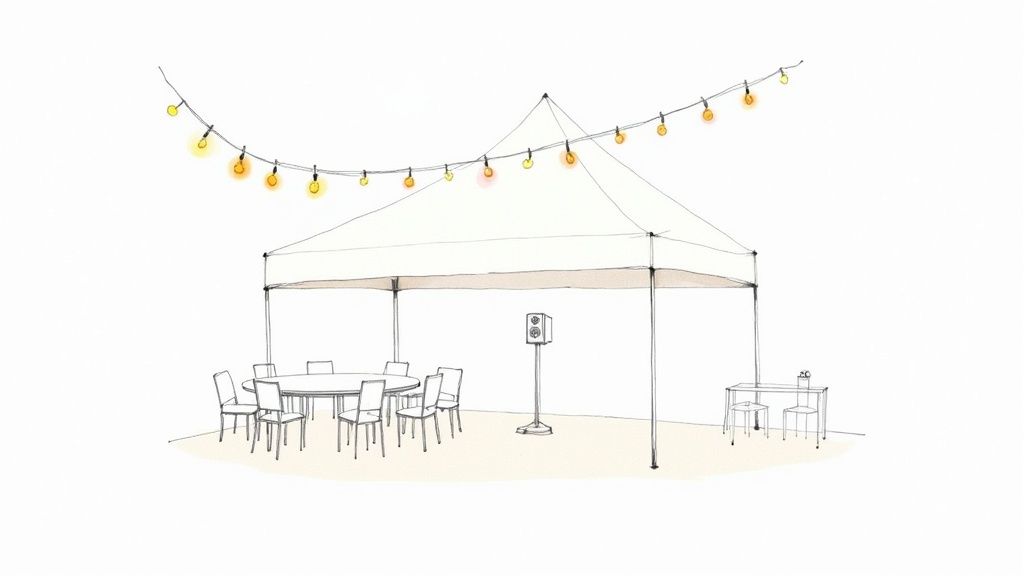
A party and event equipment rental business taps into the consistent demand for celebrations, from weddings and birthdays to corporate gatherings. This venture provides essential items like tents, tables, chairs, linens, sound systems, and decorative lighting, allowing clients to host memorable events without purchasing costly, single-use items. It’s one of the most popular rental business ideas because it scales well, from a small home-based operation with a few dozen chairs to a large warehouse serving major venues.
Key Considerations and Implementation
- Ideal Customer Segments: Wedding planners, event coordinators, corporate clients, families hosting private parties, schools, and community organizations.
- Estimated Startup Costs: Moderate ($15,000 - $75,000). Costs are driven by the quality and quantity of initial inventory. Starting with basics like folding tables, chairs, and a small tent is a viable entry strategy.
- Pricing/Revenue Models: Offer a la carte pricing for individual items and discounted package bundles for specific event types (e.g., "Wedding for 100," "Backyard BBQ"). Add-on services like delivery, setup, and teardown create high-margin revenue streams.
- Regulatory & Insurance: Commercial general liability insurance is crucial to cover property damage or injuries during setup or at the event. Rental agreements should clearly outline client responsibilities for damaged or lost items; discover how to write a cancellation policy with this guide on cancellation letter templates.
- Marketing & Booking Tactics: Build strong referral networks with event planners, caterers, and venues. Use high-quality photos on social media to showcase past event setups and inspire potential clients.
Pro Tip: Create a detailed photo-based inventory system for check-out and check-in to meticulously document the condition of your items. This minimizes disputes over damage deposits and helps you track the lifecycle of your assets.
An online booking platform like Kejoola is essential for this business, allowing clients to view inventory, check availability, and reserve items 24/7. It also automates contracts and payments, ensuring a seamless and professional customer experience while you focus on logistics.
5. Storage Unit Rental Business
A storage unit rental business offers secure, private spaces for customers to store personal belongings, business inventory, or archival documents. This model capitalizes on life transitions like moving, downsizing, or business growth, providing a passive income stream once established. With options ranging from basic drive-up units to climate-controlled indoor spaces, this is one of the more stable and scalable rental business ideas due to its consistent, long-term demand.
Key Considerations and Implementation
- Ideal Customer Segments: Individuals and families who are moving, downsizing, or decluttering; college students; military personnel; small businesses needing inventory storage; and companies requiring document archives.
- Estimated Startup Costs: High ($100,000 - $1,000,000+), primarily due to land acquisition and construction costs. Acquiring an existing facility can be a less capital-intensive entry point.
- Pricing/Revenue Models: Monthly rental fees based on unit size and features (e.g., climate control, ground-floor access). Implement dynamic pricing to adjust rates based on occupancy levels and offer add-on sales of packing supplies like boxes and locks.
- Regulatory & Insurance: Comprehensive property and liability insurance is essential. Adhere strictly to local zoning laws and state-specific lien laws, which dictate the process for handling delinquent accounts and auctioning abandoned unit contents.
- Marketing & Booking Tactics: Focus on high-visibility locations with good road access. Use local SEO to target searches like "self-storage near me." Offer introductory promotions, such as "first month free," to attract new tenants.
Pro Tip: Invest in modern security and automation, including 24/7 camera surveillance, automated gate access, and online payment portals. These features not only protect your investment but also serve as key marketing points that justify premium rental rates.
A robust website like Kejoola is critical for this business, allowing customers to view available units, sign digital lease agreements, and manage their accounts online. This automation streamlines tenant onboarding and reduces administrative overhead, making facility management more efficient.
6. Bicycle and Scooter Rental
A bicycle and scooter rental service offers convenient, short-distance transportation in urban, tourist, and campus environments. This model capitalizes on the growing demand for micro-mobility and eco-friendly travel options. Customers typically use a mobile app to locate, unlock, and pay for rides, making it a highly scalable and modern entry into the rental business ideas landscape. It serves both practical commuters and leisure-seeking tourists.
Key Considerations and Implementation
- Ideal Customer Segments: Tourists, college students, urban commuters, and event attendees looking for a quick way to navigate a localized area.
- Estimated Startup Costs: High ($50,000 - $200,000+), driven by the cost of durable, commercial-grade bikes/scooters, app development, and fleet management software.
- Pricing/Revenue Models: Typically a small flat fee to unlock the vehicle, plus a per-minute or per-mile charge. Monthly subscriptions or day passes can cater to regular users and tourists.
- Regulatory & Insurance: Comprehensive liability insurance is critical. Operations often require permits or contracts with local municipalities, so navigating city regulations is a primary hurdle.
- Marketing & Booking Tactics: Forge partnerships with hotels, transit agencies, and local attractions. Use geofencing to create designated parking zones and high-demand service areas.
Pro Tip: Invest in durable, vandal-resistant equipment with GPS tracking and real-time fleet management software. A strong maintenance protocol is essential for rider safety, asset longevity, and brand reputation.
A sophisticated booking system is the backbone of this operation. Platforms like Kejoola can manage real-time inventory, process instant mobile payments, and handle user accounts seamlessly. Learn more about how a tabbed booking system guide can be structured to support a dynamic rental fleet.
7. Costume and Formal Wear Rental
A costume and formal wear rental business taps into the market for high-quality, special-occasion apparel without the high price tag of ownership. This business model serves customers needing outfits for one-time events like weddings, galas, themed parties, Halloween, or theatrical productions. The core value is providing access to an extensive, professionally maintained wardrobe, allowing clients to wear designer gowns, intricate costumes, or sharp tuxedos for a fraction of the retail cost.
Key Considerations and Implementation
- Ideal Customer Segments: Event attendees (weddings, proms, galas), theatrical groups, schools, corporate event planners, and holiday enthusiasts (especially Halloween).
- Estimated Startup Costs: Moderate ($15,000 - $70,000), heavily influenced by the initial inventory's quality and breadth. Starting with a niche, like vintage formal wear or specific costume themes, can manage initial expenses.
- Pricing/Revenue Models: Per-event or multi-day rental fees are standard. Offer packages that include accessories (jewelry, masks, shoes). Implement a membership model for frequent renters, similar to Rent the Runway.
- Regulatory & Insurance: Business liability insurance is essential to cover potential damage to expensive garments. Rental agreements must clearly outline policies for damages, stains, and late returns, often secured by a damage deposit.
- Marketing & Booking Tactics: Partner with local event venues, photographers, and schools. Use high-quality photos on social media (Instagram, Pinterest) to showcase your inventory. Optimize for searches like "tuxedo rental near me" or "costume hire."
Pro Tip: Invest in professional in-house or outsourced cleaning and alteration services. The perceived quality and cleanliness of your garments are paramount to building trust and securing repeat business. Clearly itemize cleaning fees in your pricing structure.
A booking-optimized website like Kejoola is perfect for managing a visual inventory with sizing options, handling bookings for specific dates, and automating damage deposit holds and releases. This streamlines the customer experience from browsing to checkout.
8. Furniture Rental
A furniture rental business offers a flexible solution for individuals and companies needing temporary furnishings. This idea capitalizes on mobility and transition, serving clients who are relocating, staging homes for sale, or setting up temporary corporate housing. By providing everything from a single sofa to a fully furnished apartment, this model removes the high upfront cost and logistical hassle of buying furniture for short-term needs. This is one of the more service-intensive rental business ideas, as it often includes delivery, setup, and removal.
Key Considerations and Implementation
- Ideal Customer Segments: Corporate relocation firms, real estate agents (for home staging), property managers of furnished apartments, college students, and individuals in temporary living situations.
- Estimated Startup Costs: High ($50,000 - $200,000+), primarily driven by the cost of acquiring a diverse and high-quality inventory of durable furniture.
- Pricing/Revenue Models: Monthly lease agreements are standard, with discounts for longer terms (e.g., 6 or 12 months). Offer curated packages (e.g., "Student Starter Pack," "Executive Suite") for streamlined service.
- Regulatory & Insurance: Comprehensive liability and property insurance is essential to cover damage to furniture during transport, setup, and use, as well as potential injuries on client property.
- Marketing & Booking Tactics: Build strong B2B relationships with real estate agencies, corporate HR departments, and large apartment complexes. Showcase professionally staged room layouts on your website and social media.
Pro Tip: Invest in stylish, neutral, and highly durable furniture pieces that can withstand frequent moves and appeal to a broad audience. Implement a clear wear-and-tear policy and damage deposit system to protect your assets.
An integrated booking website from a platform like Kejoola is vital for managing inventory, coordinating complex delivery schedules, and handling recurring monthly billing. It allows clients to browse packages, sign digital lease agreements, and manage their accounts, automating the entire customer lifecycle.
9. Photography and Camera Equipment Rental
A photography and camera equipment rental business caters to the needs of professional and amateur creators who require high-end gear for specific projects. This model grants access to expensive cameras, specialized lenses, drones, lighting kits, and audio equipment without the prohibitive cost of ownership. The demand is driven by a growing content creation industry, making this one of the most relevant rental business ideas for a tech-savvy entrepreneur.

Key Considerations and Implementation
- Ideal Customer Segments: Freelance photographers, videographers, film students, production companies, marketing agencies, and hobbyists looking to try before they buy.
- Estimated Startup Costs: Moderate to high ($15,000 - $100,000+), heavily dependent on the quality and quantity of initial inventory. Starting with a niche, like a specific brand (e.g., Sony or Canon) or type of gear (e.g., anamorphic lenses), can reduce initial costs.
- Pricing/Revenue Models: Daily and weekly rates are common. Offer bundled packages for project types, like a "vlogging starter kit" or an "interview lighting package," to increase average order value.
- Regulatory & Insurance: Robust equipment insurance is essential to cover theft, loss, and accidental damage. Rental agreements must include strict liability clauses, and offering optional customer damage waivers can be a profitable add-on.
- Marketing & Booking Tactics: Build relationships with local creative agencies, universities with film programs, and photography communities. Use social media to showcase your high-end gear in action and run targeted ads to local creators.
Pro Tip: Stay current with the latest technology releases. Offering the newest camera bodies and lenses as soon as they are available can make you the go-to rental source for professionals who need to work with cutting-edge equipment.
Using a booking-optimized website like Kejoola is critical for this business. It allows you to display your inventory with real-time availability, manage complex booking schedules, securely handle deposits, and automate the rental agreement process, ensuring your valuable assets are always protected.
10. Recreational Equipment Rental (Outdoor Gear)
An outdoor gear rental business taps into the growing experience economy by providing adventure-seekers with equipment for activities like camping, kayaking, skiing, and paddleboarding. This model thrives near tourist hotspots and natural attractions, serving customers who want to try a new sport or travel light without investing in bulky, expensive gear. As one of the most popular rental business ideas, it offers high demand during peak travel seasons and builds a loyal local following.
Key Considerations and Implementation
- Ideal Customer Segments: Tourists and vacationers, local families, outdoor enthusiasts, corporate groups seeking team-building activities, and beginners testing out a new hobby.
- Estimated Startup Costs: Moderate ($15,000 - $75,000), contingent on the type and quantity of gear. Starting with a specific niche, like paddleboards and kayaks, can reduce initial investment.
- Pricing/Revenue Models: Offer hourly, half-day, full-day, and multi-day rental rates. Create bundled packages, such as a "complete camping kit" with a tent, sleeping bags, and a stove.
- Regulatory & Insurance: Comprehensive liability insurance is critical to cover accidents and injuries. All customers must sign a detailed liability waiver before using the equipment.
- Marketing & Booking Tactics: Partner with local hotels, tourism boards, and adventure tour guides for referrals. Optimize for local search terms like "kayak rental near [lake name]" and use high-quality visuals of your gear in action on social media.
Pro Tip: Position your business near a high-traffic recreational area like a beach, lake, or trailhead to capture walk-in traffic. Employ knowledgeable staff who can offer safety tips and local advice, adding significant value beyond the rental itself.
Using a booking-optimized website like Kejoola is essential for managing seasonal demand, showcasing different gear options with real-time availability, and processing secure online reservations and waivers. This streamlines operations, allowing you to focus on equipment safety and customer experience.
11. Commercial Space and Office Rental
A commercial space rental business caters to the needs of other businesses by leasing properties like offices, retail storefronts, warehouses, or co-working areas. This model generates consistent, high-value income from long-term tenants and is a cornerstone of the real estate investment world. The core appeal is providing companies with the physical infrastructure they need to operate, from a single desk in a shared office to a large industrial facility, without the massive capital outlay of purchasing property.
Key Considerations and Implementation
- Ideal Customer Segments: Startups, freelancers, small to medium-sized enterprises (SMEs), large corporations seeking satellite offices, and e-commerce businesses needing warehouse space.
- Estimated Startup Costs: Very high ($250,000 - $1,000,000+), as this requires significant capital for property acquisition or a master lease agreement.
- Pricing/Revenue Models: Monthly or annual leases are standard. Co-working spaces often use tiered monthly memberships, while retail spaces may include a percentage-of-sales clause.
- Regulatory & Insurance: Commercial property insurance, liability insurance, and thorough knowledge of zoning laws and tenant-landlord regulations are mandatory. All lease agreements must be legally sound.
- Marketing & Booking Tactics: List properties on commercial real estate platforms like LoopNet. Build relationships with commercial real estate brokers and corporate relocation specialists.
Pro Tip: Attract premium tenants by offering flexible lease terms and high-value amenities like high-speed internet, conference room access, and 24/7 security. Professional tenant screening is critical to minimize risk and ensure reliable income.
A professional website from a platform like Kejoola can serve as a powerful marketing tool, showcasing property photos, floor plans, and amenities. It can also automate the lead capture and initial application process, streamlining your tenant acquisition pipeline before handing off to manual screening and lease finalization.
12. Pet and Animal Rental Services
A pet and animal rental business offers temporary companionship or unique experiences, from providing backyard chickens for fresh eggs to supplying llamas for events. This niche within rental business ideas taps into the desire for animal interaction without the long-term commitment of ownership. The business model prioritizes animal welfare, providing all necessary supplies, care instructions, and support for the duration of the rental.
Key Considerations and Implementation
- Ideal Customer Segments: Families seeking educational experiences, event planners, photographers, film producers, and individuals seeking short-term therapeutic animal companionship.
- Estimated Startup Costs: Moderate ($5,000 - $30,000+), covering animal acquisition, housing, veterinary care, transportation, and robust insurance policies.
- Pricing/Revenue Models: Offer package-based rentals (e.g., a "backyard chicken kit" for a season) or hourly/daily rates for event animals. Pricing must reflect the high cost of animal care.
- Regulatory & Insurance: Comprehensive liability insurance covering animal behavior and public interaction is mandatory. Adherence to local, state, and federal animal welfare laws (like the Animal Welfare Act) is critical.
- Marketing & Booking Tactics: Partner with local farms, animal sanctuaries, and event venues. Use social media to showcase your animals in a positive, ethical light. Target local family and event-related keywords with your SEO strategy.
Pro Tip: Prioritize animal welfare above all else. Implement strict health and vaccination protocols, provide detailed care guides with 24/7 support, and ensure animals are sociable and well-suited for interaction to build a reputable, sustainable business.
A specialized booking website like Kejoola is essential for managing complex rental schedules, detailing specific animal profiles, handling waivers digitally, and processing deposits. This system ensures transparent communication and secure management of this sensitive business.
Comparison of 12 Rental Business Ideas
| Type | Implementation Complexity 🔄 | Resource Requirements ⚡ | Expected Outcomes 📊 | Ideal Use Cases 💡 | Key Advantages ⭐ |
|---|---|---|---|---|---|
| Equipment and Tool Rental | High — inventory, maintenance, insurance | High capital & storage; Startup $50k–$500k | Strong recurring revenue; Profit 40–60% | Construction contractors, trades, DIY rentals | High margins on utilization; long-term B2B relationships |
| Residential Property Rental (Short & Long) | High — legal, tenant management | Very high capital; Startup $100k–$1M+ | Stable monthly income; Appreciation; Net profit 8–20% | Long-term tenants, short-term vacation stays | Predictable cash flow; tax/depreciation benefits |
| Car Rental Business | High — fleet, insurance, logistics | High vehicle acquisition & insurance; $150k–$1M+ | Scalable revenues; multiple streams; Profit 20–40% | Airports, hotels, local transport demand | High demand; data-driven pricing and partnerships |
| Party & Event Equipment Rental | Medium — logistics, seasonal peaks | Medium capital; storage & transport; $20k–$150k | High per-event margins; Profit 50–70% (seasonal) | Weddings, corporate events, private parties | High markups; multiple fees (setup/teardown) |
| Storage Unit Rental Business | Medium-High — construction, zoning | Very high real estate costs; $500k–$5M+ | Passive recurring income; Profit 35–50% | Urban areas, students, businesses needing storage | Low operating overhead; recession-resistant demand |
| Bicycle & Scooter Rental | Medium — app + fleet ops | Low–medium startup; $50k–$500k | Quick scalability; Profit 15–30% | Urban short trips, tourists, campuses | Eco-friendly appeal; high customer engagement |
| Costume & Formal Wear Rental | Low–Medium — sizing, cleaning logistics | Low startup; $15k–$100k inventory | Seasonal spikes; High margins 50–75% | Proms, weddings, Halloween, theater | High-margin items; low initial inventory needs |
| Furniture Rental | Medium-High — logistics & maintenance | High inventory & delivery costs; $100k–$500k | Recurring lease revenue; Profit 35–50% | Corporate relocations, staging, furnished rentals | Premium pricing for quality; diverse client segments |
| Photography & Camera Equipment Rental | Medium — specialized handling & support | Medium startup; $50k–$300k | High rental rates; Profit 40–65% | Filmmakers, content creators, photo shoots | Strong demand; lower units than heavy rentals |
| Recreational Equipment (Outdoor Gear) | Medium — seasonal inventory & safety | Medium startup; $30k–$200k | Seasonal recurring customers; Profit 45–65% | Tourist areas, parks, adventure operators | Growing outdoor market; bundle/package opportunities |
| Commercial Space & Office Rental | High — property mgmt & compliance | Very high capital; $500k–$5M+ | Long-term stable income; Profit 15–35% | Offices, warehouses, retail storefronts | Long leases; multiple revenue streams (services/parking) |
| Pet & Animal Rental Services | High — welfare, legal & liability | Low–medium startup; $10k–$100k | Niche high-margin; Profit 50–80% but high risk | Events, therapy experiences, niche tourism | Unique premium experiences; less direct competition |
From Idea to Launch: Your Next Steps in the Rental Business
Throughout this guide, we have explored a diverse landscape of rental business ideas, each presenting a unique pathway to entrepreneurship. From the high-demand world of party and event equipment to the specialized niche of camera gear rental, a powerful, unifying principle has emerged: the modern consumer increasingly values access over ownership. This fundamental shift in behavior is the bedrock upon which a thriving rental empire can be built. You are not just renting out items; you are providing solutions, experiences, and convenience in a world that craves flexibility.
The most successful ventures will be those that move beyond a simple inventory list and create a frictionless customer journey. The difference between a struggling side hustle and a scalable business often comes down to operational efficiency. Manual tracking, endless phone calls, and disorganized scheduling are not just time-consuming; they are barriers to growth that project an unprofessional image and ultimately cost you customers.
Synthesizing Your Strategy: The Three Pillars of Success
As you transition from ideation to implementation, your focus should coalesce around three critical pillars. Mastering these areas will separate you from the competition and lay a solid foundation for long-term profitability.
-
Strategic Niche Selection and Validation: Don't just pick an idea; validate it. Your initial step is to conduct thorough market research within your local community. Is there an underserved demand for high-quality children's party supplies? Are local contractors constantly searching for specialized tools? Use online forums, local social media groups, and direct conversations to confirm that a real, paying audience exists for your chosen rental business ideas. A great idea in a vacuum is worthless; a good idea validated by market demand is the start of a real business.
-
Asset Management and Financial Acumen: Your inventory is the lifeblood of your business. This involves more than just purchasing items. You must develop a robust system for tracking maintenance schedules, calculating depreciation, and setting pricing that accounts for wear and tear, insurance, and your desired profit margin. A clear understanding of your startup costs, ongoing expenses, and potential revenue per item will empower you to make informed decisions, from acquiring new inventory to retiring older assets.
-
Operational Excellence Through Technology: This is the non-negotiable pillar for modern rental businesses. Your customers expect the same level of seamless, online booking they get from major brands. A professional, SEO-optimized website with an integrated booking system is not a luxury; it is a fundamental requirement. This digital storefront works for you 24/7, capturing leads, managing availability, processing payments, and sending automated confirmations. It frees you from administrative tasks to focus on high-value activities like marketing, customer service, and strategic growth.
Your Actionable Blueprint for Launch
Feeling inspired is the first step, but taking action is what creates results. Here is a clear, step-by-step path forward:
- Finalize Your Niche: Choose one or two of the rental business ideas from our list that genuinely excite you and align with your research.
- Draft a Simple Business Plan: Outline your target customer, startup budget, initial inventory list, and pricing strategy.
- Secure Your Digital Foundation: Before you buy a single item, establish your online presence. A platform like Kejoola can build your entire booking-optimized website in minutes, ensuring you look professional and are ready to take orders from day one.
- Acquire and Photograph Your Inventory: Start with a minimum viable inventory. Take high-quality photos of every item, as these will be crucial for your website and marketing materials.
- Launch and Market: Announce your launch on local social media channels, inform friends and family, and consider introductory offers to generate your first bookings and gather crucial testimonials.
The journey from a promising idea to a profitable rental business is a marathon, not a sprint. By focusing on a validated niche, managing your assets wisely, and leveraging powerful technology to streamline your operations, you are not just launching a business; you are building a sustainable asset poised for success in the booming sharing economy.
Ready to turn one of these rental business ideas into a fully operational venture? The right software is your most critical first investment. Kejoola provides an all-in-one platform that builds you an SEO-optimized website, manages your bookings, and automates client communication, so you can launch faster and run smarter. Start your free 14-day trial with Kejoola today and build the foundation for your rental empire.