What Is a Tab Booking System? A Comprehensive Guide
Discover what a tab booking system is, its essential features, and how it can automate your operations, reduce no-shows, and drive business growth.
Josh · Dec 4, 2025 · 14 min read
- booking system
- automation
- scheduling software
What Is a Tab Booking System?
Here is the rewritten section, designed to sound like it was written by an experienced human expert.
A tab booking system is essentially the digital command centre for a service-based business. It's software that takes the headache out of scheduling and client management by automating the whole process. Forget just a simple calendar; this is a comprehensive platform that handles everything from bookings and reminders to keeping track of your client history.
Decoding the Tab Booking System
Remember the old days? A physical appointment book, maybe a chaotic spreadsheet if you were feeling tech-savvy. Every phone call, text, or Facebook message meant you had to stop what you were doing, check your availability, and manually pencil in the details. It was a tedious grind, and mistakes like double-bookings or forgetting to follow up were all too common.
A modern tab booking system completely digitises that entire workflow. It’s less like a single tool and more like an operational hub for your entire business. Think of it as that old paper logbook, but brought to life. It automatically shows your real-time availability, sends instant confirmation messages when a client books, and dispatches reminders to cut down on no-shows.
From Manual Logbook to Automated Hub
This leap from manual entry to full automation is more than just a simple tech upgrade. It completely changes the way you run your business. Instead of constantly reacting to booking requests, you’re giving clients a self-service portal where they can schedule an appointment whenever it suits them, even at 2 AM. In a world where convenience is king, this is a massive competitive advantage.
A tab booking system is the engine that drives efficiency in a service business. By centralising all appointment-related tasks, it frees up valuable time, reduces costly errors, and provides the data needed for smarter operational decisions.
At its core, this technology makes your business more organised and far more efficient. It builds a scalable foundation for growth, allowing you to handle more clients without drowning in admin work. Adopting a system like this means you’re no longer just managing appointments—you’re strategically optimising your entire service delivery pipeline. For any business that wants to do more than just survive, this evolution is essential.
The Essential Features of a Modern Booking Platform
Let's be clear: a proper tab booking system is worlds away from a simple digital calendar. Think of it less as a diary and more as a central command centre for your entire service operation, built to solve the daily headaches that slow your business down. These features don't just exist in isolation; they work together to create a smooth, professional experience for you and your clients.
The absolute cornerstone is a real-time availability calendar. This isn't a static schedule you manually update. It’s a living, breathing tool that instantly blocks out a time slot the second it's booked, completely eliminating the chaos and customer disappointment that comes with accidental double-bookings.
Then there's the power of automated client communication. A good system will fire off instant email or SMS confirmations the moment an appointment is made. More importantly, it sends out reminders before the appointment. This one feature is a game-changer for cutting down on no-shows—many businesses have seen missed appointments drop by over 40% just by putting this in place.
Core Components for Business Automation
To really get your time back, a platform needs to do more than just schedule. Modern systems pull several key functions under one roof, turning what used to be administrative chores into automated, background processes.
- Integrated Payment Processing: You can securely take deposits or even full payments right at the moment of booking. This doesn't just improve your cash flow; it gets a firm commitment from the client, making them far less likely to cancel.
- Intelligent Resource Management: The system is smart enough to assign the right person or the right piece of equipment to a specific service. A salon, for example, can ensure a master stylist is booked for a complex colour job, while a therapy clinic can automatically reserve its largest treatment room.
- Centralised Client Database: Every appointment helps build a rich profile of your clients. The system logs their booking history, notes any preferences, and keeps contact details organised, so you can offer a truly personalised service every time they return.
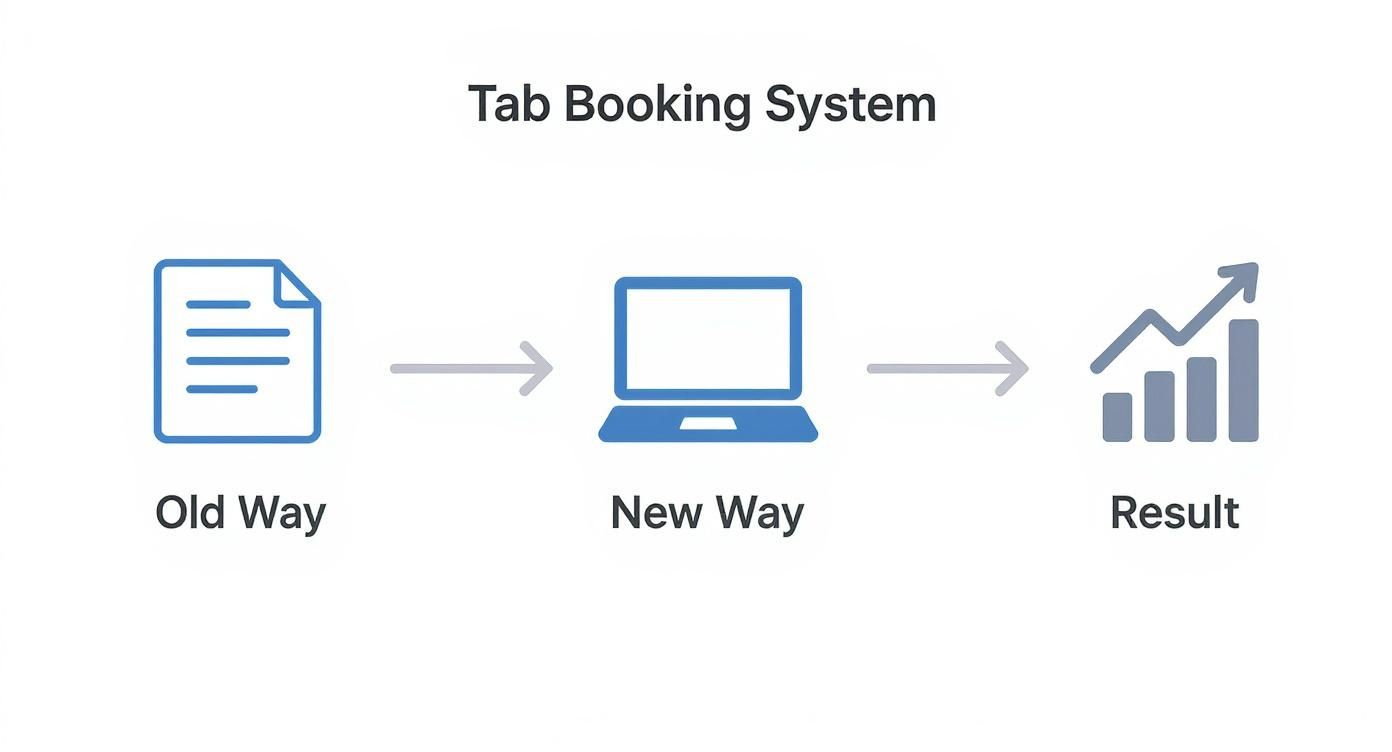
This diagram shows just how big the leap is from old-school, paper-based methods to a modern, digital system and the growth that it unlocks.
As you can see, adopting a digital platform isn't just about convenience; it’s a direct line to better performance and the ability to scale. All of these features work in sync to automate your daily tasks and protect your client data as outlined in our privacy policy, freeing you up to do what you do best: delivering an amazing service.
Here's the rewritten section, designed to sound completely human-written and natural.
How Digital Bookings Are Reshaping Service Industries
The move to online booking isn't just another passing trend. It represents a deep, fundamental change in how customers find and connect with service-based businesses. This shift is especially pronounced in places like the Philippines, where easy smartphone access and cheap data have completely rewired what people expect.
Nowadays, customers demand instant gratification and total control over their own schedules. They want to book a haircut, schedule a consultation, or reserve a table with just a few quick taps—no more frustrating phone calls or endless back-and-forth messaging. This new reality means that a solid tab booking system has gone from a nice-to-have feature to an essential tool for staying in business. Any business that doesn’t offer this level of convenience is essentially invisible to a whole generation of digital-first customers.
A Case Study in Disruption The Transport Sector
You don’t have to look far to see this transformation in action. Just think about the local transport industry. Not too long ago, getting a taxi meant standing on a kerb, waving your arm, and hoping for the best. The arrival of app-based booking systems completely turned that model on its head, bringing transparency, a sense of security, and convenience that was previously unimaginable.
This entire revolution was driven by one thing: customers demanding a better experience. While traditional street-hailing still makes up a big part of the Philippines' ride-hailing market, the future is crystal clear. The online booking side of things is set to grow at a compound annual growth rate of 7.89% all the way to 2030. You can dig into more data on the passenger car market to see just how strong this trend is.
The shift to digital booking isn't just about technology. It's about a fundamental change in customer behaviour. Modern consumers value their time and convenience more than anything, and they will always gravitate toward businesses that get that.
The same forces that upended the taxi industry are now at work in every other service sector, whether it's salons, health clinics, or professional consulting firms. The expectation for instant, self-service booking is the new baseline. For more insights on how businesses are navigating this change, the Kejoola blog is a great resource. Bringing a tab booking system into your operations is the single most effective way to meet this modern demand and turn a potential weakness into your greatest strength.
Real-World Applications of Booking Systems
Theory is one thing, but the real power of a tab booking system comes to life when you see how it solves tangible, day-to-day problems for actual businesses. Its adaptability is its greatest strength, moulding itself to fit the wildly different needs of a massive logistics company or a cosy one-person service. The core ideas—automation and letting clients help themselves—are practically universal.
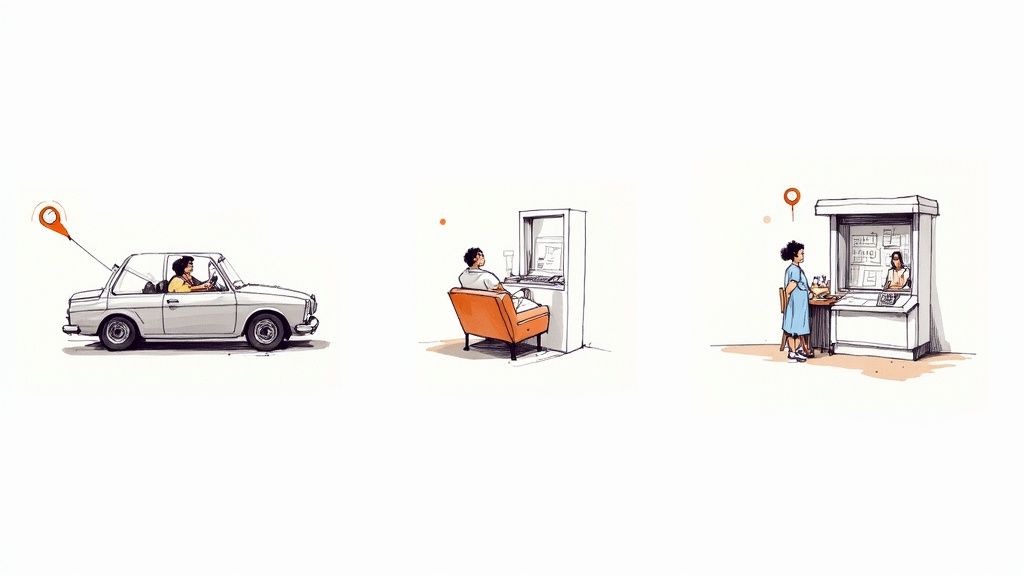
Take the ride-hailing industry, a perfect case study of a booking system working under intense pressure. A company in this sector is juggling thousands of drivers, tracking a constant stream of trips, and maintaining passenger safety, all in real time. The booking system is the brain of the operation, seamlessly connecting passengers with the closest drivers and calculating the best routes to cut down on waiting.
This model has been a game-changer. Here in the Philippines, the ride-hailing market has exploded, thanks in large part to these digital platforms. In fact, by 2025, the country had become one of inDrive's fastest-growing markets in Southeast Asia, with an eightfold increase in completed rides. You can read more about this incredible growth and what's behind it.
From Transport to Personal Care
Now, let's bring that same concept down to a more familiar scale, like your neighbourhood beauty salon. The problems are different, but no less important. A salon owner lives and dies by their ability to keep stylists busy and avoid empty chairs, which are just lost money. A tab booking system is the perfect tool for this.
Clients can hop online, see exactly when their preferred stylist is available, and book a time that suits them. You can even set up the system to prevent those awkward 15-minute gaps between appointments, making sure the day is scheduled for maximum profitability. Automated reminders are a lifesaver here, dramatically cutting down on no-shows that eat into your bottom line.
Empowering Patients in Healthcare
Another fantastic example is in healthcare, like a local GP clinic or a therapy practice. In this setting, the system gives patients a real sense of control over their health journey. They can book their own consultations, schedule follow-ups, or arrange therapy sessions online, all without having to play phone tag with the front desk.
This isn't just a win for patient convenience; it’s a huge relief for administrative staff. Instead of being glued to the phone, they can dedicate their time to more valuable work, like attending to patients in the clinic and managing records.
The core function of a booking system remains the same across industries: it replaces manual, time-consuming processes with streamlined, automated workflows that benefit both the business owner and the customer.
Whether you're organising delivery routes, running fitness classes, or scheduling professional consultations, the right platform brings structure and efficiency. It proves that the technology isn’t really about a specific industry—it's about the universal need to manage time and resources better.
The Tangible Business Benefits of Automation
It's easy to get lost in the features of a new system, but the real test is what it does for your bottom line. A tab booking system pays for itself by directly addressing the biggest things that drain your time and money, starting with the constant grind of admin tasks.
Think about it: every phone call you take to schedule an appointment and every name you jot down in a paper logbook is time you're not spending with a paying client. An automated system takes over all that, handling bookings and confirmations on its own. It hands those hours back to you, so you can focus on the work that actually brings in revenue.
Then there's the problem of no-shows, a real killer for any service business. A simple, automated SMS or email reminder is surprisingly effective at making sure clients remember their appointments. This small step protects your income and keeps your schedule packed and productive.
Capturing Opportunities Around the Clock
Your doors might close at 5 PM, but people are searching for services well into the night. An online booking portal essentially becomes your 24/7 receptionist, grabbing leads and locking in appointments long after you've clocked out.
By providing a constant point of access for clients, a booking system turns passive interest into confirmed revenue, ensuring you never miss an opportunity simply because you were unavailable.
This always-on availability is huge in a world where convenience is king. Just look at how the Philippine ride-hailing industry is set to become a billion-dollar market by 2029. Its incredible growth, with a projected USD 804 million in revenue for 2025 alone, is built on app-based booking systems that give people what they want: instant, on-demand service. Learn more about the market dynamics of this growing industry and you'll see the power of accessible booking.
Making Smarter Business Decisions
Finally, a tab booking system is more than just a calendar—it's a treasure trove of business intelligence. It gathers priceless data on how your business is actually running, giving you a clear picture of what's working and what isn't.
You can instantly get insights on key metrics, such as:
- Peak Booking Hours: Find out when you're busiest so you can schedule staff more effectively.
- Most Popular Services: See exactly which of your offerings are the real money-makers.
- Client Booking Patterns: Easily spot your most loyal customers and notice trends in how often people come back.
This information takes the guesswork out of running your business. Instead of making decisions based on a hunch, you can use hard data to refine your services, boost efficiency, and plan for real, sustainable growth.
How to Choose the Right Booking System
Choosing the right software for your business can feel like a massive decision. It's easy to get lost in a sea of options, but with a clear plan, you can cut through the noise and find what truly fits your needs. The best tab booking system isn't just about a long list of features; it's about finding a genuine partner for your growth.
Your evaluation should really boil down to a few core pillars. Think of these as the non-negotiables that separate a quick fix from a long-term solution that can keep up with your ambition.
Key Evaluation Criteria
Before you commit to any platform, it's smart to measure it against a few essential standards. This systematic approach stops you from getting distracted by flashy gimmicks you'll probably never use and helps you focus on what will actually make a difference to your business.
-
Scalability: Can the system actually grow with you? Imagine adding more staff, opening a new location, or handling double the appointments. You need to know if the system can keep up without lagging or forcing you into a costly and complicated upgrade.
-
Intuitive Interface: Let's be honest, how easy is it to use? Your team needs to manage schedules without needing a week of training, and your customers should be able to book appointments on their phones in a few taps. If it’s clunky, people just won’t use it.
-
Seamless Integrations: Does it play well with the other tools you already depend on? Check if it connects smoothly with your existing calendars, payment gateways, and any other software that's crucial to your daily workflow. The last thing you want is another disconnected system.
-
Reliable Customer Support: Who’s there to help when things go sideways? Look for providers that offer responsive support—ideally, local support that understands your market and operates on your time zone.
The ideal booking system acts as an extension of your business. It should feel intuitive, support your growth, and simplify your operations, not add another layer of complexity to your daily routine.
This is exactly where a solution like Kejoola shines. It was designed from the ground up with these criteria in mind, specifically for small and medium businesses. Its straightforward design makes getting started a breeze, and its features are built to expand right alongside your team. Plus, with dedicated local support, you know you can get help when you actually need it.
If you’re ready to see how a system built on these principles can help your business, you can explore the features and start a free trial with Kejoola today. It’s a no-pressure way to see if a platform truly stacks up against your own checklist.
Frequently Asked Questions
It’s completely normal to have a few questions when you’re thinking about bringing a new system into your business. Here are some straightforward answers to the questions we hear most often from business owners weighing up a tab booking system.
Is Setting Up a Tab Booking System Complicated?
Honestly, not anymore. Most modern platforms, including ours at Kejoola, are designed to be incredibly intuitive. The whole process is usually just a matter of outlining your services, plugging in your available hours, and then dropping a booking link or widget onto your website and social media pages.
Most good providers will even walk you through the setup, so you can realistically be up and running in a few hours, not days. The idea is to get you away from manual admin as painlessly as possible so you can start seeing the benefits right away.
Can These Systems Handle Complex Pricing?
Absolutely. This is where a good tab booking system really shines. You can set up all sorts of service variations, each with its own price, duration, and even specific staff member or equipment. It's built to handle everything from a simple 30-minute consultation to a multi-day group workshop.
A robust booking system adapts to your business model, not the other way around. It should effortlessly manage custom pricing, deposits, and service packages to reflect your unique offerings.
This flexibility is crucial for businesses that don't have a one-size-fits-all service menu. It means your online booking process can perfectly mirror your real-world operations, preventing any mix-ups and making sure you’re paid correctly.
How Secure Is My Client Data?
Data security is non-negotiable for any reputable platform. Reputable systems use strong encryption (like SSL, the same tech used by banks) and adhere strictly to data privacy laws to keep everything under lock and key.
Before you commit to any provider, it’s always a smart move to check their security policies and confirm they use trusted payment processors. This gives both you and your clients the confidence that their information is in safe hands.
Will Automation Make My Business Less Personal?
It's actually the opposite. Think about all the time you currently spend on the phone scheduling, sending reminders, and chasing up details. A tab booking system takes over that repetitive work, freeing you up to be fully present and engaged with your clients when they’re actually with you.
You can even customise the automated emails and text messages to match your brand's voice. It’s about keeping that personal connection, just more efficiently.
Ready to see how an intuitive, secure, and personalisable tab booking system can change the way you work? Explore how Kejoola simplifies scheduling and helps you build stronger client relationships. Start your free trial today.