Fall Home Maintenance Checklist: 14 Jobs Before the First Frost
A fall home maintenance checklist covers heat, water and safety: tune the furnace, sweep the chimney, test alarms, clear gutters, drain outdoor lines and seal drafts before the first freeze.
Josh · Nov 19, 2026 · 14 min read
- fall home maintenance checklist
- home maintenance
- winterizing
- handyman services
- seasonal maintenance
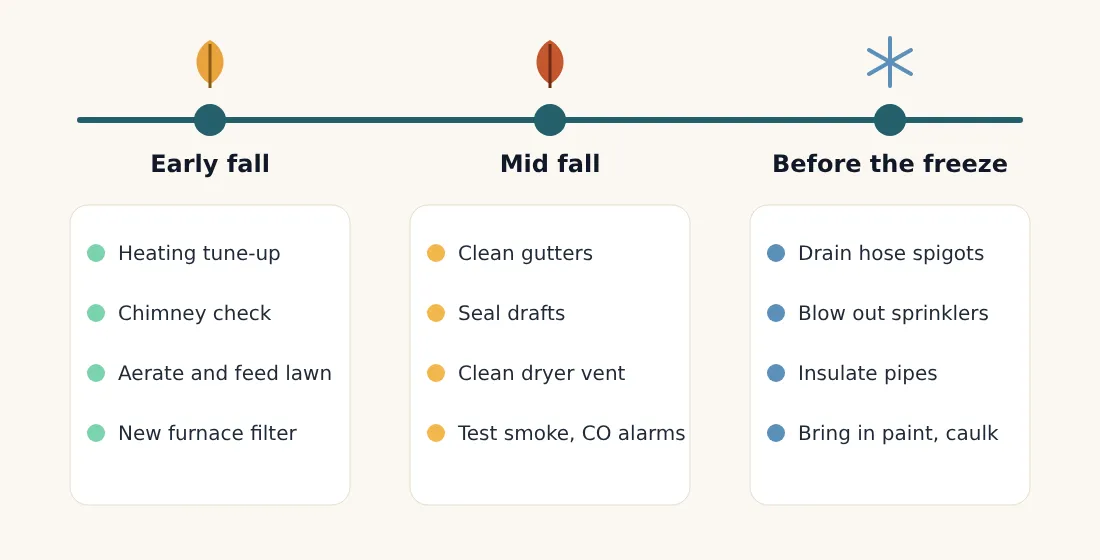
A fall home maintenance checklist is the short list of jobs that protect a house before cold weather: heat, water and safety. Get the furnace and chimney checked, test every alarm, clear the gutters, drain outdoor water lines and seal drafts before the first hard freeze. The 14 jobs below run roughly in the order the season allows, from early fall to the week before the frost. Each one says what to do, why it matters, and when it makes sense to call a pro. Work through it over a few weekends, or hand the bigger items to a handyman, HVAC tech or plumber.
1. Book the heating tune-up early
Your furnace or heat pump has sat idle all summer, and the first cold night is a bad time to find a fault. NFPA says fire departments responded to an average of 37,365 home fires involving heating equipment each year from 2020 to 2024. That is 11% of all reported home fires. Nearly half of those heating fires happened between December and February, when the system works hardest.
NFPA's advice is plain: heating systems should be inspected and cleaned each year before they are fired up for the season. A licensed HVAC technician checks the burners, the flame sensor, the heat exchanger, the blower and the flue. On a heat pump, they also check the defrost cycle and the outdoor coil.
Call in September or early October. HVAC schedules tend to fill once the first cold snap hits, so a tune-up slot is easier to get before the no-heat calls start. If your system is under a maintenance plan, check whether the fall visit is already included before you book a separate one.
2. Change the furnace filter
A clogged filter is the cheapest problem to fix and one of the easiest to forget. The U.S. Department of Energy says a dirty filter traps lint, pollen and dust that reduce airflow. That makes the system work harder and take longer to heat the house, which drives up the bill.
The Department of Energy's rule of thumb is to check the filter every month and change it if it looks dirty. At a minimum, replace it at least once every three months.
Write the filter size on the furnace cabinet with a marker, or snap a photo of the label on the old filter. The size is printed on the frame, such as 16x25x1. Buy two or three at once so the next change does not wait on a trip to the store. If the filter slot is hard to reach or the cabinet has no obvious slot, ask your HVAC tech to show you during the tune-up.
3. Have the chimney and fireplace inspected
A wood-burning fireplace builds up creosote in the flue every season it is used. Birds, squirrels and leaves can also block the chimney over the summer. NFPA recommends that chimneys be inspected and cleaned each year before the heating season starts.
The numbers explain why. NFPA reports that larger fires involving fireplaces or chimneys made up only 6% of heating equipment fires. They caused nearly a fifth (19%) of the direct property damage from those fires. A chimney fire can spread into the attic or the walls before anyone notices.
Book a chimney sweep in early fall, before the first fire of the year. Ask them to check the cap, the crown, the flue liner and the damper. Gas fireplaces and wood stoves need attention too, since their venting can crack or come loose. Inside, keep the hearth clear and use a screen.
4. Test smoke and carbon monoxide alarms
Fall is when furnaces come on, windows close and space heaters come out of the closet. That makes it the right time to confirm every alarm in the house works. NFPA 72, the national fire alarm code, calls for smoke alarms to be tested at least monthly. A fall check is a good reminder to start that habit.
Carbon monoxide is the other half of the job. The U.S. Consumer Product Safety Commission says more than 200 people in the United States die each year from accidental non-fire carbon monoxide poisoning linked to consumer products. CPSC recommends CO alarms on every level of the home and outside sleeping areas, either battery-operated or with battery backup. Interconnected alarms are best, because when one sounds they all sound.
Press the test button on each unit, replace weak batteries, and check the date printed on the back. Family Handyman notes that smoke detectors are typically good for 10 years and CO detectors last about six. An electrician can add hardwired, interconnected alarms if your home lacks them.
5. Clean the gutters and downspouts
Gutters that overflow dump water right next to the foundation. That water can end up in the basement, rot the fascia board, or freeze into ice along the roof edge. Clean them after most of the leaves have fallen, and again later if you have tall trees near the house.
Family Handyman suggests an old plastic spatula, trimmed to fit the gutter's shape, for scooping out debris without scratching the metal. Work from a sturdy ladder that sits on firm ground, and move it often rather than leaning out to reach. Drop the debris on a tarp below to make cleanup quicker.
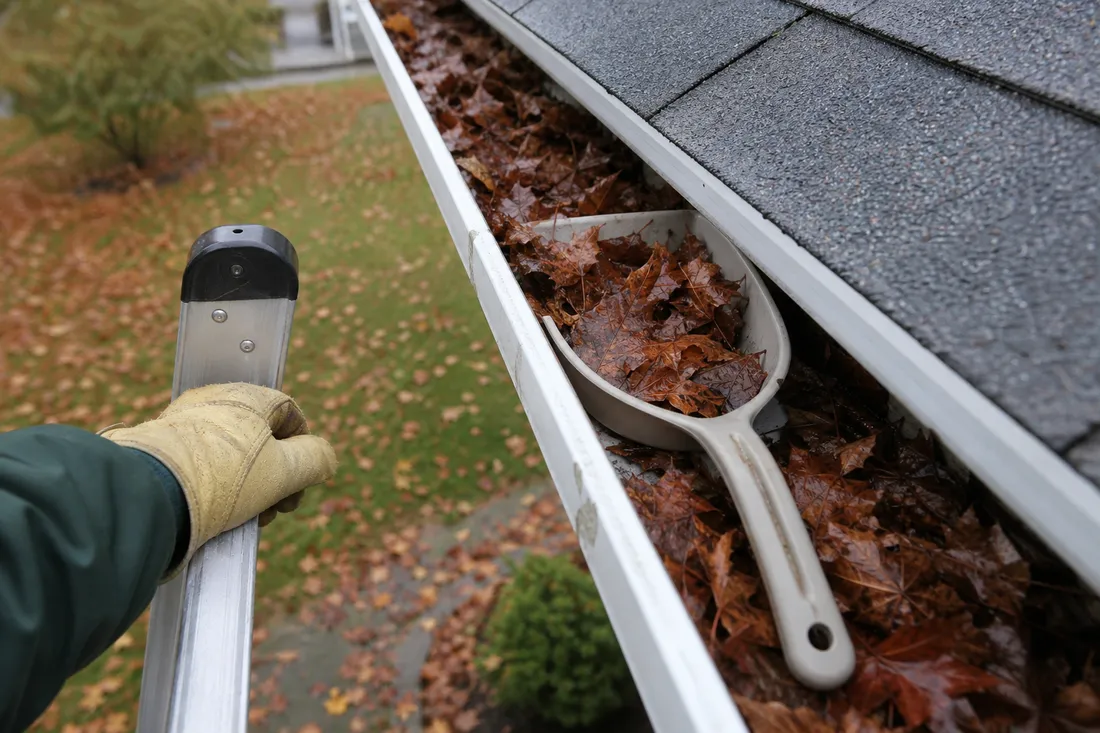
Do not forget the downspouts. Wet leaves pack into the elbows and block the whole run, and Family Handyman recommends a plumber's snake to pull out the clumps. Run a hose into each gutter once it is clear and watch the water exit at the bottom. Make sure the downspout extensions carry water away from the foundation. If the roofline is two stories or steep, a gutter crew or handyman is the safer choice.
6. Look over the roof from the ground
You do not need to climb on the roof to spot most problems. Walk around the house on a clear day with a pair of binoculars. Look for missing, cracked or curling shingles, and for granules collecting at the bottom of the downspouts.
Check the metal flashing around the chimney, the vent pipes and any skylights. Gaps or lifted edges there are a common source of leaks that only show up once winter storms arrive. Inside, take a flashlight into the attic and look for water stains on the underside of the roof deck or damp insulation.
Note anything you find with a photo and the location, such as "north slope, near the bathroom vent." That makes it easier for a roofer to quote the repair. Small repairs done in fall are usually simpler than emergency tarping after a storm. If the roof is near the end of its life, fall is also a sensible time to get two or three estimates for a replacement in spring.
7. Shut off and drain outdoor faucets
Water expands as it freezes, and the American Red Cross notes that this expansion can break metal or plastic pipes. Outdoor hose bibs are among the pipes that freeze most often, because they sit right at the edge of the cold.
The Red Cross steps are simple. Remove, drain and store the garden hoses. Close the inside valves that supply the outdoor hose bibs. Then open the outside bibs to let the water drain, and leave them open so any water still in the pipe has room to expand without bursting it.
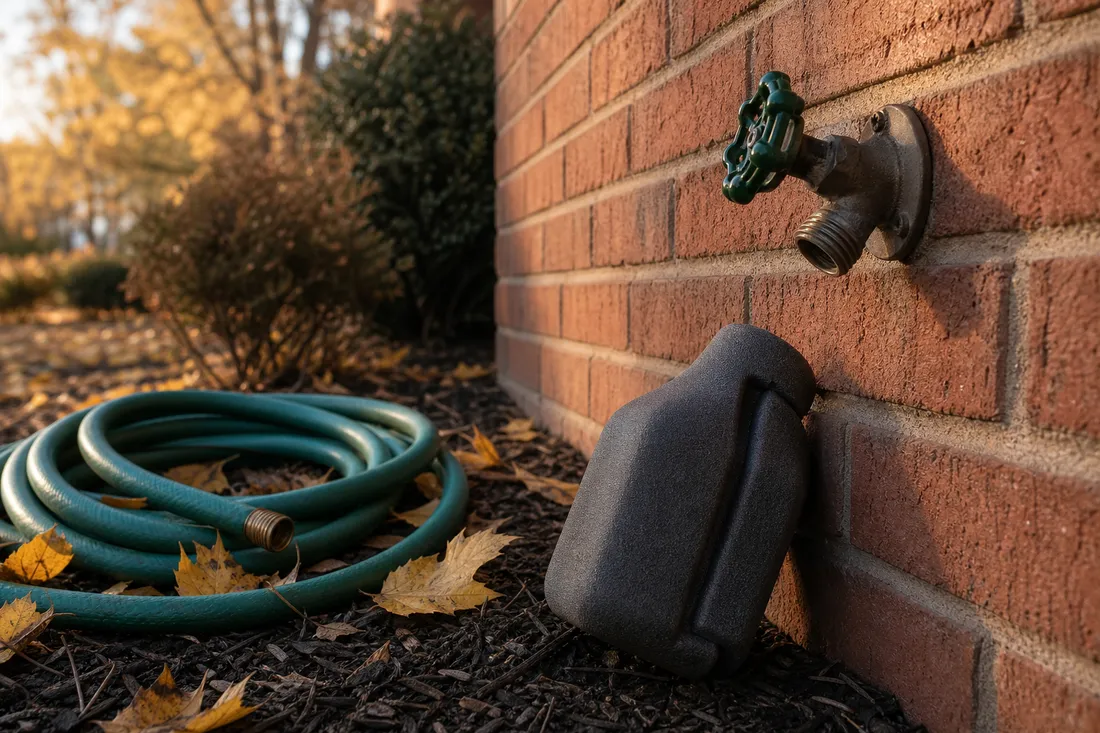
A foam faucet cover adds a layer of protection once the line is drained. If you cannot find the inside shutoff valve, or the hose bib still drips when it is closed, call a plumber. A frost-free sillcock is a common fall upgrade for older homes, and it is a short job for a pro.
8. Drain the sprinkler system
An in-ground irrigation system holds water in buried lines, valves and the backflow preventer. If that water freezes, the damage often does not show until spring, when zones leak or will not run.
The Red Cross advises draining swimming pool and sprinkler supply lines following the manufacturer's or installer's directions. It also says not to put antifreeze in those lines unless directed, because antifreeze is harmful to people, pets, wildlife and landscaping.
Many systems are cleared by shutting off the water supply and then blowing the lines out with compressed air, zone by zone. This takes a compressor with enough volume and the right pressure setting for the pipe. Too much pressure can crack fittings and heads. Many homeowners hand this job to a landscaping or irrigation company, which can also test the backflow device and note any broken heads for spring. Book it before the first forecast hard freeze in your area.
9. Insulate pipes in cold spaces
Pipes inside the house can freeze too. The Red Cross lists the usual suspects: supply lines in unheated basements, crawl spaces, attics and garages, lines inside kitchen cabinets, and pipes that run along poorly insulated exterior walls.
Go looking for them now. Check the garage, the crawl space, and under kitchen and bathroom sinks on outside walls. The Red Cross recommends insulating both hot and cold water pipes in these areas. Foam pipe sleeves are cheap and slip over the pipe in minutes. For lines that freeze often, UL-listed heat tape or heat cable is another option.
When a deep cold snap arrives, a few habits help. Keep the garage door closed if water lines run through it. Open sink cabinet doors so warm air reaches the plumbing, and let cold water drip from a faucet served by exposed pipes. If you travel during cold weather, the Red Cross says to leave the heat on and set no lower than 55°F. A plumber can reroute or insulate lines that freeze year after year.
10. Seal drafts around windows and doors
Air leaking through gaps in the outer walls, windows and doors wastes heat you have already paid for. ENERGY STAR says the EPA estimates homeowners can save an average of 15% on heating and cooling costs by air sealing and adding insulation in attics, floors over crawl spaces and basements. That works out to an average of 11% on total energy costs.
Start with the easy fixes. The Department of Energy points to caulking small gaps and adding weatherstripping to the moving parts of windows and doors. Hold a lit incense stick near window frames, door edges and outlets on outside walls on a windy day. If the smoke wavers, you have found a leak.
Replace door sweeps that no longer touch the threshold, and recaulk around window trim where the old bead has cracked. ENERGY STAR also notes that 9 out of 10 U.S. homes are under-insulated. If the attic insulation sits below the tops of the ceiling joists, an insulation contractor or handyman can add more. Air sealing the attic floor first gives the new insulation a better chance to do its job.
11. Reverse the ceiling fans
This is the quickest job on the list. Warm air rises and collects near the ceiling, especially in rooms with high or vaulted ceilings. A ceiling fan can push it back down to where people sit.
ENERGY STAR says that in winter you should reverse the motor and run the fan at low speed in the clockwise direction. That produces a gentle updraft, which forces the warm air near the ceiling down into the room. In summer, the fan runs counterclockwise to create a cooling breeze.
Most fans have a small direction switch on the motor housing, just above the blades. Turn the fan off and let it stop completely before you flip the switch. Some newer fans change direction from the remote or a wall control instead. Stand under the fan once it is running. You should feel little or no breeze. ENERGY STAR adds that you can adjust the thermostat when using the fan for extra savings. If a fan wobbles or hums once you switch it, have an electrician check the mounting.
12. Clean the dryer vent
Lint does not stay in the lint trap. Some of it passes into the duct behind the dryer and builds up along the run to the outside wall. That lint is fuel.
NFPA's research on the subject found that U.S. fire departments responded to an average of 15,970 home fires involving clothes dryers or washing machines each year from 2010 to 2014. The vast majority, 92%, involved dryers. Dust, fiber or lint was the leading item first ignited in dryer fires, at 26%, tied with clothing.
Clean the lint screen after every load. As part of your fall routine, pull the dryer away from the wall, disconnect the duct, and clear it with a vent brush kit. Go outside and check that the exterior flap opens freely and is not packed with lint or a bird's nest. If the run is long or goes through the roof, a dryer vent cleaning service can handle it.
13. Aerate, feed and mulch the lawn
Fall is when cool-season lawns recover from summer and store energy for spring. University of Illinois Extension recommends core aeration to relieve soil compaction and reduce thatch. Run the aerator a few days after rain, while the soil is still slightly damp, because the tines cannot cut into hard, dry soil. Leave the soil cores to break down on their own.
Extension also suggests one pound of nitrogen per 1,000 square feet, and says that if a lawn gets only one feeding a year, it should be before fall. In central Illinois that window runs from mid-August to mid-September, earlier in the north and later in the south. A late-season winterizer can go down one week after the final mowing.
Instead of bagging leaves, mow over them and leave the shredded pieces on the turf. Extension notes that research at Michigan State University found shredded fall leaves can improve lawn health. Fall is also a good time to treat perennial weeds like dandelions. A lawn care company can aerate, overseed and feed in one visit.
14. Bring in paint, caulk and outdoor gear
Some things in the garage or shed do not survive a freeze. Family Handyman warns that freezing ruins latex paint and latex caulk. If you live in a cold climate, move partial cans of latex or acrylic paint and tubes of caulk into a heated part of the house.
Do the same for anything else with water in it. That includes liquid lawn and garden products, some cleaners, and the water in a pressure washer pump. Check the product labels for storage temperatures.
Then put the yard away. Clean and dry patio furniture before you store or cover it. Drain the gas from small engines or add fuel stabilizer, following the manufacturer's directions, and pull the snow shovel and ice melt to the front of the garage. Shut off the gas grill's tank valve and cover the grill. Finally, schedule any exterior painting for next spring. Family Handyman notes that paint cannot dry properly in freezing temperatures and will only partly cure.
FAQ
When should you start fall home maintenance?
Start in September for the jobs that need a pro, and finish the water jobs before the first hard freeze. Heating tune-ups and chimney sweeps book up once cold weather arrives. Outdoor faucets, sprinkler lines and exposed pipes can wait until late October or November in most of the country, but not past the first forecast freeze.
Which fall jobs should you hire out?
Hire out the heating tune-up, chimney inspection and sprinkler blowout, plus anything on a tall ladder. Those jobs need tools, training or a license that most homeowners do not have. Filter changes, alarm tests, ceiling fans, weatherstripping and draining hose bibs are fine to do yourself.
How often should you test smoke and CO alarms?
Test them at least once a month, not just in the fall. NFPA 72 calls for monthly smoke alarm testing. Replace batteries when they run low, and replace the whole unit when it reaches the end of its rated life, which is printed on the back.
Do you need to winterize a house if you live somewhere mild?
Yes, but the list is shorter. Even in mild climates, the furnace, chimney, alarms, gutters and dryer vent still need their yearly check. You can skip most of the freeze-protection steps unless your area gets occasional hard frosts, which can still burst an exposed hose bib or sprinkler line.
Book your fall tune-up season online
If you run a handyman, HVAC, plumbing or gutter business, this checklist is also a booking calendar. Homeowners start looking for help with these jobs as the weather turns. Share the checklist with past customers, then make it easy to reserve a visit.
Kejoola gives a trade business a four-page website, with Home, Services, Blog and Contact pages, and online booking built in. Customers pick a service and a time, then leave their name, email, phone and a note about the job, such as "furnace tune-up, filter is 16x25x1." You can post seasonal advice like this on the Blog page and list each fall service on the Services page. Build your site with Kejoola before the next cold snap fills your phone.
Sources
- Home Heating Safety, NFPA
- How Do I Maintain My Smoke Detector?, NFPA
- Home Fires Involving Clothes Dryers and Washing Machines, NFPA
- Carbon Monoxide Information Center, CPSC
- Frozen Pipes, American Red Cross
- 5 Tips to Help You Save on Energy Bills this Winter, U.S. Department of Energy
- Why Seal and Insulate?, ENERGY STAR
- Ceiling Fan Installation and Usage Tips, ENERGY STAR
- Five Fall Tips for Cool-Season Lawn Care, University of Illinois Extension
- Fall Home Maintenance Checklist, Family Handyman