Your Essential Parent Teacher Conference Template Guide
Discover the ultimate toolkit of parent-teacher conference templates designed to transform meetings into collaborative, productive partnerships for student success.
Josh · Dec 15, 2025 · 17 min read
- templates
- education
- meetings
A parent-teacher conference template is really just a structured guide for the conversation. It's the tool that keeps the meeting on track, making sure you cover all the crucial points about a student's progress efficiently. Think of it as the difference between a rambling chat and a focused, productive strategy session.
Moving Beyond Unstructured Parent-Teacher Meetings
Let's be honest: winging a parent-teacher conference rarely works out well. Those unstructured meetings often feel rushed, chaotic, and ultimately, unproductive. Without a clear plan, conversations can easily veer off-topic, critical details get overlooked, and both you and the parents can walk away feeling like it was a missed opportunity.
This is exactly why a good parent-teacher conference template is so much more than a piece of paper. It's your strategic playbook for turning a frantic check-in into a genuine, collaborative partnership.
A well-designed template brings immediate focus. Instead of jumping from a recent test score to a playground incident and back again, it creates a logical flow. You can smoothly cover academics, touch on social-emotional development, and set clear, actionable goals. This structured approach is a lifesaver for managing the clock, ensuring the most important information gets the attention it deserves.
The Power of a Consistent Framework
When you use a consistent template for every conference, you start building a reliable communication bridge between the classroom and home. Parents learn what to expect from these meetings, so they often come better prepared with their own questions and observations. That simple shift turns what could be a one-way report into a meaningful, two-way dialogue.
This proactive approach pays off in a few key ways:
- You cover all the bases: No more "Oops, I forgot to mention..." moments about a specific test score or behavioral pattern.
- It sets a collaborative tone: The template frames the entire conversation around a shared goal: the student's success.
- It builds parent confidence: A professional, organized meeting demonstrates that you respect their time and value their partnership.
Before we dive into the templates themselves, it's worth taking a moment to understand what makes one truly effective. A great template isn't just a checklist; it's a comprehensive tool designed to facilitate a holistic conversation.
Core Components of an Effective Conference Template
| Component | Purpose and Benefit |
|---|---|
| Student Information | Basic details (name, grade) to personalize the document and keep records clear. |
| Strengths/Areas of Success | Starts the meeting on a positive note and acknowledges the student's accomplishments. |
| Areas for Growth/Challenges | Clearly outlines specific academic or behavioral areas needing focus, backed by data. |
| Action Plan/Goals | Creates a collaborative plan with concrete, measurable steps for the teacher, parent, and student. |
| Parent Questions/Concerns | Dedicates space for parent input, ensuring their voice is heard and valued. |
| Follow-Up Notes | A section to document next steps, agreed-upon actions, and a timeline for future check-ins. |
Ultimately, a solid template ensures every family gets the same thoughtful, detailed conversation about their child.
By standardizing the format, you can ensure equity in communication, giving every family the same opportunity for a detailed, insightful conversation about their child’s journey. It moves the meeting from a routine obligation to a powerful alliance.
Of course, a big part of successful conferences is just managing the schedule. Juggling all those appointments can be a headache. To keep your calendar organized and avoid any double-bookings, you might find our guide on how to sync Google Calendar with your iPhone helpful. It's a simple way to make sure you never miss an important meeting.
Your Downloadable Parent-Teacher Conference Toolkit
Let's move from theory to practice. I've put together a complete toolkit of customizable templates designed to bring structure and purpose to every phase of your conferences. Think of these resources as your system for preparing, running, and following up on meetings with total confidence.
Each document here has a specific job. Together, they transform a simple progress report into a strategic dialogue, building a genuine partnership focused on helping the student succeed.
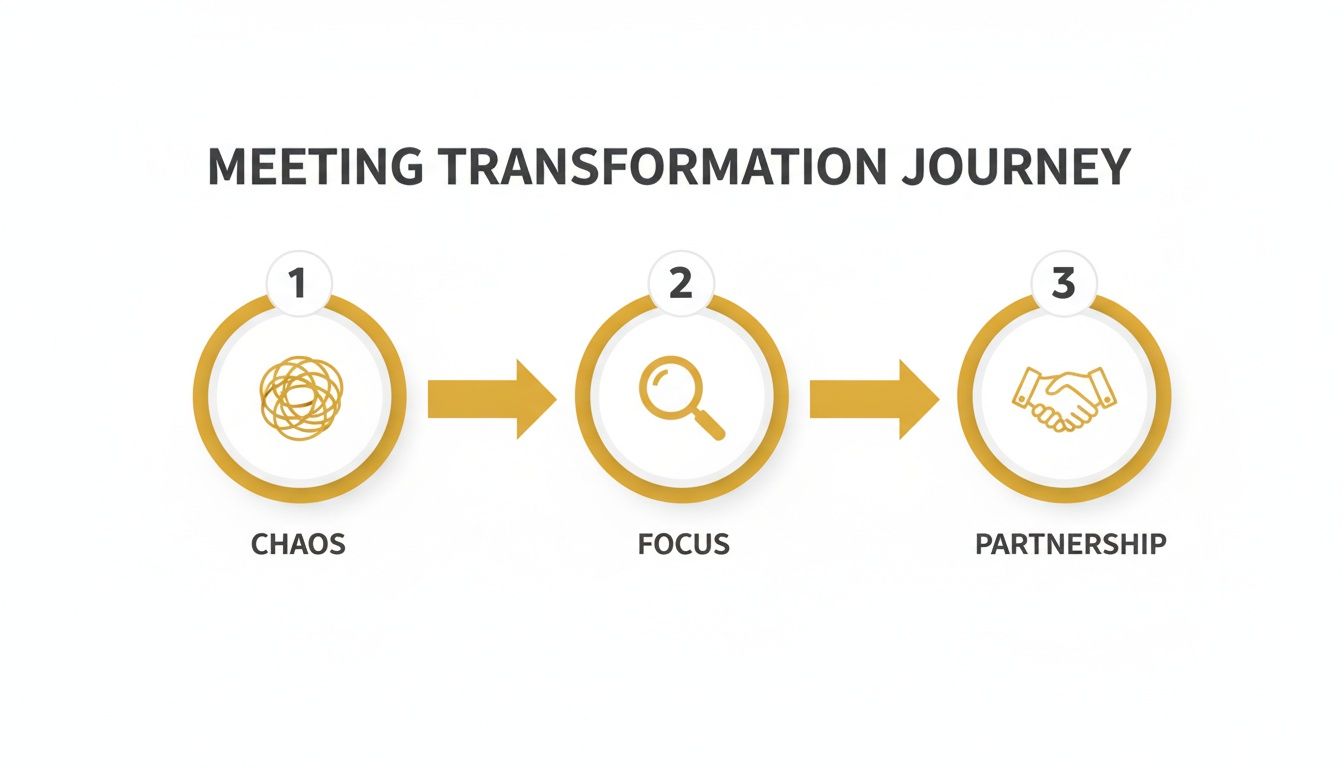
The real takeaway here is that a simple framework can bring incredible clarity, turning a potentially stressful meeting into a productive alliance.
Pre-Conference Parent Questionnaire
This is your first move toward making the conference a true two-way conversation. Send this simple form home about a week beforehand to give parents a voice before they even step into the room. It's your chance to gather their main questions, any nagging concerns, and what they hope to see for their child.
The insights you get back can be gold. A parent might share that a recent change at home is affecting their child’s focus, or perhaps they're more worried about social skills than reading levels right now. Knowing this ahead of time lets you shape the conversation around what truly matters to that family.
- Purpose: To understand the family's perspective and priorities before the meeting.
- Benefit: It makes parents feel heard from the very beginning and ensures you're discussing their most pressing issues.
Teacher Preparation Form
This one's just for you. It’s your organizational command center. Before you meet with each family, use this form to pull together all the important details on a student—academic data, behavioral notes, examples of their best work, and any social-emotional observations.
Having everything in one structured place means you won't be fumbling for papers or trying to recall a specific incident on the spot. You can speak confidently, referencing concrete examples and data that paint a clear, evidence-based picture of the student. This level of preparation shows professionalism and a deep investment in each child.
The Essential Conference Agenda
The agenda is the backbone of the meeting itself. It’s the roadmap that keeps the conversation on track and ensures you cover all the critical points within your tight time slot. A solid agenda often starts with strengths, moves to areas for growth, and ends by discussing collaborative next steps.
Using a consistent agenda brings a sense of equity to the process. Every family gets the same thoughtful, structured experience, which helps build school-wide trust and sets a professional, collaborative tone.
This structure is a lifesaver for time management, but it also helps parents know what to expect, which can ease their anxiety and encourage them to participate more openly. Of course, the meeting starts with the invitation; for tips on writing clear and welcoming communications, our guide on the meeting invitation letter template has some great examples.
Student Progress Summary
While the prep form is your internal cheat sheet, the progress summary is a take-home document for parents. It’s a clean, one-page snapshot that visualizes key information like assessment scores, attendance records, and how the student is progressing toward specific learning goals.
This document acts as a tangible record of your conversation. It translates classroom data into a format that's easy for parents to digest and refer back to later. It reinforces the key points from the meeting and gives everyone a clear baseline for measuring future progress.
Post-Conference Action Plan
A conference that ends without clear next steps is just a talk. A conference that ends with an action plan is the start of real change. This final template is a simple form for documenting the specific, measurable goals you all agree on.
- What is the goal? (e.g., Read for 20 minutes every night.)
- Who is responsible? (e.g., Student, Parent, Teacher.)
- When will we check in? (e.g., In two weeks via email.)
This simple document formalizes the commitments made in the room. It turns good intentions into concrete actions and creates a shared sense of accountability that lasts long after the meeting is over.
Putting Students in the Driver's Seat: The Power of Student-Led Conferences
What if, instead of being the subject of the conversation, the student led it? That’s the entire premise behind a student-led conference. It’s a powerful shift that transforms the meeting from a teacher’s report into a student’s active demonstration of their own learning. When you put a student at the center of the discussion, you give them a profound sense of ownership over their education.
This approach requires a different kind of prep work, of course. It’s less about you organizing your notes and more about guiding students to reflect on their work, pinpoint their own successes, and talk honestly about where they're struggling. The conference becomes a showcase of their journey, with them as the narrator.
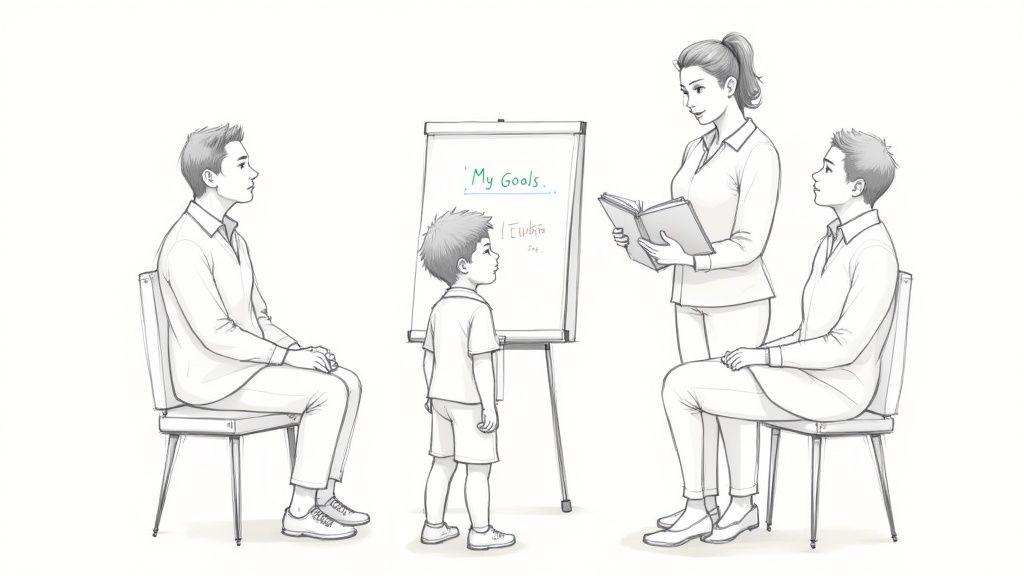
The ripple effects are huge. When students know they'll be presenting their progress to their parents, they start paying more attention to their daily work. It builds a natural sense of accountability and self-awareness that can be a game-changer for motivation all year long.
How to Make the Student-Led Model Work
Making the switch to student-led conferences isn't about throwing students into the deep end. It’s about giving them the right scaffolding to help them succeed. The most critical tool here is a solid Student-Led Conference Portfolio Template.
Think of this template as the student's script and organizer. It gives them a clear framework to gather their thoughts and materials, turning what could be a jumble of assignments into a coherent story of their progress.
A really effective portfolio template will include:
- A Goal-Setting Section: A place for students to revisit the academic and personal goals they set earlier in the term and reflect on their progress.
- Work Samples: Prompts that guide them to choose specific pieces of work—one that shows a real strength, another that shows major improvement.
- Reflection Questions: Open-ended questions like, "What was the toughest part of this project for you?" or "What are you most proud of and why?"
- An Action Plan: A space to brainstorm and write down the concrete steps they'll take to hit their next set of goals.
Using a parent teacher conference template designed specifically for the student ensures they walk into that conference feeling prepared, confident, and ready to lead a productive conversation.
When the primary speaker shifts from the teacher to the student, the entire dynamic changes. The conference stops feeling like a performance review and starts feeling like a celebration of growth and a collaborative strategy session, with the student right at the heart of it.
This model can also do wonders for parent engagement. At the Open World Learning Community in St. Paul, Minnesota, student-led conferences consistently achieve 85-100% parental attendance—often more than double the turnout for traditional formats. As described in their success story on EdWeek, students prepare full presentations to showcase their portfolios. It's proof that when students take the lead, families are far more motivated to be part of the conversation.
How to Adapt Templates for Different Student Needs
A good parent teacher conference template is a starting point, not a finished product. Let's be honest, the conversation you have about a first-grader's reading progress is worlds away from discussing a seventh-grader's study habits. The real magic happens when you customize your approach for different ages, abilities, and even meeting formats.
Making a few targeted tweaks ensures the conversation is always relevant, productive, and meaningful for everyone involved. It shows parents you see their child as an individual, not just another name on your roster.
Tailoring for Early Elementary Students (K-2)
With your youngest learners, the focus is less on letter grades and more on the foundational building blocks of their education. Parents of kids in kindergarten through second grade are hungry for information about social skills, emotional growth, and those early "a-ha!" moments in reading and math.
Your template needs to reflect this. Instead of a rigid section for "Current Grades," try reframing it with headers that tell a more complete story:
- Social & Emotional Growth: Is the student learning to share? How do they handle transitions between activities?
- Foundational Skills: Use specific, observable benchmarks like "Recognizes 15 sight words" or "Can count objects up to 20."
- Play & Creativity: Don't forget to add a spot for notes on how they problem-solve during free play or express themselves through art.
This simple shift changes the conversation from "What's their grade?" to "How is my child developing as a whole person?"—a much more valuable discussion for this age group.
Adapting for Middle School and Student Agency
Once students hit middle school, the game changes. They’re developing more self-awareness and are perfectly capable of reflecting on their own learning. This is a golden opportunity to adjust your template to bring them into the conversation and build accountability.
Before the conference, have students fill out a portion of the template themselves. A simple self-assessment checklist where they rate their own effort, class participation, or organization can be incredibly insightful. You can also include a goal-setting section for them to complete.
When you bring student self-reflection into the process, you’re doing more than just prepping for a meeting. You’re teaching a critical life skill. It empowers them to articulate their own strengths and challenges, turning them from a passive subject into an active participant in their own education.
Modifications for Special Education and IEPs
For students with an Individualized Education Program (IEP), a generic conference form just won't cut it. The entire conversation needs to be anchored to their specific, documented goals. Customizing your template to mirror the IEP isn't just good practice; it's essential for a productive and compliant meeting.
Your template should have dedicated sections to:
- Review IEP Goals: List each goal from the IEP. Beside each one, provide concrete, data-backed notes on the student’s progress.
- Discuss Accommodations & Modifications: What’s working well in the classroom? Do any supports need to be adjusted?
- Collaborate on Next Steps: This is where you align on strategies for both home and school to keep the momentum going.
This structure keeps the meeting focused, collaborative, and centered on the student's unique learning plan.
Adjusting for Virtual Conferences
In our post-2020 world, virtual conferences are here to stay. This requires a few small but important logistical tweaks to your process. Since you won't be handing out papers across a table, your template needs to be digital-friendly and easy to share.
Make it a rule to email all relevant documents to parents at least 24 hours before the meeting. This gives them time to review everything and come prepared with questions.
It's also a good idea to add a "Tech Check" to the very top of your agenda to make sure everyone's audio and video are working. For a quick refresher on setting up virtual meetings, you can check out our guide on how to create a Google Meet link. A little prep ensures the technology stays in the background, letting you focus on what really matters: the student.
Building Community with a Group Conference Model
What if you could ditch the traditional, sometimes isolating, parent-teacher meeting for an event that actually builds a powerful parent community? The classic one-on-one conference has its place, but it can feel more like a transaction than a true partnership. An innovative approach, known as Academic Parent-Teacher Teams (APTTs), completely flips the script by bringing parents together for collaborative group sessions.
This model moves the meeting from a quick, private data download to a shared learning experience. Instead of just hearing about their child’s progress in a vacuum, parents learn right alongside other families from the same classroom. This gives them a much clearer picture of grade-level expectations, shows them how their child's progress fits into the class as a whole (using anonymous data), and equips them with practical strategies to use at home.

How the APTT Model Works
The APTT model isn’t a free-for-all; it’s a structured, template-driven session designed to make every minute count. Think of the group format not as a replacement for individual attention, but as a powerful foundation for it.
First developed in an Arizona school district back in 2009, this model has grown to include roughly 200,000 families across 18 states. Instead of the usual 15-minute one-on-one slot, APTTs are 75-90 minute group meetings. During this time, parents collaboratively set 60-day academic goals and practice learning activities they can do at home, followed by shorter individual check-ins. You can discover more insights about rethinking parent-teacher conferences and see the data behind this approach.
The core idea is to empower parents as partners. When families understand the 'why' behind classroom learning and feel equipped with tools to help at home, they become a more effective part of their child's educational team.
This collective meeting fosters a real sense of shared purpose. Parents quickly realize they aren't alone in their struggles or their successes, which can be a massive boost to their confidence and involvement.
To better understand the shift, let's compare the two approaches side-by-side.
Traditional Conference vs. APTT Group Model
| Feature | Traditional Conference | APTT Group Model |
|---|---|---|
| Meeting Format | Private, one-on-one meeting with the teacher. | 75-minute group session followed by a brief individual check-in. |
| Primary Goal | Teacher reports individual student progress to parents. | Build parent knowledge, skills, and community to support student learning. |
| Data Sharing | Individual student data shared privately. | Anonymous, class-wide data is shared to contextualize progress. |
| Parent Role | Passive recipient of information. | Active participant; learns and practices strategies with other parents. |
| Takeaway | A general understanding of their child's status. | A concrete 60-day academic goal and hands-on activities to use at home. |
| Time Focus | Reviewing past performance. | Setting future goals and building skills. |
The table makes it clear: the APTT model is a proactive, community-focused alternative designed for long-term impact.
Key Benefits of Group Conferences
Adopting a group model like APTT offers some pretty compelling advantages over just sticking to individual meetings. It creates an atmosphere of mutual support and shared learning that can genuinely lift the entire classroom community.
Here are a few of the biggest wins:
- Increased Parent Confidence: Parents learn from the teacher and from each other, which deepens their understanding of the curriculum and their role in supporting it.
- Data Transparency: Showing anonymous, class-wide data helps parents put their child’s performance in perspective without making anyone feel singled out.
- Stronger Community: When families connect and build real relationships, they create a support network that lasts well beyond the classroom walls.
- Efficiency and Impact: The teacher can deliver key grade-level information once to the whole group, which saves time for more personalized goal-setting during the individual check-ins.
Ultimately, this model changes the fundamental question from "How is my child doing?" to "How can we all work together to help our children succeed?"
Navigating Common Questions and Customizations
Whenever I talk to teachers about using templates for the first time, a few questions always pop up. Let's tackle them head-on, because a great template system is all about making your life easier, not more complicated.
One of the biggest questions is about digital sharing, especially for virtual conferences. "When and how should I send the documents?" My rule of thumb is to email the agenda and any relevant progress notes at least 24 hours ahead of the meeting. This simple step shows you respect the parents' time and gives them a chance to come prepared with meaningful questions, which makes for a much richer conversation.
Another common concern is how to handle the tough conversations. What happens when you need to discuss behavioral issues or significant academic struggles? This is where a well-structured template becomes your anchor. It helps you ground the conversation in specific, observable data points you've already noted. This keeps the focus on collaborative problem-solving rather than letting emotions take over.
Making a Template Your Own
A template is just a starting point—a good skeleton. The real magic happens when you adapt it to fit the students right in front of you.
- Younger Grades: For my kindergarten or first-grade conferences, I’d ditch generic headers like "Academic Progress." Instead, I'd use more specific and relevant sections like "Social-Emotional Milestones" or "Fine Motor Skill Development."
- Student-Led Conferences: If you're empowering older students to lead the conversation, build that right into the template. Add sections for their own self-reflections and goals that they fill out before the meeting.
- IEP Meetings: When preparing for an IEP-focused conference, I always make sure the template directly mirrors the structure of the IEP itself. This means creating dedicated spaces to discuss progress toward each specific goal, keeping us all on the same page.
The goal is to tweak the language and focus of the template so it speaks directly to the student's unique situation. That's what makes the conversation truly personal and productive.
Think of your template not as a rigid script, but as a reliable framework. It's there to ensure every single family gets a thoughtful, fair, and collaborative look at their child’s journey in your classroom.
Keeping parents engaged is an ongoing challenge, especially as kids get older. We know from historical data that conference attendance is high in elementary school—around 89-91%—but can drop to just 57% by high school. Post-2020, the overall average dipped to 72%. Using a clear parent teacher conference template that shares data transparently and elevates the student's voice can be a powerful tool for reversing that trend. If you want to dig deeper into this, it's worth taking a look at these lessons learned from 44 years of parent-teacher conferences.