Your Guide to a Thriving Portraiture Photography Studio
Discover how to build a successful portraiture photography studio, from defining your niche and mastering lighting to setting profitable prices and attracting ideal clients.
Josh · Dec 21, 2025 · 24 min read
- portraiture photography
- photography studio
- business guide
- lighting setups
- client management
Building Your Portraiture Photography Studio Foundation
A portraiture photography studio is so much more than a room with lights and backdrops. It's a business, carefully designed to create stunning, professional portraits for a specific kind of client. Getting it off the ground successfully all comes down to building a solid foundation. This means getting crystal clear on your niche, drafting a realistic business plan, and handling the legal stuff from the get-go.
Think of this initial phase as setting the stage. Everything you do here will influence your marketing, your pricing, and ultimately, your success.
Defining Your Business and Legal Structure
Before you even think about buying a single softbox, you need to put on your business owner hat. This is the unglamorous but absolutely essential work that separates a hobby from a profitable career. It involves defining your unique place in the market, outlining your financial goals, and making sure you’re operating legally. Taking care of this now saves you from massive headaches down the road.
The opportunity is certainly there. The global portrait photography studio market was valued at $4.83 billion and is expected to climb to $5.06 billion this year. With projections hitting $8.2 billion by 2035, the demand for high-quality professional images isn't slowing down. You can dig deeper into these numbers in this detailed report about the portrait photography studio market.
Find Your Unique Photography Niche
In a crowded market, being a generalist is a fast track to being invisible. Specialization is your most powerful tool. Instead of trying to be the photographer for everyone, focus on a specific niche where you can become the go-to expert. This focus not only makes your marketing a million times more effective but also allows you to command higher prices.
Not sure where to start? Here are a few ideas:
- Modern Corporate Headshots: Think professionals, executives, and entire teams needing polished, consistent branding images.
- Timeless Family Portraits: This is about creating heirloom-quality art for families, often involving styled sessions and high-end print products.
- Fine Art & Avant-Garde Portraits: For a creative clientele looking for something truly unique, artistic, and expressive.
- Personal Branding Photography: The go-to for entrepreneurs and influencers who need a whole library of images for their websites and social media feeds.
Your niche will guide every decision you make, from the vibe of your studio decor to the tone of your website.
Create a Realistic Business Plan
Your business plan is your roadmap. It's the document that forces you to think through the real-world finances and logistics of running a studio. Plus, if you ever need to secure a loan from a bank or attract investors, they'll want to see a well-thought-out plan.
A business plan isn't just a document for lenders; it's a personal guide that clarifies your goals and holds you accountable. It transforms a creative passion into a viable enterprise by mapping out the path from concept to profitability.
Make sure your plan covers these key areas:
- Market Analysis: Who are your local competitors? What are they charging? More importantly, what gaps exist in the market that your studio can fill?
- Ideal Client Profile: Get specific. Go beyond simple demographics. What are your ideal client's values, pain points, and reasons for needing a professional portrait right now?
- Financial Projections: Be brutally honest here. Detail your startup costs (gear, rent, insurance), ongoing expenses (utilities, software subscriptions, marketing), and set clear revenue goals for your first one to three years.
Navigate Essential Legal Steps
Operating as a legitimate business protects you, your assets, and your clients. Trying to wing it on the legal side can land you in serious financial and legal trouble.
First things first, establish your business entity. A Sole Proprietorship is the simplest to set up, but an LLC (Limited Liability Company) is often the smarter choice. It creates a legal barrier between your business and personal assets, which is crucial for liability protection.
Next up, get insured. At a minimum, you'll need general liability insurance to cover any accidents that might happen in your studio and equipment insurance to protect your expensive gear.
Finally, get your contracts in order. Work with a lawyer to draft a rock-solid client agreement that clearly outlines deliverables, payment schedules, cancellation policies, and image usage rights. This single document can prevent countless misunderstandings and ensure everyone is on the same page.
To help you keep track of these foundational steps, here's a quick checklist of the core components needed to get your studio off the ground.
Studio Startup Essential Checklist
A summary of the core components required to establish your portrait photography studio, from legal structure to brand identity.
| Component | Key Considerations | Recommended Action |
|---|---|---|
| Business Niche | Who is your ideal client? What specific style or type of portrait will you specialize in? | Choose a niche (e.g., corporate headshots, family portraits, personal branding) and define your target audience. |
| Business Plan | What are your startup costs, ongoing expenses, and revenue projections for the first 1-3 years? | Draft a detailed plan including market analysis, financial projections, and marketing strategy. |
| Legal Structure | Will you operate as a Sole Proprietorship, LLC, or another entity? This affects liability and taxes. | Consult with a legal or financial advisor to choose the best structure. An LLC is often recommended for liability protection. |
| Business Name & EIN | Is your desired name available? You'll need an Employer Identification Number (EIN) for banking and taxes. | Register your business name with the state and apply for a free EIN from the IRS. |
| Insurance | What happens if a client trips over a light stand or your camera gear is stolen? | Secure both general liability and equipment insurance before your first shoot. |
| Contracts | How will you handle payments, cancellations, and image usage rights? | Hire a lawyer to draft a comprehensive client contract that protects both you and your clients. |
| Brand Identity | What do you want your logo, website, and marketing materials to communicate about your studio? | Develop a professional brand identity that reflects your niche and attracts your ideal client. |
Tackling these components systematically will ensure you're not just building a studio, but a sustainable business that can thrive for years to come.
Designing Your Space and Mastering Studio Light
The studio itself is where your creative vision comes to life. It's so much more than just four walls—it’s a controlled environment you build to get consistent, high-quality results, shoot after shoot. The first big decision you'll face is whether to set up at home or rent a commercial space.
A home studio is incredibly convenient and keeps your overhead costs way down, making it a fantastic starting point for many photographers. But it's not without its challenges. You might find yourself constrained by space, dealing with client perceptions, or struggling to switch off when your work is literally in your living room.
On the other hand, a commercial space instantly projects a higher level of professionalism. It gives you plenty of room for all your gear, backdrops, and dedicated client areas. The obvious trade-off is the financial hit from rent and utilities. Your choice here really boils down to your business plan, your budget, and the kind of clients you're trying to attract.
Choosing the Right Studio Space
When you're scouting potential locations, there are a few non-negotiables for a functional portrait studio. Ceiling height is a huge one. You really want at least 10-12 feet to work with. This lets you get your lights up high and stops unwanted light from bouncing around, which is critical for full-body portraits.
Natural light can be a nice bonus, but it's definitely not a necessity. Big, beautiful windows are great, but you absolutely must have a way to kill the light completely, usually with blackout curtains. The whole point of a studio is to give you total control over the lighting.
Don't forget about the client experience, either. Is parking a nightmare? Is the entrance welcoming? Do you have a private space for them to change and a comfortable spot to sit? These little details create a professional vibe that helps justify your prices.
Essential Lighting Gear and Modifiers
Once you’ve got your camera, your lighting kit is easily the most critical investment you'll make. The classic debate is strobes versus continuous lights, and honestly, the right answer just depends on how you like to shoot.
- Strobes (Flash): These pack a serious punch, way more powerful than continuous lights. They let you "freeze" motion with a quick burst of light, which is perfect for dynamic portraits where your subject might be moving. It ensures you get tack-sharp images without cranking up your shutter speed.
- Continuous Lights: Just like the name says, these lights stay on. They're amazing for beginners because you can see exactly how the light is falling on your subject in real-time—what you see is what you get. They're also a must-have if you plan on shooting any video.
After picking your lights, you need to shape them. A bare flash is harsh and just plain unflattering. Modifiers are what turn that harsh light into something beautiful and sculpted.
A simple rule of thumb: the larger the light source is relative to your subject, the softer the light will be. That's why a huge softbox creates such a flattering, gentle light on a person's face compared to a tiny, direct flash.
Your starter kit of modifiers should probably include these three:
- Softboxes: The workhorse for creating soft, directional light. An octabox (an eight-sided softbox) is a favorite for portraits because it creates a really pleasing, round catchlight in your subject's eyes.
- Umbrellas: Super simple and effective. Umbrellas throw light over a wide area. A shoot-through umbrella gives you soft, diffused light, while a reflective one will give you a bit more contrast and pop.
- Beauty Dishes: These create a really unique quality of light. It's soft, but with more contrast than a softbox, and it's often used in fashion and beauty work to really make facial features stand out.
Mastering Classic Lighting Setups
With your gear ready, it's time to start practicing the classic lighting patterns. These are the time-tested techniques that form the bedrock of professional portraiture. When you understand them, you can intentionally craft a mood and flatter any subject that walks through your door.
| Lighting Setup | Description & Use Case | Key Characteristic |
|---|---|---|
| Rembrandt Lighting | Creates a small, inverted triangle of light on the cheek opposite the key light. Perfect for moody, dramatic, and classic-looking portraits. | The defining triangle of light on the shadow side of the face. |
| Butterfly Lighting | The key light is high and directly in front of the subject, creating a butterfly-shaped shadow under the nose. It's a classic beauty light that highlights cheekbones. | The small, distinct shadow directly beneath the nose. |
| Split Lighting | The main light is at a 90-degree angle to the subject, lighting exactly half of their face. This creates a high-contrast, dramatic look often used for masculine portraits. | A clean line dividing the face into a light half and a shadow half. |
Getting these setups down will build your confidence and technical skill like nothing else. The real artistry begins when you know exactly which pattern to pull out to best suit your subject's face and the story you're trying to tell. Once you've nailed the fundamentals and want to push your boundaries, check out these ideas for creative portrait photography. This foundation gives you the power to walk into your studio and create portraits with impact, every single time.
Developing Profitable Pricing and Client Packages
Let's talk about the hardest part of running a creative business: setting your prices. It's a tricky dance, isn't it? You need to value your art and expertise, but you also need to run a business that actually makes money. Getting your pricing right is the engine that will drive your portraiture photography studio forward.
Before you can even think about what to charge, you have to get intimate with your numbers. It all starts with figuring out what it costs just to keep the lights on.
Calculate Your Cost of Doing Business
Your Cost of Doing Business (CODB) is the single most important number for your pricing strategy. This isn't just a suggestion; it's the foundation of a sustainable business. It's the grand total of every single expense—gear, rent, software subscriptions, insurance, you name it—plus the salary you need to pay yourself.
Skipping this step is a classic mistake that leads straight to burnout. To get your CODB, add up all your annual business costs (both fixed and variable), then decide on a realistic salary for yourself. That final number is your minimum annual revenue target. Now you can work backward to figure out what you need to charge per session just to break even.
Choosing Your Pricing Model
Once you know your numbers, you can start building your packages. There's no single "correct" way to price portrait photography; the best fit will depend on who you're shooting for and how you like to sell your work.
Here are the three most common approaches I've seen work well:
- Session Fee + À La Carte: This is the traditional model. A client pays an upfront, non-refundable session fee (or "creative fee") that covers only your time and talent for the shoot. After the session, they see their gallery and buy prints, albums, or digital files one by one.
- All-Inclusive Digital Packages: Super straightforward and a huge hit with clients who just want the files. You charge one flat rate that includes the session itself and a specific number of high-resolution digital images.
- Hybrid Model: This is often the sweet spot. It combines the other two models by charging a session fee and then offering tiered packages. These packages typically include a mix of digital images and a print credit, which nudges clients toward investing in beautiful, tangible products.
All the initial setup steps—finding the right space, buying gear, and perfecting your lighting—are direct costs that feed into your CODB, as this chart illustrates.
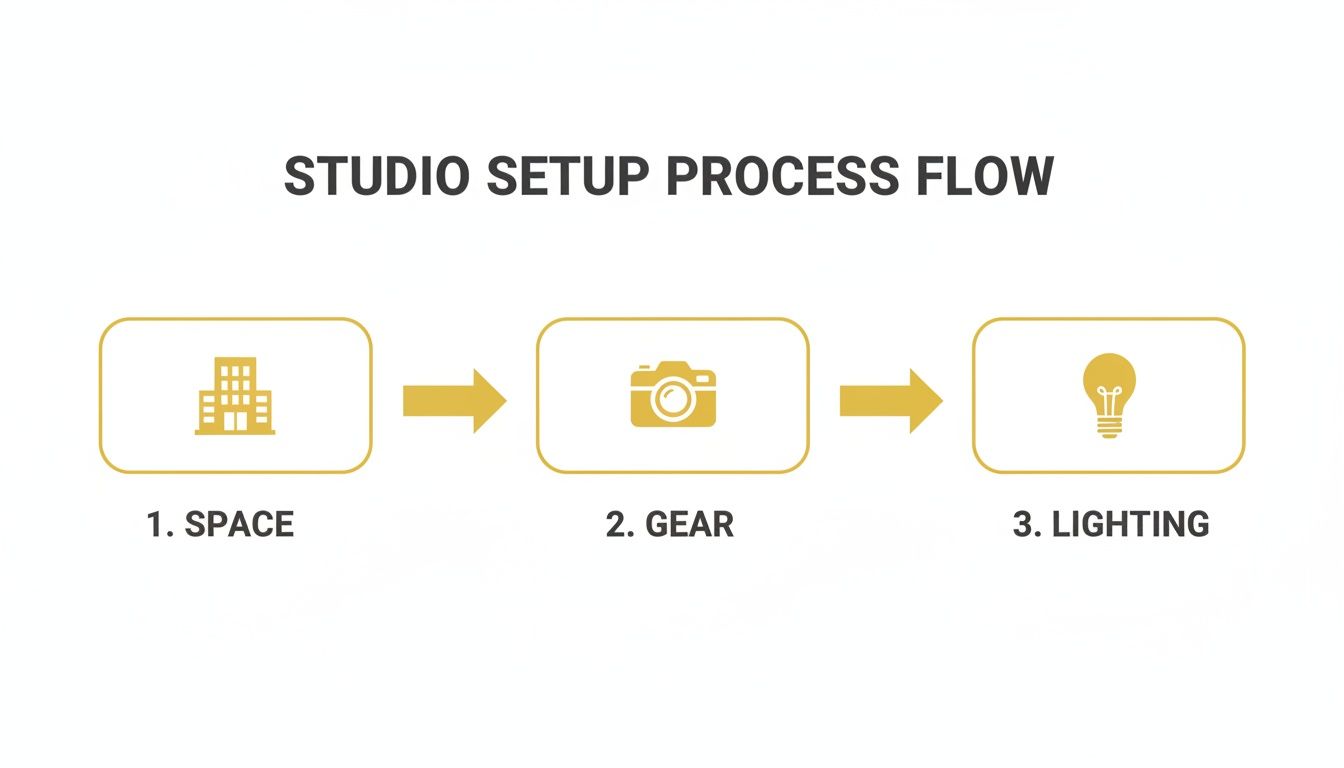
This flow really shows how those foundational costs must be covered by the pricing structure you build.
Structuring Packages to Encourage Upsells
Smart package design is a powerful sales tool. By creating tiered options—think good, better, best—you can guide clients toward the choice that makes the most sense for them and for your bottom line. The trick is to make the middle or top-tier package the most appealing in terms of value.
Your pricing isn't just a number; it's a communication tool. It tells clients about the quality of your work, the level of your service, and the value of the experience you provide. Price with confidence.
Portrait sessions, which can run anywhere from $175 to $1,500, are an amazing source of consistent income. They're a much more accessible entry point for clients than, say, a wedding. With trends showing younger people waiting longer to get married, some photographers have seen their portrait bookings jump by as much as 35%. You can see more compelling photography industry statistics on behindmud.com.
Finally, remember that your pricing isn't set in stone. As your skills grow and demand for your work increases, your rates should, too. Raising prices can feel nerve-wracking, but it's a non-negotiable part of growing a successful business. If you need help navigating that conversation, we've put together a guide on how to create a price increase announcement in our detailed article. A profitable studio is built on a pricing strategy that truly values your art while keeping the business healthy.
Crafting an Unforgettable Client Experience
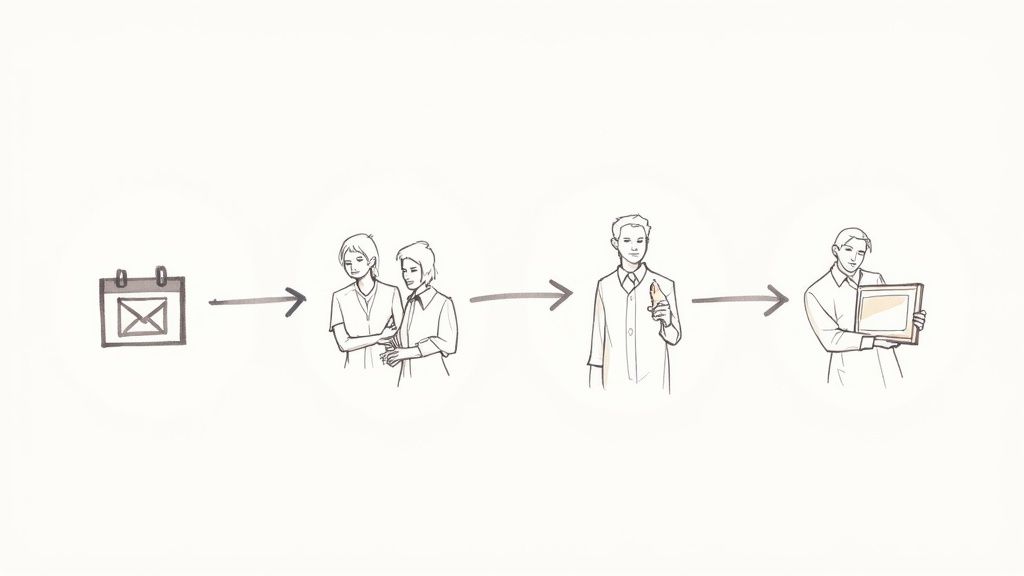
A stunning portfolio might get clients in the door of your portraiture photography studio, but a truly exceptional experience is what turns them into raving fans who send all their friends your way. The client journey is every single touchpoint, from the first email they send to the moment they're unboxing their finished portraits.
When you nail this process, it does more than just make people happy. A seamless, professional, and personal workflow justifies your premium pricing and builds a word-of-mouth reputation that no amount of marketing can buy. This isn't about luck; it's about designing an intentional system to guide every client through a predictable, high-end experience.
Systematizing Your Client Workflow
Let's be honest: running a studio on scattered emails, DMs, and a messy spreadsheet is a recipe for disaster. Important details get missed, communication looks unprofessional, and you spend more time on admin than you do behind the camera. This is where a Client Management System (CMS), often called a CRM, becomes non-negotiable for any serious studio owner.
These platforms are your central command center. They automate everything from initial inquiry responses and follow-ups to sending out contracts and invoices. This frees up dozens of hours a month and, more importantly, guarantees that every single client receives the same prompt, professional communication.
A well-implemented CRM does more than just organize your business; it elevates the client's perception of your professionalism. When booking is easy and communication is clear, clients feel confident in their investment before they even step into your studio.
Many modern platforms designed for creatives, like Kejoola, even roll booking calendars, client portals, and website management into a single, cohesive package. A client can go from your website to scheduling their session, signing their contract, and paying the retainer without a single back-and-forth email. It’s the smooth, modern onboarding they expect.
To find the right fit for your studio, you need to compare what's out there. Each platform has its own strengths, whether it's all-in-one simplicity or powerful automation features.
Client Management Software Comparison
| Software | Best For | Key Features | Pricing Model |
|---|---|---|---|
| HoneyBook | All-in-one client flow management for solo photographers and small studios. | Proposals, invoices, contracts, scheduling, and automation in one platform. Strong mobile app. | Subscription (Monthly/Annual) |
| Studio Ninja | Photographers who want a simple, intuitive interface with powerful workflow automation. | Customizable workflows, client portal, automated emails, lead tracking, and Xero integration. | Subscription (Monthly/Annual) |
| Dubsado | Highly customizable workflows and forms for studios with complex processes. | Advanced workflow automation, custom-branded portals, form builders, and bookkeeping features. | Subscription (Monthly/Annual) |
| Sprout Studio | Photographers seeking an integrated solution for galleries, sales, and studio management. | Online galleries, proofing, album design, invoicing, contracts, and email marketing. | Subscription (Monthly/Annual) |
Choosing the right software from the start saves you the massive headache of migrating systems later on. Take advantage of free trials to see which one feels most intuitive for your specific workflow.
The Power of the Pre-Session Consultation
The consultation is arguably the most crucial conversation you'll have with a client. This is your chance to pivot from being just another photographer to becoming their trusted creative partner. You get to dig into their vision, calm any anxieties they have about being photographed, and set crystal-clear expectations.
Whether it’s in person over coffee, on a video call, or on the phone, this meeting is where the magic starts. Your agenda should include:
- Vision & Goals: Get to the "why" behind the photos. Are these for a corporate headshot refresh, a once-in-a-lifetime family heirloom, or a personal branding campaign?
- Style & Wardrobe: This is where you provide real value. Guide them on what to wear to create the look they’re after. A simple mood board or style guide can make all the difference.
- Logistics: Lock in the final details—date, time, location, and who/what to bring. This is your moment to answer any lingering questions and eliminate all uncertainty.
This one conversation builds incredible rapport and ensures you’re both on the exact same page before the camera even comes out of the bag.
Guiding a Memorable Photoshoot
Let’s face it, most people are not naturally comfortable in front of a camera. They often feel awkward or self-conscious. Your number one job during the shoot is to create a relaxed, comfortable, and empowering atmosphere where their true personality can shine.
This has very little to do with rigid, technical posing and everything to do with gentle, confident direction.
Instead of a flat "now, smile," try prompts that bring out genuine emotion. For a couple, you might ask them to quietly tell each other about their favorite memory together. For a business owner, you could ask them to think about the moment they landed their biggest client. Your own calm, confident energy is contagious. When you're in control and having fun, they will be too.
The Impact of the Post-Session Reveal
How you deliver the final images is the grand finale of the entire client experience. Just dropping a link to a gallery in their inbox is a huge missed opportunity and feels anticlimactic after all the buildup. A curated reveal session—either in your studio or over a guided screen-share call—adds immense perceived value.
This dedicated meeting allows you to present their best images as a powerful, emotional story, often in a slideshow set to music. You're there to guide them through the selection process, offer your expert opinion on which images would look best as a large canvas or in an album, and share in their excitement. This personal touch not only reinforces the value of your art but almost always leads to higher sales of prints, wall art, and albums. It’s the perfect, high-impact conclusion to an unforgettable journey.
Marketing Your Studio to Attract Ideal Clients
So, you've got a beautifully equipped studio. That's a fantastic start, but it's only half the battle. Now comes the real work: filling your calendar with the clients you actually want to work with. For a local business like a portraiture photography studio, this means a smart, modern marketing approach laser-focused on attracting people right in your neighborhood.
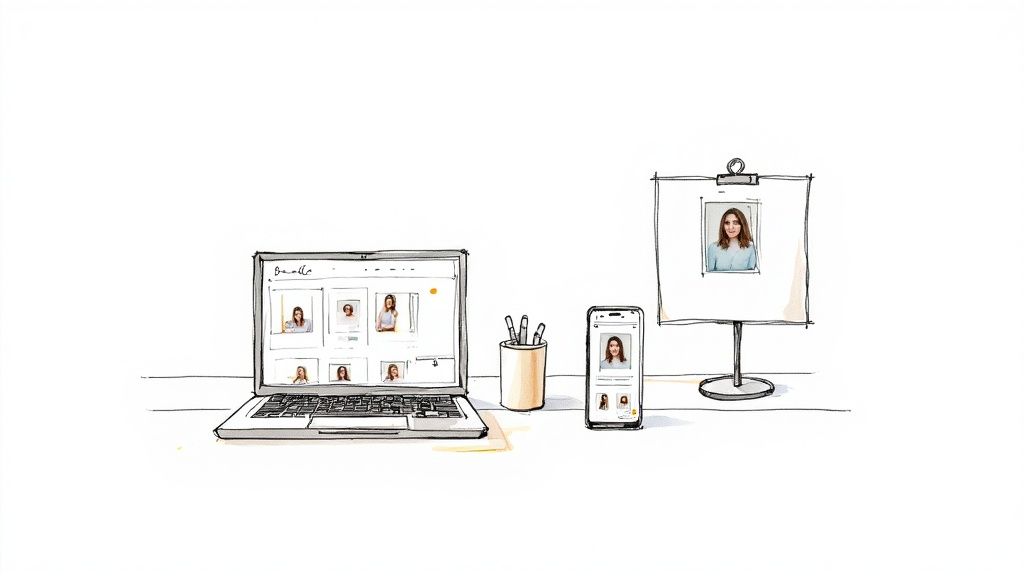
This goes way beyond just posting pretty pictures on Instagram. It's about building a solid digital footprint that gets you seen, curating a portfolio that speaks directly to your ideal customer, and creating strategic local partnerships that become a consistent source of referrals.
Dominate Local Search with SEO
For any studio with a physical address, local Search Engine Optimization (SEO) is hands-down your most powerful tool for getting clients. Think about it. When someone in your city searches for "family portrait photographer" or "professional headshots near me," you absolutely need to be at the top of that list.
Your website and your Google Business Profile (GBP) are the twin pillars of this strategy. A well-optimized website, like those built on platforms such as Kejoola, handles the technical heavy lifting from day one. This means your site will load quickly, look great on a phone, and use the right keywords and headings in your copy.
But your GBP is just as crucial. It’s that business listing that pops up in Google Maps and the local search results. A complete and active profile can give your visibility a massive boost.
To get your Google Business Profile working for you:
- Fill Out Everything: Don't skip a single section. List your business hours, address, phone number, and a detailed list of services with meticulous care.
- Show Off Your Space (and Work): Regularly upload high-quality photos of your studio, your best portraits, and some behind-the-scenes shots.
- Get Those Reviews: Make a habit of encouraging every happy client to leave a review. Positive feedback is a huge ranking factor and provides powerful social proof.
- Answer Questions Before They're Asked: Use the Q&A feature to proactively answer common questions about your sessions, pricing, or studio.
Build a Portfolio That Sells
Your portfolio isn't just a gallery of your greatest hits; it’s a finely-tuned sales tool designed to attract a very specific type of client. If your goal is to book high-end corporate headshots, your portfolio better be packed with sharp, professional images of executives, not casual snapshots of families in the park.
A great portfolio acts as a filter. It shouldn't try to appeal to everyone. Its job is to make your ideal client feel like they've found the perfect photographer while gently telling the wrong clients that you might not be the right fit.
This focused approach clarifies your marketing message and instantly establishes you as an expert in your niche. It tells potential clients you understand their world and can deliver exactly what they’re looking for.
Leverage Content and Social Media Marketing
For photographers, content marketing is all about showing, not just telling. A blog on your website is a fantastic way to do this, and it has the added benefit of boosting your SEO.
Think about writing articles that your clients would actually find useful:
- Client Stories: Turn a recent session into a case study. Detail the client's goals, talk about the process, and showcase the incredible final portraits.
- Helpful Guides: Create posts like "What to Wear for Your Family Portrait Session" or "How to Prepare for Your Headshot." This provides genuine value and positions you as the expert.
- Behind-the-Scenes Peeks: Give people a glimpse into your world. Show how you set up a lighting scheme or how you work with clients to get those genuine, relaxed expressions.
Visual platforms like Instagram are a natural home for your work. Use your best images, research relevant local hashtags, and write captions that connect with your audience. For a deeper dive into keeping your schedule full, you can get fully-booked online by reading our detailed guide.
Forge Strategic Local Partnerships
Never underestimate the power of a good referral. Collaborating with other local businesses can open up a steady stream of new clients who are already warmed up to your services. Just think about other businesses your ideal clients frequent.
- Boutiques & Salons: Offer to do headshots for their staff at a discount. In return, they can recommend your services to their clientele.
- Wedding Planners & Venues: If you also dabble in weddings, these relationships are gold. They can send engagement and pre-wedding portrait sessions your way.
- Corporate Coaches & Business Consultants: Partner with them to offer a bundled service that includes professional branding photos for their clients.
The demand for what you do is huge. Portrait photography generates a staggering $20.6 billion each year, accounting for almost 20% of all professional specializations. The industry is thriving because a skilled photographer offers a level of quality and personalization a smartphone simply can't touch. You can read more about the current state of the photography market in these insightful statistics. By combining a powerful local digital presence with smart, strategic partnerships, your studio can claim its piece of this thriving market.
Answering the Tough Questions About Starting a Portrait Studio
When you're first getting started, the big picture is exciting, but it's the small, nagging questions that can really hold you back. I've been there. You've got the passion, but the practicalities feel overwhelming. Let's tackle some of the most common hurdles that new studio owners face.
Think of this as a conversation about the real-world stuff—the things that come up after you've read the business books and started plugging in the lights. From figuring out what gear actually matters to landing that very first person willing to pay you, let's clear the air.
What’s the Absolute Minimum Gear I Need to Get Started?
It’s tempting to drool over massive gear lists, but that’s a quick way to drain your bank account before you even open your doors. Forget the fancy multi-light kits for now. Your goal is to build a "minimum viable studio" that delivers professional, high-quality results from day one.
Here’s what you truly need to get going:
- One Good Light: I'd strongly recommend a single strobe (or flash) over a continuous light. The power and ability to freeze motion give you so much more control and create that crisp, professional look.
- One Large Modifier: Your first modifier should be something big and soft, like an octabox or a large softbox. Why? A larger light source wraps your subject in flattering light, hiding imperfections and creating a much more pleasing portrait.
- A Solid Light Stand: This is not the place to cheap out. A flimsy stand is a disaster waiting to happen. Invest in something sturdy to protect your gear and, more importantly, your clients.
- A Simple Backdrop: A roll of white or grey seamless paper is the most versatile starting point you can buy. Honestly, even a clean, neutral-colored wall will work perfectly when you're just starting out.
That's it. With just your camera and these four items, you have the power to create an incredible variety of professional lighting setups.
How Do I Actually Find My First Paying Clients?
This is the big one, isn't it? Getting those first few paying clients is all about building momentum and proving you can deliver. Your initial push should be personal and focused on showcasing your skills.
A great way to start is by offering a very limited number of "portfolio-building" sessions. These aren't freebies; they're sessions offered at a seriously reduced rate to a select group of people. Think about targeting friends, family, or even local business owners who you think would make great subjects.
The real objective of these first shoots isn't just the cash. It's about generating a small but killer portfolio and collecting genuinely enthusiastic testimonials. These are the assets you'll trade on to attract your first full-paying clients.
Once you have a handful of stunning images and some glowing reviews under your belt, you can launch your official pricing with confidence and start marketing your studio through your website and local channels.
Should I Really Specialize in Just One Type of Portrait?
I know, niching down feels counterintuitive. Won't you be turning away business? In reality, specializing is one of the smartest business moves you can make. While it's fine to experiment at the beginning, deciding to focus on a specific area—like corporate headshots, newborn sessions, or moody fine art portraits—is the key to long-term growth.
When you specialize, a few powerful things happen:
- You Become the Go-To Expert: You're not just another photographer; you're the headshot person or the newborn specialist. This deep expertise is something clients actively seek out.
- Your Marketing Gets Way Easier: Suddenly, your message is sharp and clear. You know exactly who you're talking to and where to find them online or in your community.
- You Can Charge More: Experts command higher prices than generalists. Period. Your specialization is a mark of authority, and people will pay for that perceived value.
Choosing a niche doesn't mean you're forbidden from ever shooting anything else. It just means you're building your brand and marketing your business around a single, powerful identity. That focus is what makes a studio truly profitable.
Ready to build a professional online presence for your new studio? Kejoola gives you an AI-powered website, booking system, and client portal—all in one place. Launch a stunning, SEO-optimized site in minutes and let clients book themselves 24/7. Start your 14-day free trial at https://kejoola.com.