11 Client Communication Best Practices to Streamline Your Service Business
This guide moves beyond generic advice to provide a definitive checklist of 11 client communication best practices, designed to streamline operations and enhance professionalism.
Josh · Jan 5, 2026 · 20 min read

- client communication
- customer service
- small business
- automation
- client management
Juggling texts, DMs, and endless phone tag isn't just inefficient—it's actively costing your service business clients and revenue. Missed messages lead to lost bookings, inconsistent information creates frustration, and a lack of clear policies results in costly no-shows. In a competitive market, exceptional service isn't a bonus; it's the baseline. The difference between a thriving business and a struggling one often comes down to mastering the art of client interaction.
This guide moves beyond generic advice to provide a definitive checklist of 11 client communication best practices. These strategies are engineered to fix the systemic issues that undermine growth and profitability. We will cover specific, actionable frameworks you can implement immediately to create a more efficient and professional operation.
From automating confirmations that slash no-show rates to creating secure client portals that build unshakable trust, these tactics are designed to help you streamline operations, enhance professionalism, and foster the kind of loyalty that turns one-time clients into lifelong advocates. You will learn how to establish clear response-time SLAs, develop a coherent multi-channel strategy, and build feedback loops that drive continuous improvement. Let's dive into the systems that will transform your communication from a liability into your greatest asset.
1. Centralized Communication Hub
Fragmented communication is a significant operational risk for service businesses. When conversations happen across text messages, social media DMs, multiple email inboxes, and handwritten notes, vital details inevitably get lost. A centralized communication hub consolidates every client interaction into a single, accessible platform, creating a comprehensive and chronological record for each customer.
This unified system is a cornerstone of effective client communication best practices because it ensures consistency and reliability. Every team member can access the same information, from appointment history and specific requests to past feedback and payment status. This eliminates the "let me check with someone else" delay, empowering your team to provide informed, immediate, and personalized service.
For instance, platforms like Kejoola integrate a client portal where all messages, booking confirmations, and internal notes are stored together. A fitness studio using such a system can instantly see a client’s past injuries, preferences, and attendance history before a session. Similarly, a beauty salon can track a client’s color formulas and service history, ensuring any stylist can deliver a consistent experience.
Implementation and Key Actions:
- Establish Protocols: Define clear team guidelines on what information must be logged (e.g., all client requests, post-service feedback) and how quickly it should be entered.
- Utilize Templates: Create and use templates for common interactions like appointment confirmations, reminders, and follow-ups to maintain brand consistency and save time.
- Daily Audits: Assign a team member to conduct a brief daily review of the hub to catch any unread messages or unresolved queries, ensuring nothing falls through the cracks.
Adopting a centralized hub transforms client communication from a reactive, chaotic process into a streamlined, proactive asset that builds trust and operational efficiency.
2. Automated Confirmation and Reminder Systems
Manual follow-ups are a significant drain on time and resources, yet they are crucial for minimizing no-shows and client confusion. Automated confirmation and reminder systems solve this by instantly sending all necessary appointment details upon booking and dispatching timely follow-ups without any manual intervention. This proactive approach is a core component of effective client communication best practices, as it provides clients with clarity and keeps your service top-of-mind.
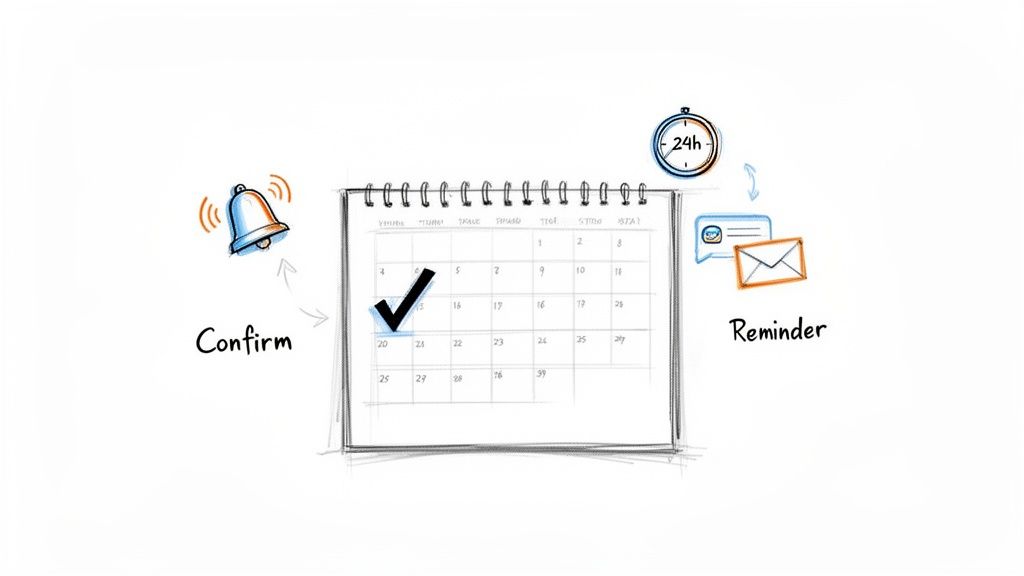
These systems ensure clients receive essential information like location, pricing, preparation instructions, and cancellation policies immediately. More importantly, reminders sent at strategic intervals, such as 48 or 24 hours beforehand, dramatically reduce no-show rates. For example, medical practices have successfully cut no-shows from 15% to 8% using automated reminders. Platforms like Kejoola build this functionality directly into their booking systems, allowing service businesses to secure revenue and optimize their schedules effortlessly.
Implementation and Key Actions:
- Optimize Reminder Timing: Test different reminder windows (e.g., 72, 48, and 24 hours) to identify what works best for your client base. Some services may even benefit from a one-week reminder.
- Personalize Your Messages: Use merge tags to include the client's name, service provider, and appointment details. Personalized communication feels less robotic and is more likely to be read.
- Include Actionable Links: Embed direct links for rescheduling or canceling in every reminder. This empowers clients to manage their appointments proactively, freeing up your schedule for other bookings. You can learn more about how to send a reminder email on kejoola.com.
- Track Key Metrics: Monitor your no-show and late cancellation rates before and after implementation. Use this data to validate the system's effectiveness and make data-driven adjustments to your reminder strategy.
3. Clear and Transparent Pricing Communication
Ambiguity around pricing is a major source of client friction and a direct path to lost trust. Proactively communicating all costs before a booking is confirmed eliminates surprise charges, significantly reduces billing disputes, and demonstrates integrity. This upfront transparency is a critical component of client communication best practices because it empowers clients to make informed decisions confidently, fostering a relationship built on respect and clarity from the very first interaction.
When clients can clearly see the cost of a service, potential add-ons, and relevant policies without having to ask, it removes a significant barrier to booking. For example, a personal training studio that displays package pricing and per-session rates directly on its booking page allows potential clients to self-qualify based on their budget. Similarly, hair salons that list specific prices for cuts, color, and conditioning treatments prevent sticker shock at the register. Platforms like Kejoola facilitate this by showing a detailed cost breakdown and total price before a client finalizes their appointment, ensuring there are no misunderstandings.
Implementation and Key Actions:
- Display Pricing Prominently: Use your booking platform’s features to ensure service costs are clearly visible. Create tiered options (e.g., standard, premium) to cater to different budgets and clearly define what is included in each.
- Detail All Policies: Your booking interface and confirmation emails must clearly state your cancellation, no-show, and rescheduling policies, including any associated fees. This minimizes disputes later on.
- Create a Pricing FAQ: Develop a dedicated section on your website or booking page that answers common questions about pricing, payment methods, and packages to reduce back-and-forth inquiries. For guidance on handling price adjustments, see our detailed guide on announcing a price increase.
4. Responsive and Timely Communication
In today's fast-paced digital environment, client expectations for response times are higher than ever. Delays can lead to frustration, missed booking opportunities, and a perception of unreliability. Responsive and timely communication, ideally within a 2-4 business hour window, is a critical component of professional service delivery. It demonstrates that you value your client’s time and are organized enough to manage their needs efficiently.
This practice isn't just about providing immediate solutions; it's about acknowledgment. Even a quick automated reply confirming receipt of a message and setting a realistic timeline for a full response can significantly improve the client experience. This simple act manages expectations and prevents clients from feeling ignored or seeking alternatives. Effective client communication best practices demand a proactive approach to managing inquiry queues and acknowledging every touchpoint promptly.
For example, a massage studio that responds to booking inquiries within two hours is far more likely to convert that lead than one that waits a full day. Similarly, tutoring services can use automated responses during class hours to confirm they received a message and will follow up personally within four hours. Platforms like Kejoola support this with instant booking confirmations, providing immediate acknowledgment and peace of mind.
Implementation and Key Actions:
- Set and Communicate SLAs: Clearly state your service level agreement (SLA) for response times on your website and in automated replies to manage client expectations from the start.
- Leverage Templates: Create pre-written templates for common inquiries (e.g., pricing, availability, service details) to enable faster, yet personalized, replies.
- Assign Clear Ownership: Designate a specific team member or a rotating schedule for monitoring all communication channels during business hours to ensure nothing is missed.
5. Personalization and Client-Specific Communication
Tailoring interactions to individual client history, preferences, and needs is a powerful way to build strong, lasting relationships. Effective personalization goes beyond simply using a client's first name; it involves remembering past conversations, acknowledging specific preferences, and proactively anticipating their needs based on previous service patterns. This level of detail makes clients feel seen, understood, and genuinely valued.
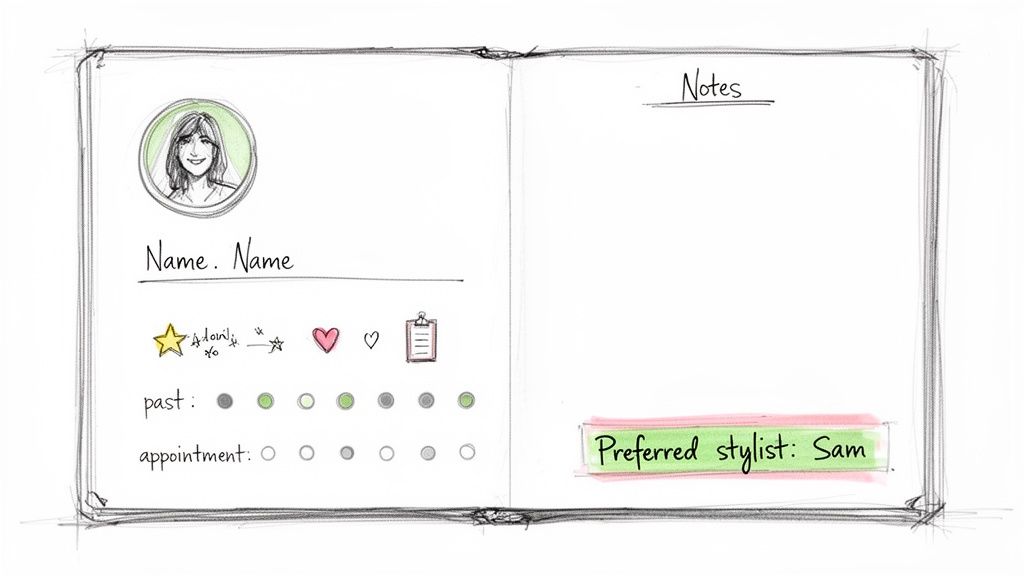
This practice is central to outstanding client communication best practices because it transforms a transactional service into a personalized experience. For instance, a pet grooming business that remembers a dog’s anxiety triggers and preferred handling techniques can provide a safer, more positive experience. Similarly, a fitness trainer who tracks a client's progress toward a specific goal and references it in check-ins demonstrates a deep commitment to their success. These small, thoughtful details are what foster loyalty and encourage repeat bookings.
Implementation and Key Actions:
- Standardize Client Notes: Create a consistent template for client profiles to capture key information like preferences, allergies, goals, and important dates. This ensures every team member records and accesses information uniformly.
- Leverage a Client Portal: Use a system where you can store detailed client history and notes. Before each appointment, conduct a quick review of the client's profile to refresh your memory on important details.
- Proactive Engagement: Analyze a client's service history to suggest timely follow-up appointments or complementary services. For example, if a client gets a specific hair color treatment every eight weeks, send a personalized booking reminder around week seven.
6. Transparent Cancellation and Rescheduling Policies
Unclear cancellation policies are a primary source of client friction and lost revenue. A well-defined and transparent policy sets professional boundaries, protects your income from last-minute changes, and manages client expectations from the very beginning. This proactive approach is a vital component of effective client communication best practices, as it prevents misunderstandings and demonstrates respect for both the client's time and your own.
The key is to communicate these terms multiple times, starting from the moment of booking. Integrating the policy directly into the booking workflow, confirmation emails, and automated reminders ensures clients are fully aware of the rules before a conflict arises. For example, a personal training studio might implement a tiered fee system: no charge for cancellations made more than 24 hours in advance, but a 50% fee for changes within that window. This structure feels fair while still protecting the business.
Platforms like Kejoola can automate the enforcement of these rules, allowing you to set custom windows for free rescheduling or cancellation. This removes the emotional labor of manually enforcing your policy and ensures consistent application for every client, which builds trust and perceived fairness. By being upfront and clear, you transform a potential point of conflict into an opportunity to reinforce your business's professionalism. For more detailed guidance, see this letter of cancellation template on kejoola.com.
Implementation and Key Actions:
- Prominent Display: Feature your policy directly within your online booking tool so clients must acknowledge it before confirming an appointment.
- Use Simple Language: Avoid legal jargon. Clearly state the notice period required (e.g., "24 hours"), the associated fee, and any exceptions.
- Automate Reminders: Include a brief, friendly reminder of the cancellation policy in all automated appointment reminders sent via email or SMS.
- Offer Flexibility: Frame the policy positively. Instead of "Cancellations within 24 hours are charged," try "Free rescheduling is available with at least 24 hours' notice."
- Review and Adapt: Periodically analyze your no-show and cancellation data. If rates are high, your policy may need adjustment to better suit your clientele's behavior.
7. Proactive Client Outreach and Engagement
Effective client communication extends beyond simply responding to inquiries. Proactive outreach involves initiating contact to strengthen relationships, gather feedback, and drive repeat business. Instead of waiting for a client to reach out, you anticipate their needs and demonstrate a genuine investment in their satisfaction, transforming a transactional service into a long-term partnership.
This approach is one of the most powerful client communication best practices for building loyalty in competitive markets. It shows clients they are valued beyond their last appointment. For example, a spa could send a post-massage check-in email asking about their experience, or a pet groomer might contact inactive clients with a seasonal grooming package. This strategy uncovers potential issues before they become complaints and keeps your business top-of-mind.
A coaching business, for instance, could celebrate client milestones like achieving a fitness goal, reinforcing the value delivered. This type of personalized engagement makes clients feel seen and appreciated, which is a key driver of retention.
Implementation and Key Actions:
- Create an Outreach Calendar: Develop a 30-60-90 day communication plan for new clients to welcome them, check in, and offer follow-up services.
- Automate Post-Service Follow-ups: Use your booking system to automatically send a "How did we do?" message 24-48 hours after a service to gather immediate feedback.
- Launch Win-Back Campaigns: Identify clients who have not booked in over 90 days and send them a personalized offer or a simple "we miss you" message to encourage their return.
- Personalize Your Messaging: Reference specific services or past results in your outreach. For example, "Hope you're still enjoying the results from your balayage last month!"
8. Professional and Brand-Consistent Messaging
Every client interaction is an opportunity to reinforce your brand identity and build trust. Professional and brand-consistent messaging ensures that all communications, from automated appointment confirmations to promotional emails, reflect your unique brand voice, values, and level of quality. Inconsistent messaging, such as using an overly casual tone when a formal one is expected or having typos in an invoice, undermines credibility and can erode client confidence.
This practice is a key component of effective client communication best practices because it shapes perception and manages expectations. A luxury spa, for instance, should use elegant, sophisticated language in all touchpoints to align with its premium services. Conversely, a high-energy personal training studio might adopt an encouraging and motivational tone. Consistency across all channels ensures clients receive the same brand experience whether they are on your website, reading an email, or receiving an SMS reminder.
Platforms like Kejoola allow businesses to customize website themes and communication templates, ensuring that the brand’s visual and verbal identity remains coherent. This alignment is not just aesthetic; it’s a strategic tool for building a recognizable and reliable brand that clients trust and return to.
Implementation and Key Actions:
- Document Brand Voice: Create a simple guide outlining your brand’s tone, key phrases, and formatting rules. Share it with your entire team.
- Develop Templates: Build a library of pre-written templates for common communications like booking confirmations, payment reminders, and follow-ups.
- Proofread Everything: Implement a mandatory proofreading step before any message is sent, especially for first-time client interactions or mass communications.
- Use Professional Signatures: Ensure all team members use a standardized, professional email signature that includes your business name, contact information, and logo.
9. Active Listening and Feedback Integration
Effective client communication is a two-way street, not a broadcast. It requires actively listening to client needs and concerns, then demonstrating that you've integrated their feedback. This practice transforms a transactional relationship into a collaborative partnership, where clients feel heard, valued, and invested in your success. Active listening involves asking clarifying questions, paraphrasing to confirm understanding, and creating formal channels for feedback.
This approach is one of the most powerful client communication best practices because it directly fuels service improvement and builds unshakeable loyalty. When clients see their suggestions visibly implemented, they become advocates for your brand. For example, a fitness coach who asks about a client's specific barriers to achieving their goals and then adjusts the program accordingly shows genuine care. Similarly, a hair salon that asks, "What would make this appointment perfect for you today?" before starting a service sets a tone of personalized attention.
Implementation and Key Actions:
- Ask Open-Ended Questions: Instead of "Are you happy with the service?", ask "What is one thing we could do to improve your experience next time?" This invites detailed, actionable responses.
- Create a Feedback System: Utilize surveys, post-appointment follow-up emails, or a dedicated section in your client portal to systematically collect and track feedback. Platforms like Kejoola allow clients to add notes and preferences directly to their profile, creating a permanent record.
- Respond and Act Visibly: Acknowledge feedback promptly. More importantly, when you implement a suggestion, announce it. Send an email saying, "We heard you! Based on your feedback, we've now..."
By embedding active listening and feedback loops into your operations, you not only enhance service quality but also create a customer-centric culture that drives retention and referrals.
10. Accessible Multi-Channel Communication Options
Relying on a single communication channel, like phone-only support, creates friction and alienates clients who prefer different methods. Accessible multi-channel communication means offering clients multiple ways to connect with you, such as phone, email, SMS, and in-app messaging. This approach meets diverse preferences and ensures no client feels ignored because their preferred contact method is unavailable.
This strategy is fundamental to modern client communication best practices because it puts the client in control of how they interact with your business. A younger client may prefer a quick text for booking, while a corporate client might need detailed email correspondence. By accommodating these preferences, you reduce barriers to booking and improve overall satisfaction. Businesses that fail to offer this flexibility risk losing customers to more adaptable competitors.
For example, a medical office enhances accessibility by allowing appointment scheduling via phone calls, a web form, or a secure patient portal. Similarly, a busy salon can capture more bookings by accepting them via phone, text, its website, or even direct messages on social media. Tools like Kejoola help manage this by consolidating inquiries from various channels into a unified inbox, preventing messages from getting lost.
Implementation and Key Actions:
- Prioritize Based on Demographics: Analyze your client base to determine which channels are most popular. Younger clients often prefer text and app-based messaging, while others may favor email or phone.
- Set Channel-Specific Expectations: Clearly communicate expected response times for each channel. Use auto-responders for less frequently monitored channels like social media DMs to direct clients to faster options if needed.
- Collect Contact Preferences: During onboarding, ask clients for their preferred communication method and use that information to personalize your outreach for appointment reminders and follow-ups.
- Train Your Team: Ensure all staff members who handle client interactions are proficient in every supported channel, providing a consistent and high-quality experience regardless of how the client contacts you.
11. Create a Clear Escalation Path
Not every client issue can be resolved at the first point of contact. A well-defined escalation path provides a structured process for handling complex, sensitive, or unresolved problems, ensuring they receive the appropriate level of attention without causing client frustration. This framework is a critical component of professional client communication best practices, demonstrating that your business is prepared, organized, and committed to satisfactory resolutions.
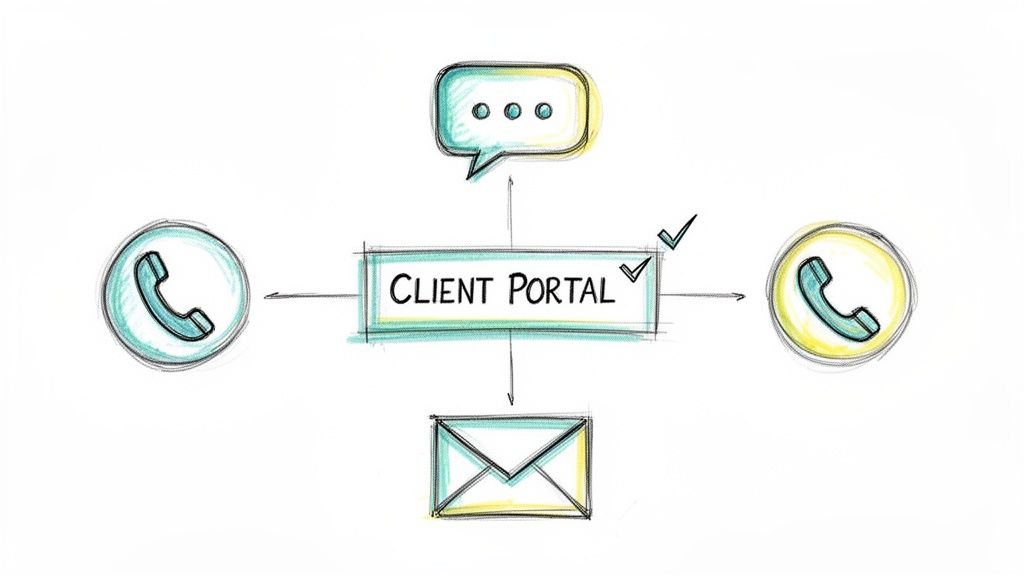
An escalation path prevents situations where an unhappy client feels ignored or passed around. It empowers your frontline team by giving them clear instructions on when and how to elevate a concern to a manager, senior technician, or business owner. For example, a spa's front desk staff might be trained to handle scheduling errors, but they would escalate a complaint about an allergic reaction directly to the spa director. This ensures the issue is managed by someone with the authority and expertise to offer a definitive solution, such as a full refund or a complimentary corrective service.
Implementation and Key Actions:
- Define Tiers of Support: Create a simple hierarchy (e.g., Tier 1: Frontline Staff, Tier 2: Team Lead/Manager, Tier 3: Owner/Specialist) and specify which types of issues belong to each tier.
- Document the Process: Write down the exact steps for an escalation, including who to contact, what information to provide (client name, issue summary, steps already taken), and the expected response time.
- Empower Frontline Staff: Train your team to recognize when an issue is beyond their scope and assure them that escalating a problem is a sign of responsible service, not failure.
A transparent escalation process turns a potentially negative experience into an opportunity to showcase your business's commitment to client satisfaction and problem-solving.
11-Point Client Communication Best Practices Comparison
| Item | Implementation Complexity 🔄 | Resource & Efficiency ⚡ | Expected Outcomes 📊 | Ideal Use Cases 💡 | Key Advantages ⭐ |
|---|---|---|---|---|---|
| Centralized Communication Hub | Medium 🔄 — platform setup + team adoption | Moderate ⚡ — integrations + ongoing use | Fewer missed messages; faster issue resolution | Multi-staff service teams (salons, studios) | Single source of truth; improved coordination |
| Automated Confirmation and Reminder Systems | Low–Medium 🔄 — workflow & timing setup | Low ⚡ — automated messaging saves time | Reduces no-shows ~20–40%; fewer manual confirmations | Appointment-driven businesses (medical, salons) | Cuts no-shows; frees staff time; clearer info |
| Clear and Transparent Pricing Communication | Low 🔄 — content and display setup | Low ⚡ — minimal maintenance after setup | Fewer billing disputes; higher conversion rates | Services with add‑ons or packages | Builds trust; reduces price inquiries |
| Responsive and Timely Communication | Medium 🔄 — staff/automation + SLAs | Moderate–High ⚡ — staffing or smart automation | Higher booking conversion and satisfaction | High-touch services needing quick replies | Demonstrates reliability; prevents escalation |
| Personalization and Client-Specific Communication | Medium–High 🔄 — data capture + workflows | Moderate ⚡ — CRM use and note-taking | Increased retention and repeat bookings | Repeat clients; premium or relationship-driven services | Stronger loyalty; better upsell accuracy |
| Transparent Cancellation and Rescheduling Policies | Low–Medium 🔄 — policy creation + enforcement | Low ⚡ — automated rules reduce admin | Fewer last-minute cancellations; revenue protection | Businesses with frequent no-shows | Sets clear expectations; reduces disputes |
| Proactive Client Outreach and Engagement | Medium 🔄 — campaign planning + automation | Moderate ⚡ — content + scheduling effort | Higher repeat rates and LTV; more referrals | Retention-focused businesses (spas, coaches) | Drives re‑engagement; uncovers issues early |
| Professional and Brand-Consistent Messaging | Medium 🔄 — templates and guidelines | Low–Moderate ⚡ — template maintenance | Improved perceived quality and trust | Premium brands; professional services | Cohesive brand experience; stronger credibility |
| Active Listening and Feedback Integration | Medium 🔄 — feedback collection + actioning | Moderate ⚡ — analysis and implementation | Service improvements; authentic reviews | Businesses aiming to iterate on service | Identifies gaps; builds client advocacy |
| Accessible Multi-Channel Communication Options | Medium–High 🔄 — channel setup + monitoring | High ⚡ — multiple channels to staff/integrate | Higher reach and conversion across demographics | Diverse-clientele businesses | Meets client preferences; reduces friction |
From Chaos to Clarity: Systematize Your Client Communication
Navigating the complexities of client interactions can feel like managing controlled chaos. The strategies detailed throughout this guide, from establishing a centralized communication hub to implementing active listening and feedback integration, are not just individual tips; they are interconnected components of a robust operational system. Adopting these client communication best practices is the definitive move from a reactive, disorganized state to a proactive, professional, and scalable business model. The core principle is simple: structure creates freedom. By systematizing how you communicate, you free up mental energy and valuable hours previously lost to chasing down information, clarifying misunderstandings, and managing preventable client frustrations.
The journey begins by recognizing that every client touchpoint is an opportunity to reinforce your brand's reliability and professionalism. Think of automated confirmations and reminders not as impersonal messages, but as consistent, reliable promises kept. View a transparent cancellation policy not as a rigid rule, but as a framework for mutual respect. Each practice, from personalizing outreach to maintaining brand-consistent messaging across all channels, contributes to building a powerful asset: client trust. This trust is what transforms a one-time customer into a loyal advocate for your business, driving repeat bookings and invaluable word-of-mouth referrals. The initial effort to implement these systems pays long-term dividends in client retention and reduced administrative overhead.
Your Actionable Blueprint for Implementation
The most significant barrier to improvement is often feeling overwhelmed by the sheer number of potential changes. Instead of attempting a complete overhaul overnight, adopt a strategic, incremental approach. Your path forward can be broken down into clear, manageable steps:
- Conduct a Communication Audit: Start by mapping out your current client journey. Where do communications happen? Identify the biggest friction points. Are you constantly answering the same questions via DM? Are no-shows a persistent issue? Pinpoint the one or two areas causing the most significant pain.
- Prioritize and Implement One System: Choose your first target based on the audit. For many, the highest-impact starting point is implementing an automated booking, confirmation, and reminder system. This single change can drastically reduce no-shows and eliminate hours of manual back-and-forth scheduling each week.
- Standardize Your Messaging: As you automate, take the time to create clear, professional templates. Draft your standard confirmation email, your 24-hour reminder SMS, and your post-appointment follow-up. This ensures every client receives the same high-quality, on-brand experience, regardless of who on your team is managing the interaction.
- Establish Your Feedback Loop: The final piece is creating a mechanism to listen. Once your initial systems are in place, introduce a simple, automated feedback request. This not only provides you with crucial insights for continuous improvement but also shows clients that their voice is valued, closing the loop and strengthening the relationship.
Mastering these client communication best practices is not merely about being more efficient; it's about building a resilient business foundation. It’s about creating an operational engine that supports growth, enhances your professional reputation, and delivers an exceptional client experience every single time. By moving from scattered, manual processes to a unified, automated strategy, you are not just improving communication; you are engineering a more profitable, sustainable, and less stressful future for your business.
Ready to replace scattered spreadsheets and DMs with a single, powerful platform? Kejoola provides an all-in-one solution designed to implement these client communication best practices seamlessly, from automated bookings and reminders to a centralized client portal. Start building a more professional and efficient business today by visiting Kejoola to learn more.