Unpacking the Schedule Conflict Meaning and How to Solve It
A schedule conflict is more than a simple double-booking; it's a crack in your operational foundation. Learn what it means for your business and how to prevent it.
Josh · Dec 6, 2025 · 13 min read
- scheduling
- conflict resolution
- business management
- productivity
At its core, a schedule conflict happens when you’ve promised the same block of time to two different things. It’s a simple definition for a problem that can get complicated—fast. This isn't just about a simple double-booking; it’s a crack in your operational foundation.
The Bottleneck in Your Business Operations
Picture a schedule conflict as a sudden bottleneck on a busy motorway. One stalled car in a single lane doesn't just stop that car; it backs up traffic for miles. That's exactly what a scheduling clash does to your business—it creates a jam that stalls projects, frustrates clients, and throws your team's day into chaos.
The real schedule conflict meaning for any business is a failure to keep a promise. It could be a consultant booked for two different client calls at 10 AM or a conference room reserved by both Marketing and Sales for the same strategy session. No matter the cause, the result is identical: someone is going to be let down.
This initial breakdown rarely stays contained. It almost always kicks off a domino effect of bigger problems.
A schedule conflict is more than just a diary mix-up; it's a direct threat to your business's reliability and reputation. How you handle these clashes says a lot about your company's professionalism and how well you've actually got things under control.
The fallout can be felt almost instantly:
- Damaged Productivity: Instead of doing productive work, your team is stuck doing damage control—rescheduling, making apologies, and trying to patch things up. All of that is wasted time.
- Eroding Client Trust: When you have to cancel or postpone, clients start to see you as disorganised. That's not a perception you can afford.
- Decreased Team Morale: Nothing burns out a team faster than constant chaos. When your staff are always firefighting scheduling issues, they get stressed, frustrated, and start to check out.
Recognising these impacts is the first, crucial step toward stopping them before they start.
The Hidden Causes Behind Most Scheduling Conflicts
Spotting a schedule conflict is the easy part. The real challenge is digging deeper to find out why it happened in the first place. These clashes aren't just one-off mistakes; they're often symptoms of bigger, underlying problems in your operations. Getting to the root cause is the only way to build a schedule that doesn't constantly break.
While simple errors are sometimes to blame, the real culprits are usually systemic flaws. To truly understand the schedule conflict meaning for your business, you need to examine the interplay between your people, your tools, and your time.
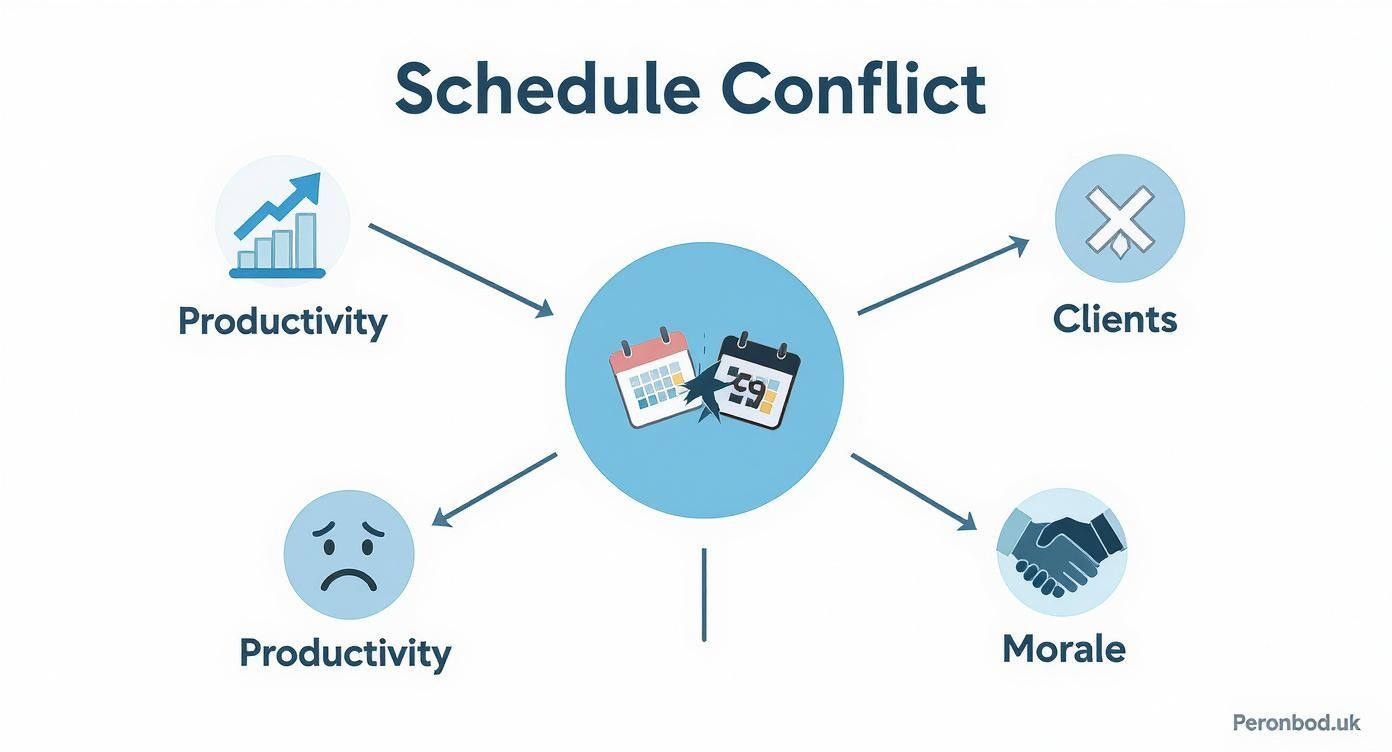
This infographic paints a clear picture of how damaging these conflicts can be.
As you can see, every single mix-up sends ripples across the business, hitting productivity, client trust, and team morale all at once. It's a chain reaction of disruption.
Common Scheduling Failure Points
Most scheduling problems boil down to a few recurring issues. Think of each one as a crack in your operational foundation—a weak spot that needs reinforcing.
-
Overlapping Commitments: This is the classic double-booking scenario where one person or resource is promised to two places at once. It’s a dead giveaway that your calendars aren't talking to each other or aren't being updated consistently.
-
Communication Breakdowns: Information silos are a huge source of conflict. A team member might confirm an appointment over the phone but forget to log it in the shared system. Before you know it, someone else has booked that same slot, creating a clash that was entirely avoidable.
-
Time Zone Blind Spots: For businesses with a distributed team or international clients, time zones are a minefield. A simple mistake—scheduling a 9 AM meeting without specifying whether it's PHT or GST—can easily lead to missed appointments, wasted time, and a lot of frustration.
A scheduling conflict is rarely an isolated event. It’s typically the end result of a weak process, poor communication, or inadequate technology.
Diagnosing Your Scheduling Bottlenecks
To fix the problem, you first need to identify exactly where your process is breaking down. The table below outlines the most common types of conflicts, what usually triggers them, and which part of your business feels the impact most.
| Conflict Type | Primary Cause | Commonly Affected Area |
|---|---|---|
| Double-Booking | Lack of a central, real-time calendar | Staff availability |
| Miscommunication | Manual updates and information silos | Client appointments |
| Time Zone Errors | Inadequate tools for global teams | International sales/support |
| Overrun/Buffer Issues | No built-in downtime between tasks | Daily team productivity |
| Resource Scarcity | Booking shared assets (e.g., room) | Project timelines |
By pinpointing which of these issues appear most often, you can stop fighting fires and start building a more resilient system from the ground up.
The Domino Effect of Unplanned Events
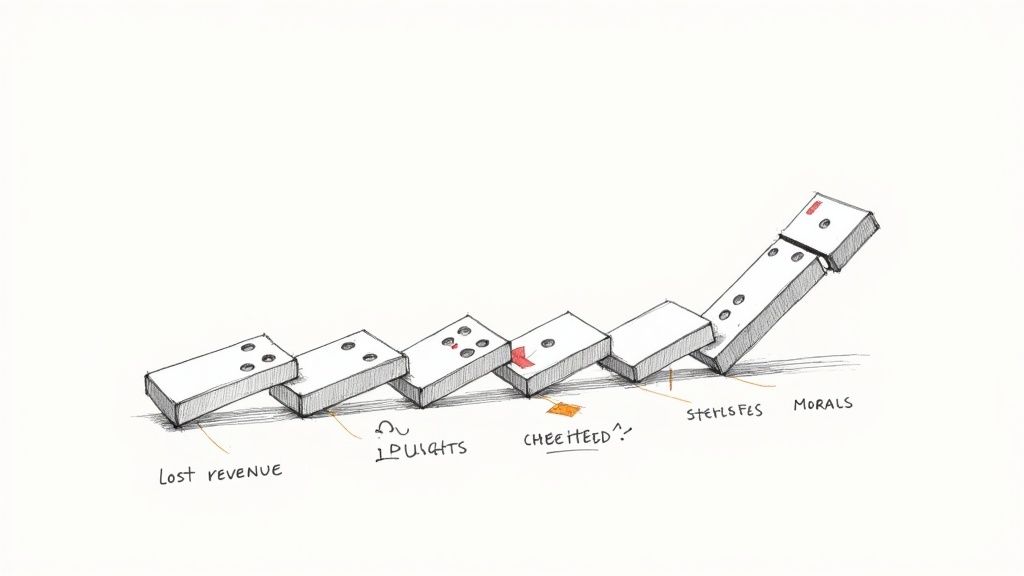
Another sneaky cause of chaos is the failure to account for overruns. When a client call goes 30 minutes over its allotted time, it doesn't just throw one person's day off. It triggers a domino effect. The next meeting starts late, which pushes back the one after that, creating a cascade of delays that can derail an entire afternoon.
Without built-in buffers, your schedule is fragile and has zero room for error. Thankfully, modern tools are designed to build that resilience for you. You can learn more about how they work in our comprehensive tab booking system guide. By correctly diagnosing these failure points, you can finally shift from a reactive mindset of fixing conflicts to a proactive one of preventing them entirely.
Analysing the True Cost of Scheduling Errors
A scheduling conflict feels like a minor hiccup, but in reality, it's an operational risk that can quietly chip away at your business. For any service-based company, these mix-ups aren't just inconvenient; they have real, measurable costs that hit both your finances and your reputation. The true schedule conflict meaning lies in the domino effect it triggers.
It starts with the obvious financial hit. Every appointment you have to cancel or project you have to delay is money walking out the door. When a client drops off because your schedule is a mess, you're not just losing that single payment—you're losing all their future business and any word-of-mouth referrals they might have given.
But honestly, the money you can count is often less damaging than the costs you can't. That’s where the real danger is.
The Slow Burn of Lost Client Trust
In the service industry, trust is everything. It's the foundation of your entire business. When you have to call a client to reschedule, you're sending a signal, whether you mean to or not: you're not reliable. That perception can be incredibly difficult to shake.
Each conflict acts like a small crack in that foundation. After enough of them, clients lose confidence and start looking elsewhere for a competitor who seems more organised and professional. This slow, quiet erosion of trust is hard to spot on a spreadsheet, but you'll feel it when the bookings dry up.
When a client experiences a scheduling conflict, they don't just see a mistake. They see a business that doesn't value their time, which is a critical blow to the client relationship.
The Hidden Toll on Your Team
The damage doesn't just radiate outwards; it creates problems inside your business, too. Constantly putting out scheduling fires creates a stressful, chaotic work environment that drains your team's energy and focus.
Think about the internal fallout:
- Wasted Admin Hours: Your team ends up spending their days making apology calls, juggling calendars, and trying to calm down frustrated clients instead of focusing on tasks that actually grow the business. It’s pure operational drag.
- Sinking Team Morale: Nobody enjoys being the bearer of bad news. Forcing your employees to constantly manage the fallout from scheduling errors leads to stress, burnout, and disengagement. In fact, studies show that workplace conflict is so draining that 23% of employees have quit a job because of it.
- Productivity Nosedives: The chaos throws a wrench in everyone's workflow. It's impossible for your team to get into a productive rhythm when they're constantly being interrupted to deal with yet another scheduling crisis.
At the end of the day, repeated scheduling mistakes aren't just mix-ups. They're a symptom of a deeper operational weakness that can seriously stunt your business's growth and threaten its long-term health.
How Systemic Disruptions Redefine Schedule Conflicts
It’s one thing to deal with a double-booking in a salon or clinic, but the term "schedule conflict" takes on a much heavier meaning when it happens on a societal scale. The consequences here aren't just about lost revenue or team stress; they can ripple through entire communities and even affect future generations.
Take the Philippine education sector, for example. Here, the meaning of a schedule conflict isn't about two appointments at the same time. It's about systemic, calendar-wide disruptions caused by massive external events like typhoons, local conflicts, or sudden changes in public policy. These create huge, unpredictable holes in the school year.
This isn't just an inconvenience. It's a genuine national crisis.
The Educational Toll of Lost Time
When the official school calendar is constantly broken, the most immediate consequence is a huge loss of learning time. It’s not just a day here or there. A recent joint report revealed a shocking statistic: 53 teaching days were lost in public schools over just one school year. That's nearly 30% of the required class time, a massive setback for millions of students.
These large-scale conflicts don't just delay lessons; they fundamentally weaken the learning process. Students are left scrambling to catch up, and the country's entire educational foundation is put at risk.
On a national level, a schedule conflict isn't just about managing time; it's about safeguarding the future. The instability directly threatens the developmental progress of an entire generation.
This large-scale example really drives home a core truth: a stable, predictable schedule is a pillar of progress. Bringing that lesson back to your own business, mastering scheduling on a smaller scale is absolutely vital. For many PH businesses, the first step is to get fully booked online with a system you can count on. When you lock down your schedule, you build a foundation for reliable service and steady growth, stopping those small conflicts before they turn into much bigger problems.
The Human Cost of Constant Schedule Instability
When you look past the day-to-day business headaches, the real schedule conflict meaning can take on a deeply personal, even life-altering dimension. Think about what happens when this instability affects a child's future. For kids growing up in conflict-affected areas of the Philippines, a disrupted schedule isn't just an inconvenience—it's a direct threat to their education, their safety, and their sense of hope.
In these regions, armed conflict can turn a predictable school calendar into a chaotic series of shutdowns and interruptions. This constant instability doesn't just create logistical problems; it causes immense psychological stress and denies children the routine they desperately need to learn and grow. It means lessons are skipped, classrooms are abandoned, and entire futures are put on hold indefinitely.
The impact isn't just anecdotal; it's measurable and deeply concerning. A report from Plan International revealed a stark statistic: among Filipino children surveyed in these conflict zones, a staggering 26.9% said they missed school specifically because of the violence. That’s nearly one in four children whose education is being actively derailed by instability. You can read more on the impact of conflict on children's education in this detailed breakdown.
When a child's schedule is chronically disrupted by conflict, the loss is not just measured in school days. It is measured in lost potential, diminished well-being, and the erosion of a community's future.
This powerful example brings a fundamental truth into sharp focus. Stable, reliable schedules are far more than a business convenience; they are a cornerstone of human progress and well-being. The chaos of a broken schedule, whether it’s happening in a small business or across an entire region, always carries a significant human cost.
A Practical Framework for Resolving and Preventing Conflicts
Knowing what a schedule conflict is isn't enough; you need a solid game plan to deal with it. The best approach is two-pronged: you need a clear process for resolving conflicts the moment they pop up, and a smarter strategy to stop them from happening in the first place.
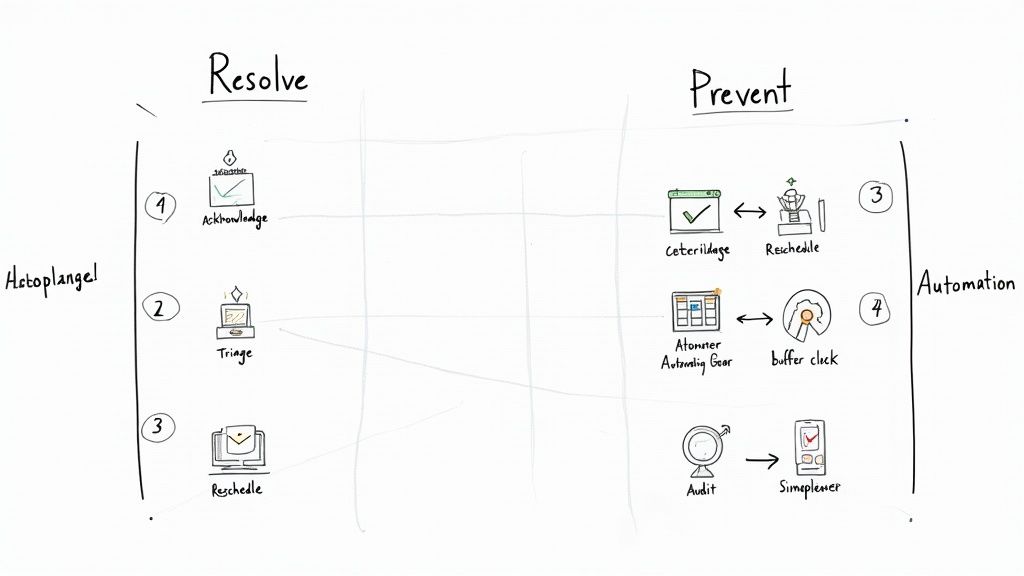
This dual focus is what turns scheduling chaos into a well-oiled machine. It moves you from constantly putting out fires to building a system that works for you, not against you.
Immediate Conflict Resolution Steps
When a double-booking happens, your response needs to be quick, calm, and professional. The immediate goal is to minimise the fallout for your client relationships and your team's sanity.
- Acknowledge and Communicate: Get in front of the problem. Tell everyone involved what's happened straight away. Honesty builds trust, even when you've made a mistake.
- Triage Priorities: You can't be in two places at once, so you have to decide. Quickly figure out which appointment is more critical based on deadlines, client value, or strategic importance. This keeps the decision logical, not emotional.
- Collaborate on a Solution: Work with the affected parties to find a way forward. This could mean rescheduling one appointment, bringing in another team member to help, or slightly adjusting what needs to be delivered.
- Reschedule and Rebuild: As soon as you agree on a new plan, get the calendars updated. A small gesture of goodwill—like a discount on their next service—can go a long way in smoothing over any frustration.
A well-handled conflict can sometimes strengthen a client relationship. It demonstrates accountability, professionalism, and a genuine commitment to making things right.
Proactive Conflict Prevention Strategies
Fixing conflicts is a must, but preventing them is where your business really starts to shine. Prevention is all about building a scheduling system that’s smart enough to avoid clashes before they ever have a chance to happen.
- Centralise Your Calendars: Ditch the scattered diaries. Use a single, shared calendar as the one source of truth for all bookings, appointments, and staff availability.
- Implement Automated Scheduling: Let technology do the heavy lifting. Software can manage bookings, send confirmations, and fire off reminders without the risk of human error. It’s a simple change with a massive impact. For more on this, check out our guide to automating Outlook scheduling emails.
- Establish Clear Booking Policies: Set firm rules. Define how far in advance clients can book and automatically add buffer times between appointments so one meeting running late doesn’t derail the entire day.
- Conduct Regular Schedule Audits: Every so often, take a hard look at your calendar. Are there patterns? Recurring bottlenecks? Use that insight to fine-tune your process and make it even more robust.
Answering Your Top Questions About Schedule Conflicts
To wrap things up, let's tackle a few of the most common questions people have when they're stuck trying to sort out a scheduling mess.
What’s the First Thing I Should Do When a Schedule Conflict Pops Up?
Communicate. Immediately. The moment you spot a double-booking or an overlap, your first job is to let everyone involved know what’s happened. That includes your team members and, of course, your clients.
Honesty really is the best policy here. Acknowledge the mistake, let them know you’re already on it, and give them a clear idea of when you’ll have a solution. Getting ahead of the problem shows you respect their time and goes a long way in reducing frustration.
How Can Technology Actually Stop These Errors From Happening?
This is where good scheduling software becomes your best friend. It acts as the single source of truth for your entire team's availability, eliminating the guesswork.
Think about it: the software automatically blocks off time slots as they’re booked, manages shared resources like meeting rooms or equipment, and even handles tricky time zone differences without you lifting a finger. By taking human error out of the equation—which, let's face it, is the cause of most scheduling headaches—you build a system that just works.
The real power of automation isn’t just about saving time; it's about building a reliable system. When technology handles the nitty-gritty details, both your team and your clients can trust the calendar.
Is It Ever Okay to Cancel a Client Meeting for an Internal One?
This should be your absolute last resort. If you have no other choice, how you handle the cancellation will make all the difference.
Get in touch with the client personally and offer a genuine apology—no excuses. The next step is critical: make it incredibly easy and worthwhile for them to reschedule. You could offer them first pick of your available slots or perhaps a small discount on their next service as a gesture of goodwill. Often, the way you recover from a mistake is what a client remembers most.
Tired of juggling DMs, texts, and spreadsheets to manage your schedule? Kejoola gives you an AI-powered website with a smart booking system built right in. Eliminate schedule conflicts for good with automated confirmations, real-time calendar syncing, and professional client portals. Start your free 14-day trial and build a reliable booking system in minutes.