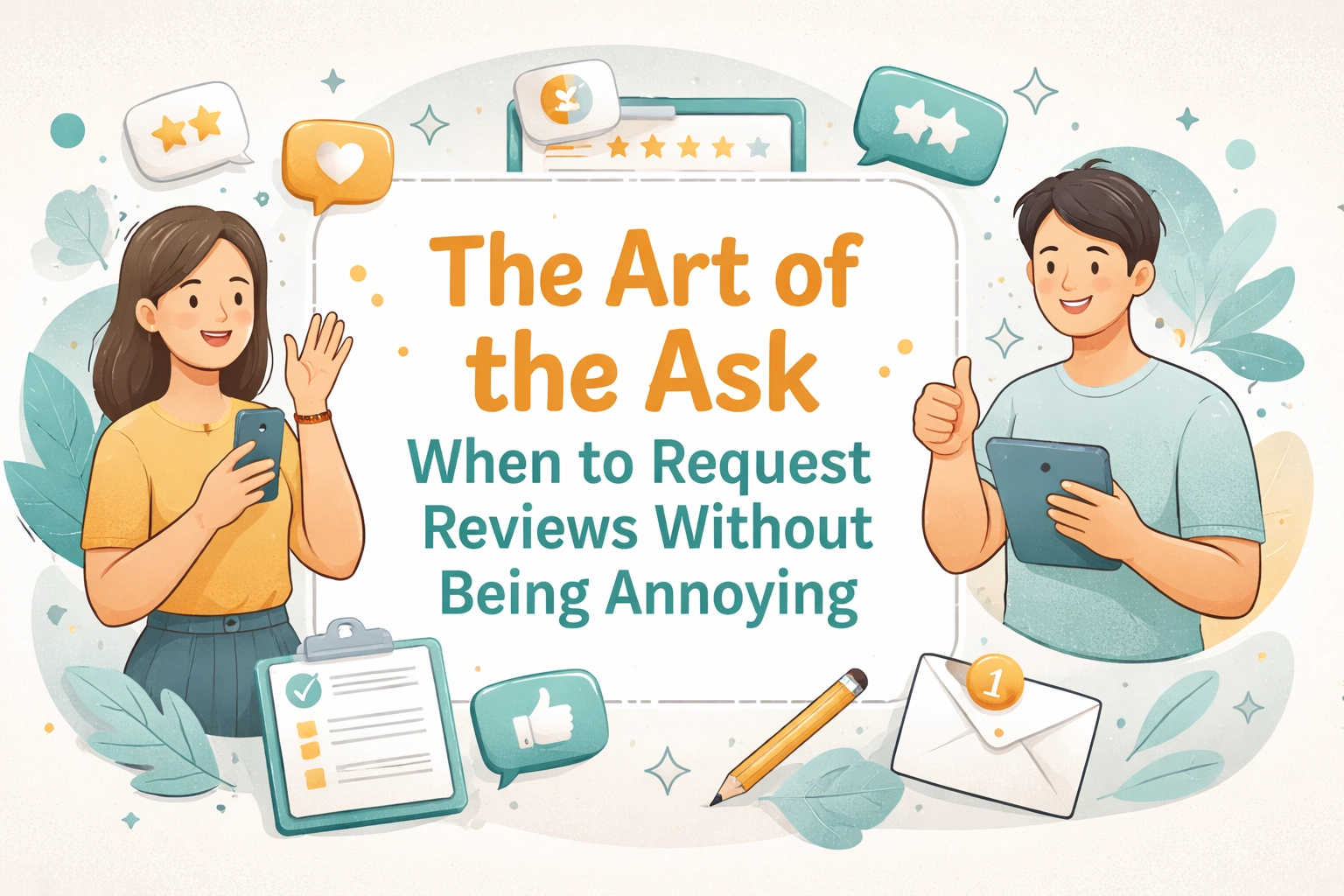
The Art of the Ask: When to Request Reviews Without Being Annoying
Learn the perfect timing and tactics for requesting customer reviews that actually get responses, without making your clients cringe.
Penny · Jan 20, 2026 · 6 min read
- customer reviews
- service business tips
- review requests
- client communication
- small business growth
Let's be honest, asking for reviews feels awkward. You've just finished a great job cleaning someone's home, fixing their AC, or transforming their backyard. The last thing you want is to come across as needy or pushy. But here's the reality: reviews are the lifeblood of your service business. They're how new customers find you and decide to trust you with their homes and money. 💰
The good news? There's a science to this. Ask at the right time, in the right way, and customers are actually happy to leave you a glowing review. Ask at the wrong time, and you'll get ignored, or worse, annoy someone who was perfectly satisfied with your work.
So when exactly should you hit send on that review request? Let's break it down.
Why Timing Is Everything 🎯
Think about it from your customer's perspective. You just installed their new HVAC system. They're relieved it's done, maybe a little tired from having workers in their house all day. Is that the moment they want to write a thoughtful review? Probably not.
But wait a week, after they've cranked up the heat on a cold morning and thought, "Wow, this thing actually works perfectly", and suddenly they have something genuine to say.
The sweet spot for requesting reviews is 7 to 21 days after your service is complete. This gives customers enough time to actually experience the results of your work without waiting so long that the excitement fades.
Here's the breakdown by service type:
- One-time services (deep cleaning, appliance repair, tree removal): 3-7 days after completion
- Recurring services (weekly cleaning, lawn maintenance): After the 2nd or 3rd visit
- Bigger projects (HVAC installation, landscaping overhauls): 7-14 days to let them live with the results
The critical insight here: sooner isn't always better. Requesting before customers have actually used or experienced your work leads to generic reviews or, worse, no response at all. But waiting too long means the "wow factor" has worn off.
The Best Days and Times to Ask 📅
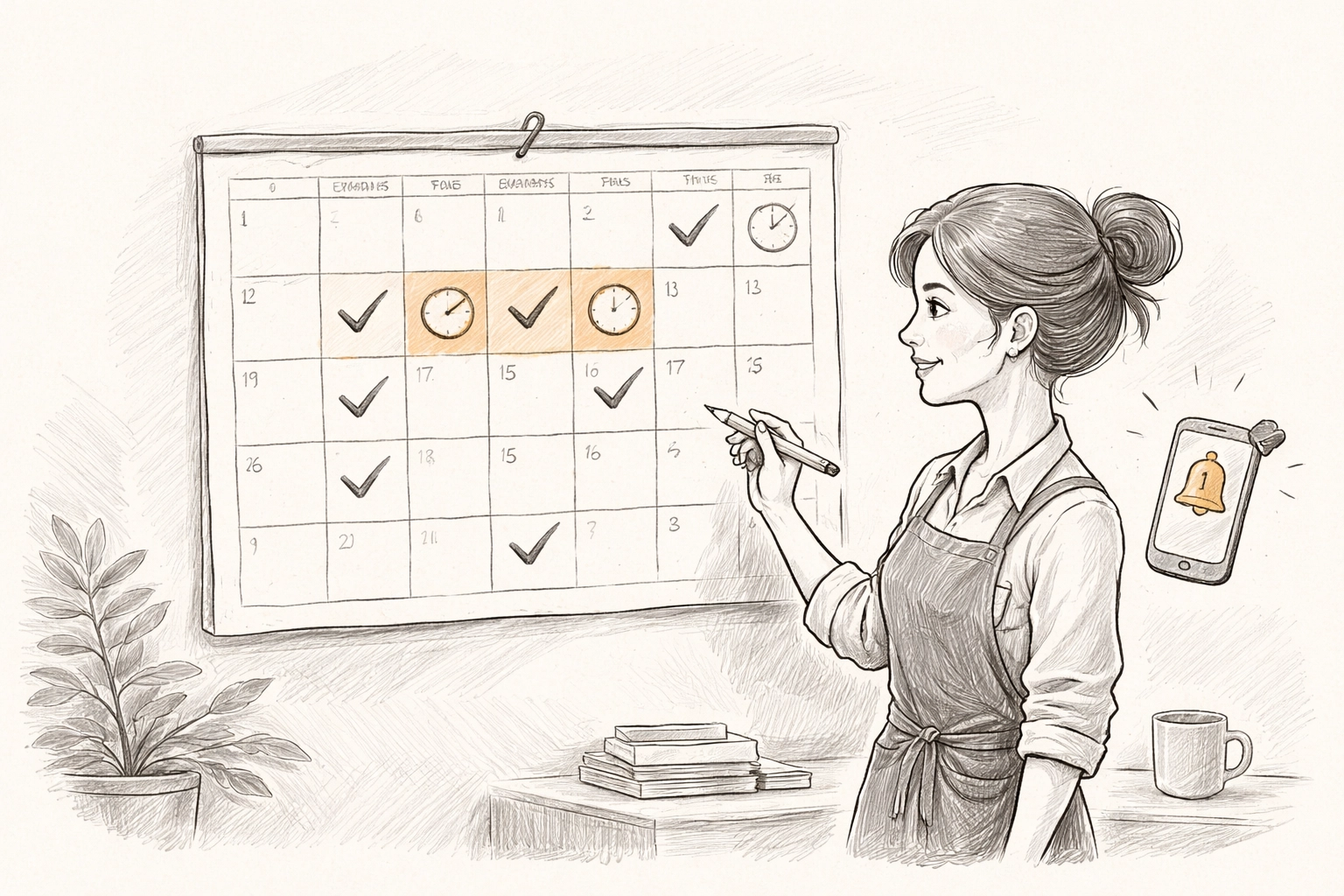
You've nailed the when in terms of days after service. But what about the actual day and time you send that request? This matters more than you might think.
Research shows that Wednesdays and Saturdays generate the highest response rates for review requests. Why? Wednesday catches people mid-week when they're in a productive mindset but not overwhelmed by Monday chaos or Friday checkout mode. Saturday works because people have breathing room and are in a relaxed, helpful mood.
Best times of day:
- 10 AM to 2 PM , People are on lunch breaks or between tasks. They have a few minutes to spare.
- 6 PM , The workday is done, dinner hasn't started yet, and people are winding down with their phones.
Times to avoid:
- 2-3 AM (obviously)
- Early morning before 9 AM (nobody wants to write reviews with their coffee)
- Sunday evenings (people are mentally preparing for Monday)
Timing Comparison: When to Ask vs. Response Rates
Not all asking moments are created equal. Here's a quick comparison to help you visualize the impact of timing:
| When You Ask | Effectiveness | Risk Level | Best For |
|---|---|---|---|
| Immediately after service | ⭐⭐ Low | Medium (feels pushy) | Quick verbal ask only |
| 1-3 days after | ⭐⭐⭐ Medium | Low | Simple, quick services |
| 7-14 days after | ⭐⭐⭐⭐⭐ High | Very Low | Most service businesses |
| 21+ days after | ⭐⭐ Low | Low | Long-term projects only |
| After a complaint resolution | ⭐ Very Low | High (risky) | Avoid entirely |
| After positive feedback | ⭐⭐⭐⭐⭐ High | Very Low | Any service, strike while iron is hot! |
💡 Pro Tip: If a customer reaches out to compliment your work, via text, email, or even in person, that's your golden moment. Respond with gratitude and immediately ask if they'd be willing to share that feedback in a review. The conversion rate on these requests is through the roof.
How to Ask Without Being Annoying 😅
Timing is only half the battle. How you ask matters just as much.
Keep it short. Your review request should take 30 seconds to read, max. Thank them for their business, ask for the review, and thank them for their time. That's it.
Make it stupid easy. Include a direct link to your Google Business Profile or wherever you want reviews. Every extra click you require drops your response rate.
Be genuine, not robotic. "We'd love your feedback!" sounds like it came from a corporate template. "Hey Sarah, hope your new AC is keeping you cool! If you have a sec, a quick Google review would mean the world to us" sounds like a real human wrote it.
Don't be afraid of follow-ups. Here's something that surprises most business owners: customers don't actually mind receiving multiple review requests. Data shows that up to 80% of all reviews come from follow-up emails, not the first ask. A gentle nudge 5-7 days after your initial request is totally acceptable.
What will annoy customers:
- Asking right after you've resolved a complaint (they're not in the mood)
- Sending review requests daily
- Making the process complicated with multiple steps
Here's a helpful video that breaks down the psychology of asking for reviews without being pushy:
https://www.youtube.com/watch?v=3tGDcoBDhJM
Channel Matters: Email, Text, or In-Person? 📱
Different customers prefer different communication styles. The best approach? Use whatever channel you've already been using with them.
If you've been texting appointment confirmations, send your review request via text. If you've been emailing invoices, go with email. Consistency feels natural; switching channels feels jarring.
That said, here's a general effectiveness ranking:
- In-person ask (highest conversion, but easy to forget or feel awkward)
- Text/SMS (high open rates, feels personal)
- Email (easy to automate, professional)
- Social media DM (works for certain industries, feels casual)
The real magic happens when you combine approaches. A quick verbal mention at the end of a job ("We'd really appreciate a review if you have time!") followed by an automated email a week later gives customers multiple low-pressure opportunities to respond.

How to Automate This Without Losing the Human Touch ⚙️
Here's where most small service businesses drop the ball. They know they should ask for reviews. They mean to ask for reviews. But in the chaos of running a business: scheduling jobs, managing employees, dealing with suppliers: sending review requests falls through the cracks.
This is exactly why automation exists.
With a tool like Kejoola, you can set up automatic follow-up messages that go out at the perfect time after each appointment. No more remembering to send emails manually. No more awkward timing. Just consistent, well-timed requests that run in the background while you focus on actually running your business.
The best part? You can customize your messages so they don't sound like they came from a robot. Set the tone, add personal touches, and let the system handle the timing. If you're already using Kejoola for appointment scheduling or reminder emails, adding review automation is a natural next step.
Key Insight: The businesses that consistently get reviews aren't the ones with the best services (though that helps). They're the ones with systems in place. Automating your review requests removes the mental load and ensures you're always asking at the right time.
The Takeaway: Be Thoughtful, Be Consistent, Be Patient
Getting more reviews isn't about being pushy or sending more requests. It's about asking the right people at the right time in the right way.
Wait until customers have experienced the value of your work. Send your request during optimal windows (Wednesday or Saturday, mid-day or early evening). Keep your message short and genuine. Make leaving a review dead simple. And follow up once if you don't hear back.
Most importantly, build a system so you're not relying on memory or motivation. Your future self: and your Google ranking( will thank you.) ⭐⭐⭐⭐⭐