Kitchen Cleaning Checklist: 7 Templates for House Cleaners
A kitchen cleaning checklist works top to bottom and ends at the floor: dust high, soak the stove and microwave, wipe cabinets and appliances, then counters, sink and floor. Here are 7 templates a cleaning business can copy.
Josh · Nov 21, 2026 · 16 min read
- kitchen cleaning checklist
- kitchen deep cleaning checklist
- cleaning checklist template
- move out kitchen cleaning
- cleaning business
A kitchen cleaning checklist is a fixed order of tasks that runs top to bottom and finishes at the floor, so crumbs and drips never land on a surface you already cleaned. You dust high first, then put product on the stove top and inside the microwave so it can work. Cabinets and appliance fronts come next, then counters, the sink, and the floor on your way out. The seven templates below are written for a house cleaning business. Copy them, swap the brackets for your own details, and print them or load them on a phone.
What every kitchen checklist needs
The kitchen has more surfaces and more finishes than any other room on the job. A checklist earns its place when a new cleaner can follow it without asking, and a client can see what was done. Every template in this pack uses the same parts:
- A header with the client, address, date, the cleaner's name and the time in and out.
- One line per task, marked done, skipped, or needs attention.
- The products for that kitchen, written by name, with the counter and appliance finishes noted.
- A plain "not included" line, so the inside of the oven is never a surprise on either side.
- A notes box for anything the client should know: a slow drain, a loose handle, a fridge that feels warm.
The order comes from the appliance makers as much as from the trade. Whirlpool's kitchen cleaning guide says to start from the top down, because dust and debris fall while you work. It lists ceiling fans, light fixtures and cabinet tops first, then countertops and appliances, with the floors last.
Keep the chemistry simple and on the label. The EPA tells users to read a disinfectant's label and follow its directions, including how to apply it. The CDC warns never to mix household bleach with any other cleaner or disinfectant, because the vapors can be very dangerous to breathe. Put both rules at the top of every sheet.
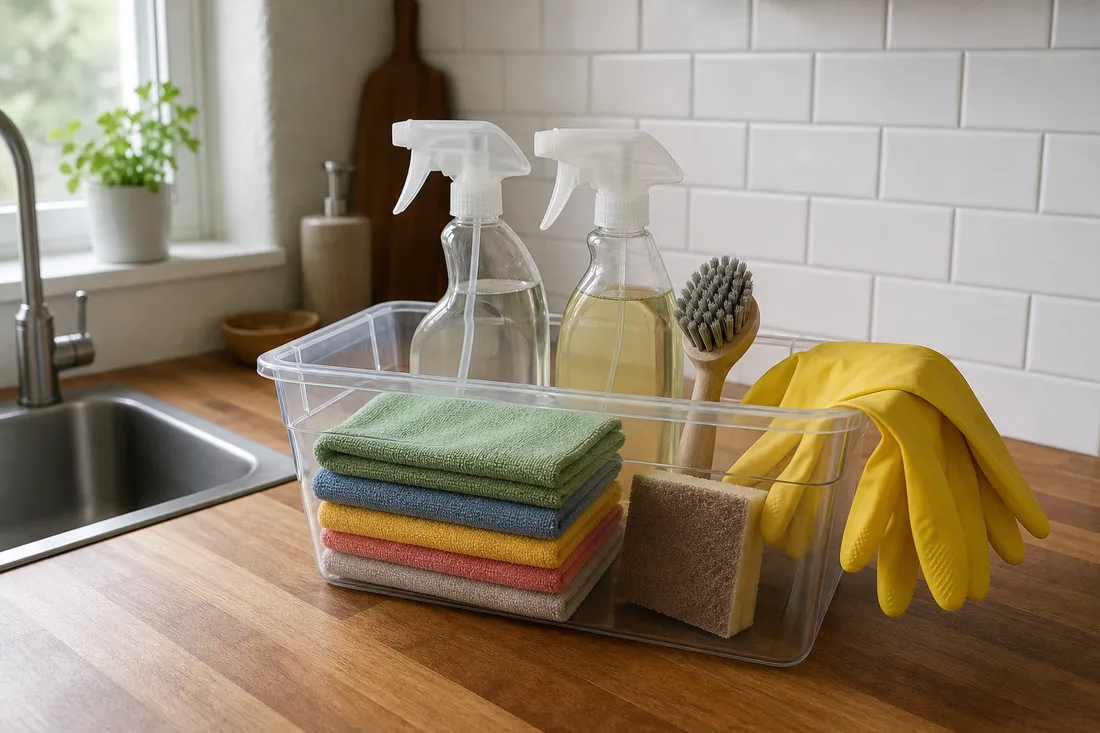
Stock the caddy for the finishes in this kitchen before the first task starts.
Clean first, then sanitize where food was
Most of a kitchen needs cleaning, not disinfecting. The CDC's home guidance says cleaning with soap or detergent removes most harmful germs from surfaces. It adds that sanitizing or disinfecting is likely not needed at home unless someone there is sick.
Food-contact surfaces are the exception worth writing into your sheets. The same CDC page says to clean kitchen counters and food preparation areas with soap and water first. It then says to sanitize any surface that touched raw meat, poultry or their juices, including the inner sink.
For cutting boards, USDA's Food Safety and Inspection Service gives a mix of 1 tablespoon of unscented liquid chlorine bleach per gallon of water. You flood the surface, let it stand for several minutes, rinse with clear water, and air dry. A store-bought sanitizer works too, as long as its label lists food-contact surfaces and you follow the directions.
Two finishes need their own line on the sheet. The Natural Stone Institute says to clean stone with a neutral cleaner, stone soap or mild dish detergent and warm water. It warns that products with lemon, vinegar or other acids may dull or etch calcareous stones, the group made mainly of calcium carbonate. Ask the client what the counters are before the first visit. For stainless steel, Whirlpool says to wipe in the direction of the grain with a microfiber cloth. It also says to avoid cleaners with bleach or ammonia, steel brushes and steel wool on those appliances.
1. Standard recurring kitchen clean
This is the sheet for weekly and biweekly clients, and the one every new hire learns first. It follows the order in the diagram below, so product sits on the stove top and in the microwave while you do the dry tasks.
STANDARD KITCHEN CLEAN
Client: [Name]    Address: [Street, city]
Date: [Date]    Cleaner: [Name]
Time in: [  ]    Time out: [  ]
Counters: [Laminate / Quartz / Granite / Marble / Wood]
Appliances: [Stainless / Black / White / Panel]
Products: [All-purpose] [Degreaser] [Glass] [Stone-safe]
Rule: Read each label. Never mix bleach with any other product.

Mark each line: DONE / SKIPPED / NEEDS ATTENTION

SET UP
[ ] Load or stack dishes as the client note says
[ ] Clear counters of crumbs, mail and loose items
[ ] Remove trash and recycling

TOP AND DRY
[ ] Dust light fixtures and reachable cabinet tops
[ ] Dust top of fridge and range hood
[ ] Dust window sill and blinds

APPLY AND LET SIT
[ ] Spray stove top and burner area
[ ] Spray or steam the microwave interior

CABINETS AND APPLIANCES
[ ] Wipe cabinet fronts and pulls for drips
[ ] Wipe microwave inside, door and handle
[ ] Wipe small appliances: toaster, coffee maker, kettle
[ ] Wipe fridge, dishwasher and oven fronts and handles
[ ] Scrub stove top, knobs and hood front

COUNTERS AND SINK
[ ] Clean backsplash
[ ] Clean counters, items lifted and put back
[ ] Scrub sink basin, faucet, handles and drain
[ ] Dry and polish faucet and sink rim

LAST
[ ] Wipe table and chair seats
[ ] Wipe switch plates and door handles
[ ] New liner in trash can, lid wiped
[ ] Vacuum floor, edges and under the toe kicks
[ ] Mop toward the exit

Not included unless booked: inside oven, inside fridge,
inside cabinets and drawers, interior windows
Notes for client: ______________________________
Set the dish rule with each client before the first visit and write it in the header. "Load the dishwasher" and "stack beside the sink" take very different amounts of time. The "not included" line should match your price sheet word for word.
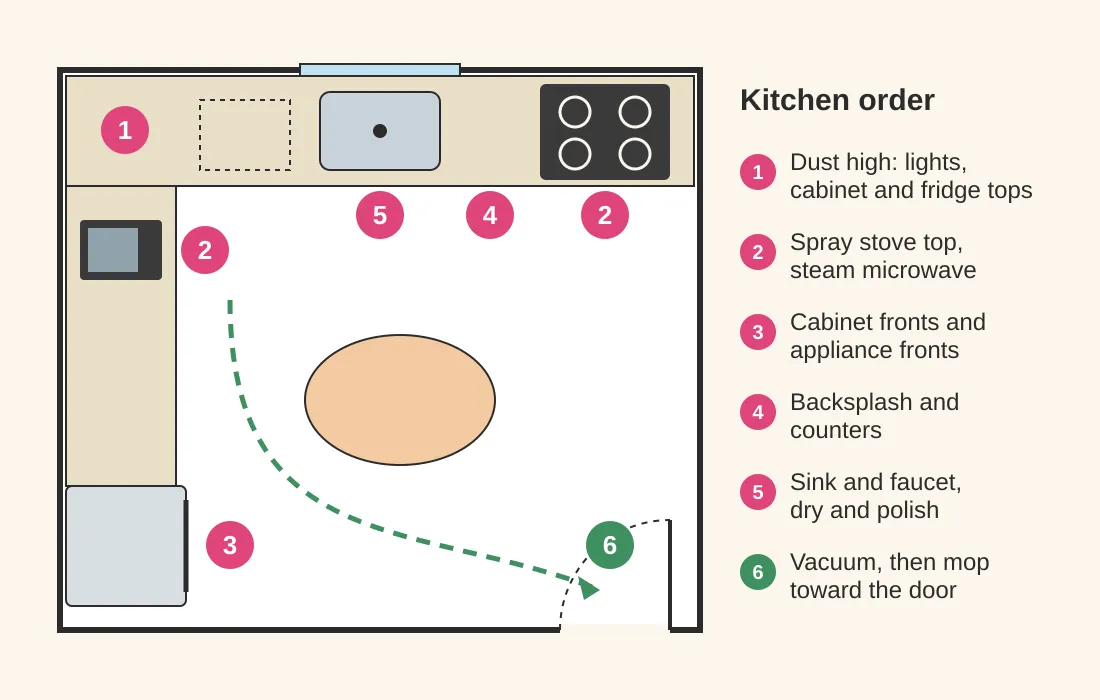
Work in one direction around the room and finish at the door.
2. Deep clean kitchen checklist
A deep clean is the standard sheet plus the buildup that a weekly visit never reaches. Sell it as a first visit for new recurring clients, and again every few months. Whirlpool's seasonal list is a fair guide to what belongs here: pulling out appliances to sweep behind them, cleaning grout, and wiping the tops of upper cabinets.
DEEP CLEAN KITCHEN (ADD TO STANDARD SHEET)
Client: [Name]    Date: [Date]    Cleaner: [Name]
Rule: Read each label. Never mix bleach with any other product.

HIGH
[ ] Wash light fixture covers and ceiling fan blades
[ ] Wipe tops of upper cabinets and top of fridge
[ ] Wash range hood exterior and underside
[ ] Remove and degrease hood filter (if it lifts out)

CABINETS
[ ] Wash all cabinet doors, edges and pulls
[ ] Wipe drawer fronts and the lip inside each drawer
[ ] Wipe inside trash pull-out and under-sink floor

APPLIANCES (OUTSIDE AND EDGES)
[ ] Degrease stove knobs, grates and drip pans
[ ] Clean oven door glass, handle and side gaps
[ ] Clean fridge door seals and handle backs
[ ] Clean dishwasher door edge and filter
[ ] Descale kettle or coffee maker only if client asks
[ ] Wipe behind small appliances and under the microwave

WALLS AND DETAIL
[ ] Scrub backsplash grout
[ ] Spot wash walls near stove and trash can
[ ] Wash baseboards, door and door frame
[ ] Wash window sill, track and interior glass

FLOOR
[ ] Pull out range and fridge if client approved: [Y / N]
[ ] Vacuum and mop behind and under
[ ] Scrub floor grout or edges by hand

Add-ons booked: [ ] Inside fridge  [ ] Inside oven
[ ] Inside cabinets
Notes for client: ______________________________
Get a written yes before anyone moves a range or a fridge. A gas line, a water line or a floor that scratches turns a cleaning job into a claim. If the client says no, mark the line skipped and say so in the notes.
3. Inside-the-fridge add-on
Fridge interiors are the most requested kitchen add-on, and the one with the most food-safety detail. This sheet follows the CDC's steps for cleaning a refrigerator, which are written for recalls but work for any full clean.
INSIDE FRIDGE ADD-ON
Client: [Name]    Date: [Date]    Cleaner: [Name]
Client emptied fridge: [Y / N]
If N, food goes: [Cooler provided by client / Counter]

[ ] Check the thermometer or display: [  ] °F
[ ] Move food out, cold items together
[ ] Set aside anything expired for the client. Do not discard.
[ ] Remove shelves, drawers and door bins
[ ] Let glass shelves reach room temperature
[ ] Wash removable parts by hand, hot soapy water
[ ] Dry parts with a clean towel
[ ] Wipe interior walls, floor and door with hot soapy water
[ ] Wipe again with clean water to rinse
[ ] Dry interior with a clean towel
[ ] Wipe door seals and the folds in the gasket
[ ] Replace shelves, drawers and food
[ ] Wipe exterior, handles and top
[ ] Vacuum front grille at the floor

Freezer included: [Y / N]
Notes for client: ______________________________
The glass shelf line prevents the costliest mistake on this sheet. The CDC says not to run cold glass shelves or drawers under hot water, because the glass could crack. Pull them first and wash them last.
The temperature line takes ten seconds and gives you something useful to report. USDA says a refrigerator should hold 40 °F or below, and the FDA puts the freezer at 0 °F. If the reading is high, write it in the notes and let the client decide what to do.
Stay with soap and water inside the box. USDA advises against solvent cleaning agents and abrasives in a refrigerator, since they can leave a chemical taste in food or ice. Never throw out a client's food on your own judgment. Set it aside and note it.
4. Inside-the-oven add-on
Oven interiors take the longest of any single kitchen task, so price them as a separate line. Whirlpool suggests cleaning an oven about every three months, or more often if it needs it. That is a reasonable interval to offer recurring clients.
INSIDE OVEN ADD-ON
Client: [Name]    Date: [Date]    Cleaner: [Name]
Oven type: [Standard / Self-clean / Steam-clean]
Fuel: [Electric / Gas]
Product approved by client: [Name]

BEFORE
[ ] Oven is off and fully cool
[ ] Towel or drop cloth on the floor in front
[ ] Window open or hood fan on

RACKS
[ ] Remove racks
[ ] Soak in hot soapy water: start time [  ]
[ ] Scrub, rinse and dry

INTERIOR
[ ] Lift out loose debris from the oven floor
[ ] Apply product to floor, walls and door interior
[ ] Keep product off heating elements and the door gasket
[ ] Dwell per label: [  ] minutes
[ ] Wipe out with damp cloths until they come away clean
[ ] Clean door glass inside and out
[ ] Clean the gap between door and drawer

FINISH
[ ] Racks back in the same positions
[ ] Wipe control panel and handle
[ ] Clean storage or warming drawer: [Y / N]

Did not run a self-clean cycle: [ ]
Notes for client: ______________________________
Start the racks first, because the soak is the long step. Whirlpool's oven guide says to soak racks in hot water with dish soap for at least two hours or overnight. On a normal visit you will not have two hours. Offer a shorter soak and tell the client what result to expect.
Check the oven type before any product goes in. Whirlpool says commercial oven cleaners are not advisable on self-cleaning ovens, because they can damage the interior surfaces. Leave the self-clean cycle itself to the homeowner and the owner's manual.
5. Move-out kitchen checklist
A move-out kitchen is empty, which makes it faster to clean and harder to hide anything. Landlords and property managers open every door and drawer. This sheet covers the inside of everything.
MOVE-OUT KITCHEN
Property: [Address, unit]    Date: [Date]
Booked by: [Tenant / Landlord / Manager]
Cleaner: [Name]    Utilities on: [Y / N]
Rule: Read each label. Never mix bleach with any other product.

BEFORE
[ ] Photo of each wall, the floor and inside each appliance
[ ] Note existing damage: [burns, chips, stains, missing parts]

CABINETS AND DRAWERS
[ ] Empty crumbs and liners from every cabinet and drawer
[ ] Wipe inside shelves, walls and drawer boxes
[ ] Wash doors, drawer fronts and pulls
[ ] Wipe under the sink and around the pipes

APPLIANCES
[ ] Fridge: full interior clean (template 3)
[ ] Freezer: defrosted by tenant [Y / N], wiped out
[ ] Oven: full interior clean (template 4)
[ ] Stove top, knobs, grates and drip pans degreased
[ ] Range hood, filter and light cover
[ ] Dishwasher: filter, door edge, interior wipe
[ ] Microwave: interior, turntable, vent grille
[ ] Pull out fridge and range if approved, clean behind

SURFACES
[ ] Counters and backsplash, including grout
[ ] Sink, faucet, drain and disposal splash guard
[ ] Walls spot washed, switch plates wiped
[ ] Window sill, track and interior glass
[ ] Light fixtures washed

FLOOR
[ ] Vacuum edges and corners
[ ] Mop, including inside the pantry
[ ] Baseboards washed

AFTER
[ ] Photo of each wall, the floor and inside each appliance
[ ] Fridge left: [On / Off with doors propped open]

Not included: wall repair, paint, appliance repair
Notes: ______________________________
Take the before photos even when you are short on time. A burn on the counter or a cracked crisper drawer that was already there should be on record before you touch it. Ask who booked the job whether the fridge stays on. A fridge left off with the doors closed will smell by the next showing.
6. Vacation rental turnover kitchen checklist
A turnover is a short reset between guests, with a restock list attached. The standard that matters is the next guest opening a cabinet and finding everything clean, dry and in place.
RENTAL TURNOVER KITCHEN
Property: [Name or address]    Date: [Date]
Checkout: [Time]    Next check-in: [Time]
Cleaner: [Name]

CLEAR
[ ] Remove all guest food from fridge, freezer and counters
[ ] Run dishwasher or hand wash everything left out
[ ] Empty trash and recycling, wipe cans, new liners

CLEAN
[ ] Wipe fridge shelves and drawers, check for spills
[ ] Wipe microwave inside and out
[ ] Check oven and stove top, clean any spills
[ ] Empty and wipe toaster crumb tray
[ ] Rinse coffee maker, carafe and filter basket
[ ] Wipe cabinet fronts, pulls and switch plates
[ ] Clean counters, backsplash, sink and faucet
[ ] Wipe table and chairs
[ ] Vacuum and mop floor

CHECK AND RESTOCK
[ ] Dishes, glasses and flatware put away clean and dry
[ ] Count per owner list: plates [  ] glasses [  ] mugs [  ]
[ ] Pots, pans and utensils clean, none missing
[ ] Dish soap and dishwasher tabs: [  ]
[ ] Fresh sponge, dish towel and paper towels
[ ] Trash bags under the sink: [  ]
[ ] Coffee filters or starter supplies per owner: [  ]

REPORT TO OWNER
[ ] Damage or missing items: ______________________
[ ] Low supplies: ______________________
[ ] Photo of finished kitchen sent: [Time]
Agree with the owner on what happens to guest food before your first turnover. Most owners want everything opened removed, and some keep sealed condiments. Write the answer on the sheet so a new cleaner does not have to guess.
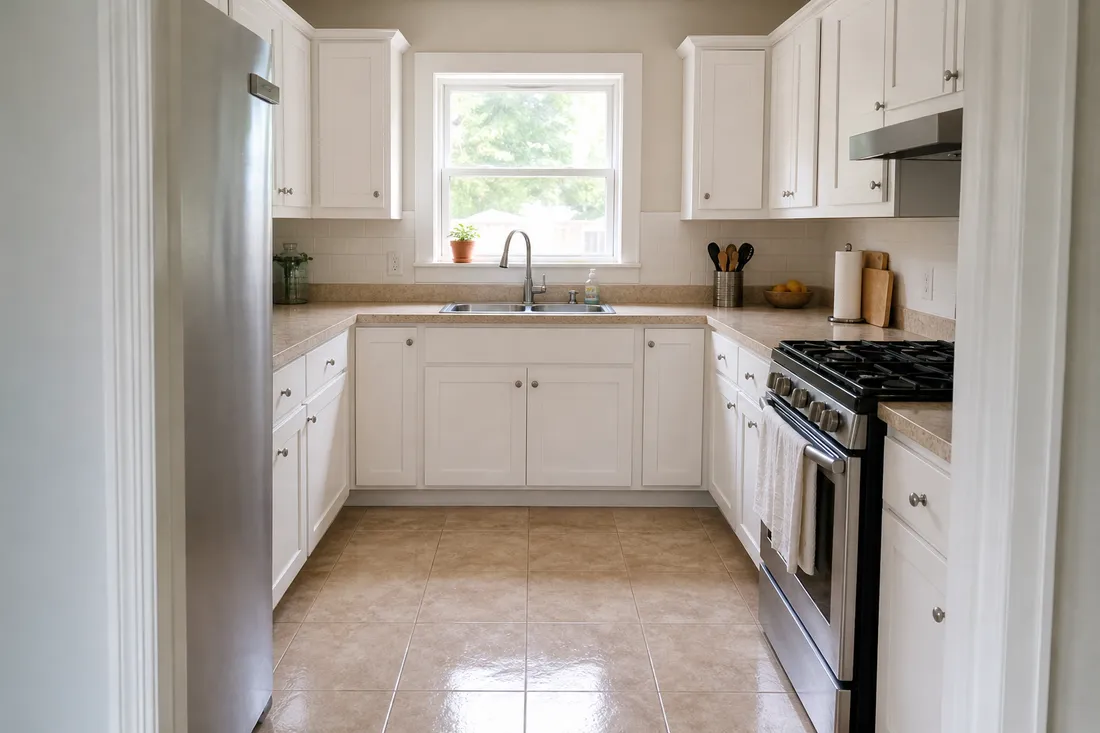
Clear counters and a dry sink are what the client sees first from the doorway.
7. Client-facing "what's included" card
Most kitchen complaints come from a gap between what the client pictured and what was booked. A short card on your website, your estimate and the first-visit folder closes that gap before the job starts.
YOUR KITCHEN CLEAN: WHAT'S INCLUDED

EVERY VISIT
- Counters, backsplash and sink cleaned and dried
- Stove top, knobs and hood front degreased
- Microwave cleaned inside and out
- Fridge, oven and dishwasher fronts and handles wiped
- Cabinet fronts spot cleaned
- Table and chairs wiped
- Trash emptied, new liner
- Floor vacuumed and mopped

DEEP CLEAN ADDS
- Cabinet doors washed top to bottom
- Hood filter, grates and drip pans degreased
- Backsplash grout, baseboards and window sill
- Tops of cabinets and fridge

BOOK AS AN ADD-ON
- Inside the fridge: [Price]
- Inside the oven: [Price]
- Inside cabinets and drawers: [Price]

HOW TO GET READY
- Tell us what your counters are made of
- Put away dishes, or tell us to load the dishwasher
- For a fridge clean, toss what you do not want kept

WHAT WE DO NOT DO
- Run self-clean oven cycles
- Move appliances without your written approval
- Throw away food without asking
Keep the wording identical to the task lines on your crew sheets. When a client asks why the inside of the oven was not cleaned, the card and the checklist give the same answer.
Some clients ask what they should do between visits. Whirlpool's schedule gives a simple reply: a daily wipe of counters, sink and table, a weekly mop and fridge check, and a monthly clean of the microwave and the dishwasher filter.
How to roll these out to a crew
A checklist only works if the crew uses it on the job. Start with template 1 alone and run it on every kitchen for two weeks. Add the others as jobs call for them.
Walk each new hire through one kitchen with the sheet in hand, in order. Time the room on the next three visits, so you know what a normal kitchen takes your team. Use that number when you quote.
Spot check with the same sheet. Open the microwave, run a finger along the hood front, and look at the floor edge under the toe kicks. Those three places show whether the order was followed.
Send the client the notes line after each visit. If the same task keeps coming back skipped, the time allowed is too short or the line is unclear.
Frequently asked questions
What is the correct order to clean a kitchen?
Top to bottom, with the floor last. Whirlpool's guide starts with ceiling fans, light fixtures and cabinet tops, then moves down to countertops and appliances, and finishes with sweeping and mopping. Dust then falls onto surfaces you have not cleaned yet.
How often should a kitchen be deep cleaned?
Every few months suits most homes. Whirlpool groups tasks such as cleaning behind appliances, grout and cabinet tops as seasonal or yearly, and suggests cleaning the oven about every three months. Heavy cooking or pets shorten that interval.
Do cleaners need to sanitize kitchen counters on every visit?
No, soap or detergent is enough for a routine clean. The CDC says cleaning alone removes most harmful germs, and that surfaces should be cleaned before they are sanitized. It advises sanitizing surfaces that touched raw meat, poultry or their juices, including the inner sink.
Can I use vinegar on a client's stone counters?
Not unless you know the stone can take it. The Natural Stone Institute says products with lemon, vinegar or other acids may dull or etch calcareous stones. It recommends a neutral cleaner, stone soap or mild dish detergent with warm water.
Let new clients book their first clean
People comparing cleaners want to know what a visit covers before they call. A short page built from template 7 answers that on your site. For what else that site needs, see this guide to a cleaning business website, and the house cleaning checklist pack for the other rooms.
Kejoola gives a cleaning business a four-page website (Home, Services, Blog and Contact) with online booking. The booking form asks for name, email, phone and a notes box, where a client can say what their counters are made of and whether they want the fridge or oven added.
Sources
- How to Clean a Kitchen: Checklist and Quick Tips, Whirlpool
- How to Clean an Oven, Whirlpool
- How to Clean Stainless Steel Appliances, Whirlpool
- When and How to Clean and Disinfect Your Home, CDC
- Cleaning and Disinfecting with Bleach, CDC
- How to Clean Your Refrigerator Because of a Food Recall, CDC
- Cutting Boards, USDA Food Safety and Inspection Service
- Refrigeration and Food Safety, USDA Food Safety and Inspection Service
- Are You Storing Food Safely?, FDA
- Applying Disinfectants by the Label Directions, EPA
- Care and Cleaning of Natural Stone, Natural Stone Institute