Plumbing Inspection Checklist: 8 Templates for Plumbers
A plumbing inspection checklist lists every part of a water and drain system you check, in walking order, with a place to record findings. Eight copy-ready templates for plumbers: client interview, water service and meter, water heater, fixtures by room, drains and vents, outdoor plumbing, a pre-inspection check for permitted work, and a ranked findings report.
Josh · Nov 17, 2026 · 15 min read
- plumbing inspection checklist
- home plumbing inspection
- water heater inspection
- leak detection
- drain inspection
- plumber forms
A plumbing inspection checklist is a written list of every part of a water and drain system you check on a visit, in a fixed order, with a place to record what you found. A workable one follows the water from the meter and main shutoff to the water heater, the fixtures, the drains and the outdoor lines. It ends with ranked findings. The eight templates below cover the client interview, the water service, the water heater, fixtures by room, drains and vents, outdoor plumbing, permitted work, and the findings report. Copy each one, replace the brackets, and cut any line outside the scope you agreed with the client.
What a plumbing inspection checklist has to cover
The EPA's WaterSense program estimates that household leaks waste nearly 1 trillion gallons of water a year nationwide. The average household's leaks account for more than 9,300 gallons a year. Nine percent of homes have leaks that waste 50 gallons or more per day. The common causes are worn toilet flappers, dripping faucets and other leaking valves, which are all parts a plumber checks on a routine visit.
Three different jobs share the name, and your checklist should say which one you are doing.
| Kind of inspection | Who does it | What the list is built around |
|---|---|---|
| Code inspection | The local building department | Stages of permitted work, each item tied to a code section |
| Home inspection | A home inspector, usually for a sale | A visual review of accessible parts |
| Condition inspection | A licensed plumber | The state of an existing system, with repairs priced afterward |
The City of Odessa, Texas publishes a checklist of the first kind. It runs in stages, from underground plumbing to rough and top-out, a gas test and the plumbing final. Each line cites a section of the International Residential Code. The InterNACHI home inspection standard shows the second kind. It is a visual standard. The inspector is not required to operate any valve, open sealed plumbing access panels, or determine the exact pressure or temperature of the water supply.
Templates 1 to 6 and Template 8 are for the third kind: a paid inspection of an existing home. Template 7 helps you prepare your own permitted work for the first kind. Each template has the same four parts.
| Part | What to write | Example line |
|---|---|---|
| Job header | Client, address, date, plumber, license number | "2218 Birch Ave, built 1984, city water, sewer" |
| Scope | What you will open, test and leave alone | "Crawl space entered. No camera work." |
| Check lines | One verb and one object per line, in walking order | "Flush every toilet and watch the refill" |
| Findings | What you saw, where, and how urgent | "Relief valve drain capped. Fix now." |
Template 1: Job header and client interview
Start with the person who pays the water bill. The EPA suggests looking at water use in a colder month such as January or February. A family of four that exceeds 12,000 gallons a month could have serious leaks. A homeowner who mentions a toilet that refills on its own at night has told you where to start.
PLUMBING INSPECTION: [Client name]
Address: [Street, city]            Date: [Date]
Plumber: [Name]                    License: [Number]

PROPERTY
Year built: [Year]                 Stories: [Number]
Water supply: [ ] Public  [ ] Private well
Waste: [ ] Sewer  [ ] Septic
Pipe materials seen: Supply [Type]   Drain [Type]
Water heater: [Tank / tankless]  [Gas / electric]  Year: [Year]

CLIENT INTERVIEW
[ ] Winter water bill reviewed: [Gallons] per month
[ ] Toilets that run or refill on their own? [Which]
[ ] Slow drains, gurgling or sewer smell? [Where]
[ ] Stains on ceilings, walls or cabinet floors? [Where]
[ ] Hot water runs out early or changes temperature? [Notes]
[ ] Past repairs, repipes or drain cleaning: [What, when]
[ ] Reason for this inspection: [Sale / purchase / leak / routine]

SCOPE AGREED
Will open: [Access panels, cleanouts, meter box]
Will not open or enter: [Areas]
Not included: [Camera inspection, septic tank, well equipment]
Client initials: [Initials]
Fill in the scope before you unpack a tool. A client who expected a sewer camera and got a visual check will dispute the invoice, and one initialed line prevents that.
Template 2: Water service, meter and main shutoff
This is where a hidden leak shows up first. The EPA's method is to check the water meter before and after a two-hour period when no water is being used. If the meter changes at all, there is probably a leak. On a shorter visit, read the meter on arrival and again before you leave. Then show the client how to run the two-hour version.
Pressure is the other number to record. The City of Washougal, Washington publishes a residential plumbing final checklist. It tells installers to check water pressure at any hose bib to verify that it is 80 psi or less. Above that, a pressure-reducing valve is required. The checklist cites the 2006 Uniform Plumbing Code, so confirm the edition your jurisdiction enforces.
WATER SERVICE AND METER
[ ] Meter located: [Where]      Reading on arrival: [Number]
[ ] All fixtures off. Leak indicator: [Still / moving]
[ ] Reading on departure: [Number]   Minutes between: [Number]
[ ] Meter box dry, no standing water
[ ] Service line material at entry: [Copper / PEX / galvanized / other]

MAIN SHUTOFF
[ ] Main shutoff located: [Where]
[ ] Valve type: [Ball / gate]   Turns freely: [Yes / No]
[ ] No corrosion or weeping at the valve body
[ ] Client shown where the shutoff is

PRESSURE
[ ] Static pressure at hose bib: [Number] psi
[ ] Pressure-reducing valve present: [Yes / No]
[ ] Pressure with two fixtures running: [Number] psi

Findings: [What, where, urgency]
Template 3: Water heater
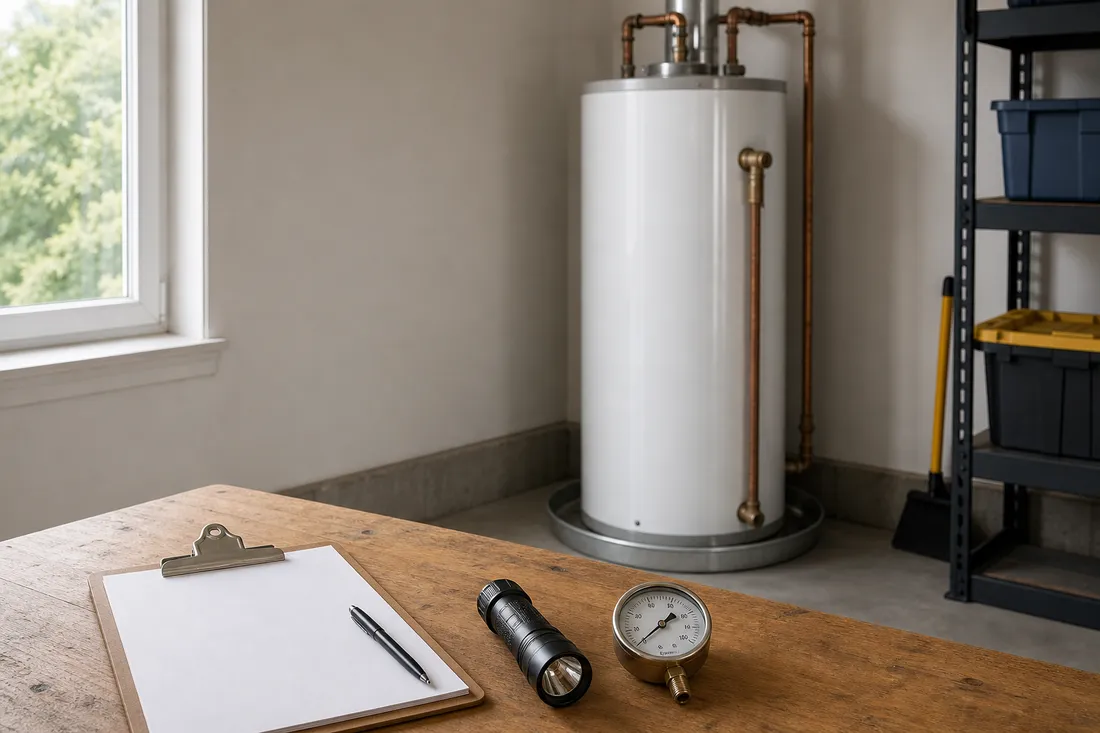
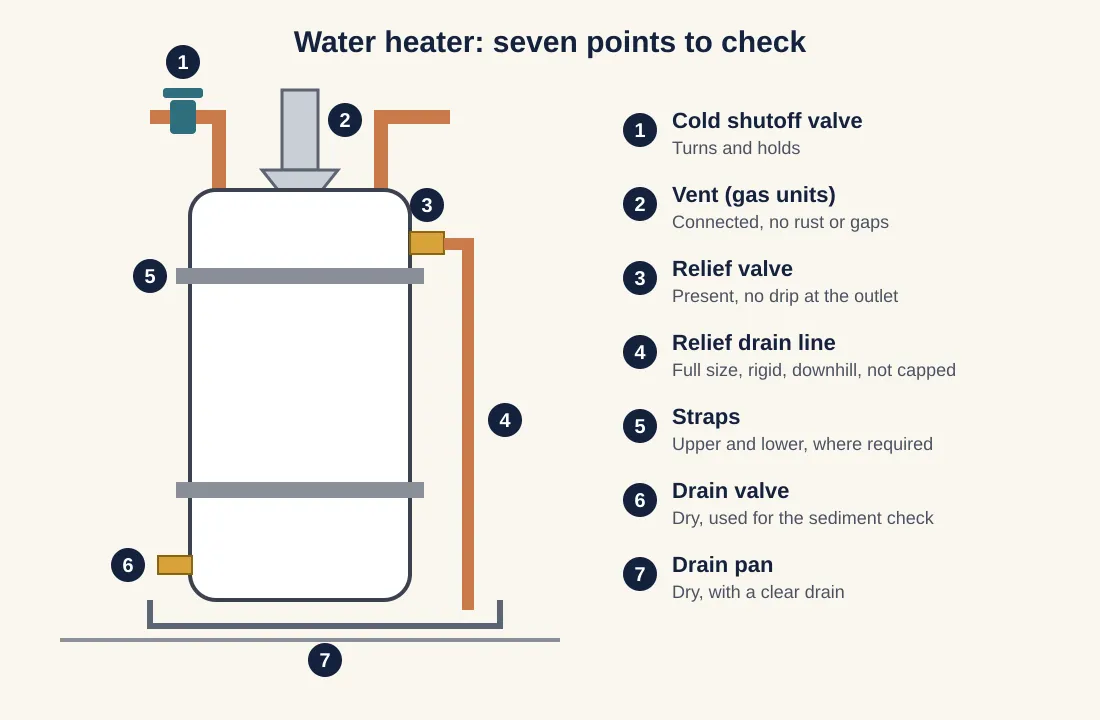
A water heater inspection covers the tank, the fuel or power, the venting, the relief valve and the water temperature. InterNACHI's standard has a home inspector look at the energy source, venting connections, temperature/pressure-relief (TPR) valves and seismic bracing. Your version adds the tests that the visual standard leaves out.
Age comes first, because it sets the conversation. The Department of Energy's Energy Saver guide says most storage water heaters last 10 to 15 years. Tankless water heaters can last more than 20 years. The same guide advises draining a quart of water from the tank every 3 months to remove sediment.
Temperature is the safety line. The Consumer Product Safety Commission urges all users to lower their water heaters to 120 degrees Fahrenheit. Most adults will suffer third-degree burns from two seconds in 150-degree water or six seconds in 140-degree water. To measure, the CPSC suggests holding a thermometer under the faucet at least two hours after water use.
WATER HEATER
Type: [Tank / tankless]   Fuel: [Gas / electric]
Capacity: [Gallons]       Year made: [Year]
Location: [Garage / closet / basement / attic]

TANK AND CONNECTIONS
[ ] No rust, scale or moisture at the base
[ ] Drain pan present and its drain runs clear: [Yes / No / None]
[ ] Cold shutoff valve works
[ ] No corrosion at the hot and cold connections
[ ] Sediment check: quart drained, water [Clear / cloudy / gritty]

RELIEF VALVE
[ ] TPR valve present, no drip at the outlet
[ ] Drain line is full size, rigid pipe, not capped
[ ] Drain line runs downhill with no trap
[ ] Drain line ends at: [Outside / approved drain]

GAS UNITS
[ ] Gas shutoff valve at the appliance, reachable
[ ] Flex connector not run through a wall or floor
[ ] Vent connected, sloped up, no rust or gaps
[ ] Burner area clear of stored items
[ ] In a garage: ignition source raised or unit FVIR-listed

BRACING AND TEMPERATURE
[ ] Seismic straps where required: [Upper / lower / none]
[ ] Hot water at nearest tap: [Number] °F
[ ] Thermostat setting: [Setting]

Findings: [What, where, urgency]
Several lines here come from how building departments check new installs. Washougal's list says the relief valve drain must drain by gravity with no part trapped. The pipe is hard and full sized. A gas water heater in a garage has its ignition source at least 18 inches above the floor unless it is listed as flammable vapor ignition resistant. Local amendments vary, so write each finding as a condition you saw.
Template 4: Fixtures room by room
Walk the house in the same order every time, and run water at every fixture. InterNACHI's standard has a home inspector run the water at all fixtures and faucets and flush all toilets. Sinks, tubs and showers are checked for functional drainage. Supply is judged by viewing the flow in two fixtures operated at the same time, which is a quick test worth copying.
Toilets get the dye test. The EPA's method is to place a few drops of food coloring in the tank. If any color shows up in the bowl after 10 minutes, the toilet has a leak. Flush right away afterward to avoid staining the tank. Start the dye in every toilet on your first pass, then read the bowls on your way back.
ROOM: [Kitchen / bath 1 / bath 2 / laundry / other]

SINK AND FAUCET
[ ] Hot on the left, cold on the right, not crossed
[ ] Faucet shuts off fully, no drip at the spout or base
[ ] Flow steady with a second fixture running
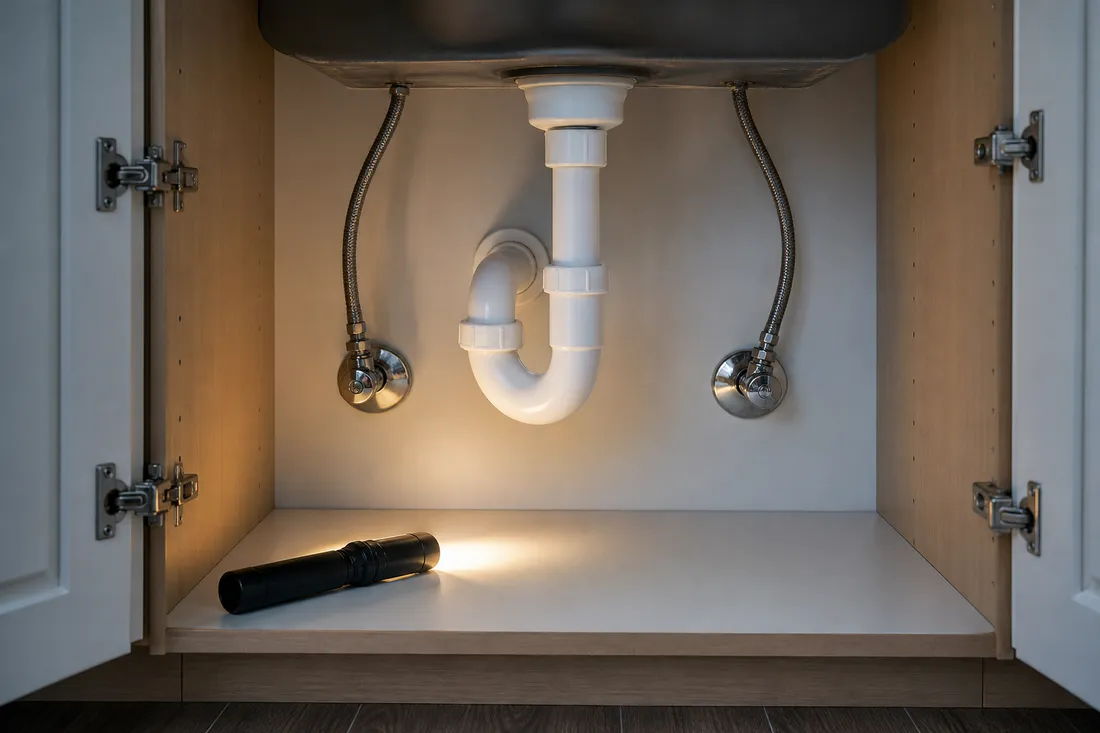
[ ] Stops under the sink turn and hold
[ ] Supply lines: no bulges, kinks or rust at the nuts
[ ] Trap and tailpiece dry, cabinet floor dry
[ ] Sink drains without backing up or gurgling

TOILET
[ ] Dye in tank at [Time]   Bowl checked at [Time]: [Clear / color]
[ ] Flushes fully and refills, then stops
[ ] Does not rock, sealed at the floor
[ ] Stop valve and supply line dry
[ ] Tank parts work: flapper, fill valve, handle

TUB AND SHOWER
[ ] Valve holds temperature when a nearby tap opens
[ ] Diverter sends water fully to the showerhead
[ ] Showerhead and arm do not drip when off
[ ] Drain clears standing water
[ ] Caulk and grout intact at the tub and wall joint

APPLIANCES
[ ] Dishwasher: air gap or high loop, drain hose secured
[ ] Disposal: no leak at the flange or the discharge
[ ] Washer: hoses dated [Year], box valves work, standpipe drains

Findings: [What, where, urgency]
Small drips are worth a line in the report because the numbers persuade clients. The EPA says a faucet dripping once per second can waste more than 3,000 gallons per year. A showerhead leaking at 10 drips per minute wastes more than 500 gallons per year. A toilet flapper should be replaced at least every five years.
Template 5: Drains, waste and vents
Most of this system is hidden, so the checklist records what you can reach and what the fixtures told you. A gurgling sink, a slow tub on the lowest floor and a sewer smell at a floor drain all point here. If the client has a septic system, note it without inspecting the tank. The EPA says the average household septic system should be inspected at least every three years by a septic service professional. Tanks are typically pumped every three to five years.
DRAIN, WASTE AND VENT
[ ] Visible drain pipe material: [PVC / ABS / cast iron / other]
[ ] Exposed drain runs supported, sloped toward the main
[ ] No stains, cracks or patched joints on exposed pipe
[ ] Cleanouts located: [Where]   Caps intact and reachable
[ ] Lowest fixture drains with an upstairs fixture running
[ ] Floor drains hold water in the trap, no odor
[ ] Vent terminals seen from the ground: [Number], uncapped
[ ] No test plugs left in vent pipes

SUMP AND EJECTOR PUMPS
[ ] Sump pit clear of debris
[ ] Float moves freely, pump starts when lifted
[ ] Check valve present, discharge runs away from the house
[ ] Ejector pit lid sealed, vent connected

SEPTIC (NOTE ONLY)
[ ] Tank and drainfield location: [Where, per client]
[ ] Last pumped: [Year, per client]
[ ] No wet ground or odor over the drainfield

CAMERA INSPECTION (IF IN SCOPE)
[ ] Entry point: [Cleanout]   Length run: [Feet]
[ ] Roots, bellies, offsets or breaks at: [Feet from entry]
[ ] Recording saved and sent to client

Findings: [What, where, urgency]
Washougal's final checklist tells the inspector to look down on the roof and check for test plugs left in the vent pipes. On a house with recent plumbing work, take the same look from the yard.
Template 6: Outdoor plumbing and irrigation
Outdoor leaks run for months because nobody stands next to them. The EPA estimates that an irrigation leak 1/32 of an inch in diameter, about the thickness of a dime, can waste about 6,300 gallons of water per month. It recommends checking an in-ground system each spring before use for frost damage.
OUTDOOR PLUMBING
[ ] Hose bibs: [Number]   Each opens, closes and does not drip
[ ] Vacuum breaker on each hose bib
[ ] Hose bibs secured and sealed at the wall
[ ] Exposed pipe insulated in unheated areas
[ ] Yard cleanout cap intact
[ ] No wet spots or sunken soil along the service line route

IRRIGATION (IF IN SCOPE)
[ ] Backflow preventer present, no drip at the body
[ ] Each zone run: [Number of zones]
[ ] Broken, tilted or missing heads: [Zone, location]
[ ] Pooling or bubbling between heads: [Zone, location]

Findings: [What, where, urgency]
Both city checklists call for vacuum breakers on hose bibs. Washougal's also asks for exterior hose bibs that are frostproof, caulked and secured at exterior walls. Water piping in unheated spaces is to be insulated against freezing. On an existing house, a missing vacuum breaker is an inexpensive repair to offer while you are there.
Template 7: Pre-inspection check for permitted work
When your own job is waiting on the building department, run this list before you call for the inspection. The figures below are from the City of Odessa's residential checklist, which cites the 2018 International Residential Code. Your jurisdiction's adopted code comes first, so replace any number that differs.
PRE-INSPECTION: [Rough / top-out / final]
Permit: [Number]   Address: [Street]   Date: [Date]

PAPERWORK
[ ] Job address posted where it can be seen
[ ] Permit and approved plans on site
[ ] Work matches the approved plans
[ ] Test equipment and materials on site

ROUGH AND TOP-OUT
[ ] DWV water test: 10-foot head held 15 minutes
[ ] Water lines at working pressure or 50 psi for 15 minutes
[ ] No air test on plastic pipe unless the maker allows it
[ ] Cleanout at the building drain and sewer junction
[ ] Steel plates where pipe is under 1 1/4 inch from a stud edge
[ ] Tub and shower valves set, pressure-balance or thermostatic
[ ] Washer standpipe 18 to 42 inches above the trap weir
[ ] Main shutoff reachable near the service entrance

GAS TEST (BEFORE FINAL)
[ ] Gas piping under air test, gauge reading: [Number]
[ ] Pressure held 10 minutes with no loss
[ ] Valve at every appliance connection, open ends plugged

FINAL
[ ] Every fixture secured, sealed and caulked
[ ] Shutoff valve at every fixture
[ ] Hot on the left, hot and cold not crossed
[ ] Water run at every fixture, no leaks
[ ] Vacuum breakers on all hose bibs
[ ] Water heater pan drain ends 6 to 24 inches above the ground
[ ] Pipe penetrations sealed
[ ] Debris cleared from all fixtures
Template 8: Findings report and sign-off
The report is what the client pays for. Rank every finding so a homeowner can read the first three lines and know what to do. Three levels are enough: fix now, fix soon, and watch.
PLUMBING INSPECTION REPORT
Client: [Name]            Address: [Street, city]
Inspected: [Date]         Plumber: [Name], License [Number]

SUMMARY
System: [Public / well], [Sewer / septic], built [Year]
Static pressure: [Number] psi    Hot water: [Number] °F
Meter test: [No movement / moved] over [Number] minutes

FIX NOW (active leak, safety or sanitation risk)
1. [Finding]  Location: [Where]  Photo: [Number]
   Repair: [What]  Price: [Amount]

FIX SOON (will fail or is wasting water)
1. [Finding]  Location: [Where]  Photo: [Number]
   Repair: [What]  Price: [Amount]

WATCH (aging, working today)
1. [Finding]  Location: [Where]  Check again: [When]

NOT INSPECTED
[Areas or systems, and why]

Plumber signature: [Signature]   Date: [Date]
Client signature: [Signature]    Date: [Date]
Keep the "Not inspected" block even when it feels obvious. If the client declined the camera, the report should say so in writing. Price each repair on its own line so the client can approve the fix-now items and schedule the rest.
Questions plumbers ask about inspection checklists
What does a plumbing inspection include?
It includes the water service and main shutoff, the water heater, every fixture, the drain, waste and vent system, and any sump pump, followed by a written report. InterNACHI's home inspection standard names the same chain, from the main water supply shut-off valve to the water heater, fixtures, toilets and sump pumps. A plumber's version goes further by operating valves and measuring pressure and temperature.
Is a plumber's inspection the same as a home inspection?
No. A home inspection is a non-invasive, visual examination. The InterNACHI standard says the inspector is not required to operate any valve or to determine the exact pressure or temperature of the water supply. A plumber's inspection does both, and it can add a sewer camera run.
How do you check a house for hidden leaks?
Use the water meter. The EPA's method is to read the meter before and after a two-hour period when no water is being used. Any change means there is probably a leak. Then narrow it down with the toilet dye test and a look under every sink.
What temperature should a water heater be set to?
Set it to 120 degrees Fahrenheit unless the client has a reason for more. The Consumer Product Safety Commission urges that setting for all users, and it notes the change also conserves energy. Measure at a tap with a thermometer at least two hours after water use, and record the reading in the report.
Let homeowners request an inspection online
A homeowner who opens a high water bill or finds a stain under the sink tends to search in the evening, when your phone is off. Kejoola gives a plumber a four-page website with Home, Services, Blog and Contact pages and an online booking form. The form asks for a name, email, phone number and a notes box, where the homeowner can describe the leak and the age of the water heater. You read the request the next morning, call back, and bring Template 1 to the visit.
Sources
- EPA WaterSense: Fix a Leak Week
- InterNACHI: Home Inspection Standards of Practice
- CPSC: Avoiding Tap Water Scalds
- U.S. Department of Energy: Energy Saver guide
- City of Washougal: Residential Plumbing Final checklist
- City of Odessa: Residential Inspection Checklist, Plumbing
- EPA: How to Care for Your Septic System