Painting Checklist: 7 Free Templates for Painting Jobs
A painting checklist lists every step of a paint job in the order you do it, with a box to tick as each one is done. Seven copy-ready templates for painters: site visit and scope, supplies and load-out, a lead check for older homes, interior prep, interior painting, exterior painting, and the final walkthrough.
Josh · Nov 16, 2026 · 16 min read
- painting checklist
- painting prep checklist
- painting supplies checklist
- exterior painting checklist
- painting contractor forms
- lead-safe painting
A painting checklist is a written list of every step on a paint job, in the order you do it, with a box to tick as each one is finished. A complete one covers the site visit, the supplies, the prep, the application, and the final walkthrough with the client. The seven templates below follow a job from the first visit to the last labeled can of touch-up paint. They cover scope, load-out, a lead check for older homes, interior prep, interior painting, exterior painting, and the closeout. Copy each one, replace the brackets, and delete any line that does not apply to the job in front of you.
What a painting checklist has to cover
Most published painting checklists are shopping lists for a homeowner. The Sherwin-Williams project checklist has four steps, which are prep, protect, application and paint, and each step is a set of products. The Home Depot paint project checklist sorts its items the same way.
Those lists answer one question, which is what to buy. A painter running paid jobs has to answer four more. You need to know what you agreed to paint, whether the house is old enough for lead rules to apply, what order the crew works in, and what the client signs off on at the end.
| Stage | What the list is for | Template |
|---|---|---|
| Before the price | Measure, record conditions, agree on scope | 1 |
| Before the first day | Load the van once, with nothing missing | 2 |
| Before any scraping | Decide whether lead-safe rules apply | 3 |
| Prep day | Protect, clean, repair, sand, prime | 4 |
| Paint days, inside | Work in a fixed order, room by room | 5 |
| Paint days, outside | Weather, ladders, wash, prime, coat | 6 |
| Last day | Inspect, touch up, clean, hand over | 7 |
Write every line as one verb and one object, so a crew member can tick it without asking what it means. "Remove outlet covers" works, and "Outlets" does not.
Template 1: Site visit and job scope
The scope sheet is the list every later list depends on. Fill it in during the walk-through, with the client beside you, and have them initial the areas that are not included.
PAINT JOB SCOPE: [Client name]
Address: [Street, city]            Date: [Date]
Estimator: [Name]                  Year built: [Year]

AREAS INCLUDED
[ ] [Room or elevation]: walls / ceiling / trim / doors
[ ] [Room or elevation]: walls / ceiling / trim / doors
Not included: [Closets / garage / inside cabinets]

MEASUREMENTS
Room: [Name]   Length: [ft]   Width: [ft]   Height: [ft]
Doors: [Count]         Windows: [Count]
Wall area: [sq ft]     Ceiling area: [sq ft]
Trim: [Linear ft]

EXISTING CONDITIONS
[ ] Current finish: [Flat / eggshell / semi-gloss / gloss]
[ ] Current paint type: [Water-based / oil-based / unknown]
[ ] Stains: [Water / smoke / tannin / none]  Where: [Location]
[ ] Mildew: [Yes / No]  Where: [Location]
[ ] Peeling or cracking paint: [Yes / No]  Where: [Location]
[ ] Holes, dents and cracks to repair: [Count and size]
[ ] Photos taken of every existing defect

COLORS AND PRODUCTS
Walls: [Brand, product, color, sheen]
Ceiling: [Brand, product, color, sheen]
Trim and doors: [Brand, product, color, sheen]
Primer: [Product]      Coats agreed: [Number]

ACCESS
Furniture moved by: [Client / crew]
Working hours: [Start to finish]   Pets: [Yes / No]

Client initials on scope: ____
The measurements turn into gallons. Sherwin-Williams says a gallon of paint typically covers about 350 to 400 square feet, and a gallon of primer covers about 200 to 300 square feet. Take a 12 by 14 foot bedroom with 8-foot ceilings. The four walls come to 416 square feet, so two coats need 832 square feet of coverage. That works out to a little over two gallons before you subtract the doors and windows.
A glossy oil-based trim coat changes your sanding and primer choices, so record the existing finish on every visit. Carry the numbers from this sheet into your painting estimate, and put the included and excluded areas into the painting contract word for word.
Template 2: Supplies and load-out
Load the van from a list the night before. The Home Depot checklist tells homeowners to have enough tape, rags and cleaners that they do not run out mid-project, and a crew on the clock has more to lose.
LOAD-OUT: [Client name]            Job date: [Date]
Loaded by: [Name]

PROTECT
[ ] Canvas drop cloths: [Count]
[ ] Plastic sheeting: [Rolls]
[ ] Painter's tape: [Rolls]        Masking paper: [Rolls]

PREP
[ ] Scrapers and putty knives
[ ] Spackle or patching compound
[ ] Caulk: [Tubes]                 Caulk gun
[ ] Sandpaper: [Grits]             Sanding block or pole
[ ] Cleaner, sponges, buckets, rags
[ ] Vacuum and dust brush

APPLY
[ ] Angle sash brushes: [Sizes]
[ ] Roller frames: [Count]         Roller covers: [Nap, count]
[ ] Trays and liners               Extension poles
[ ] Empty bucket for mixing cans together
[ ] Sprayer, tips and hoses: [If used]

ACCESS
[ ] Stepladders: [Sizes]           Extension ladder: [Length]
[ ] Work lights

PAINT
[ ] Primer: [Product, gallons]
[ ] Walls: [Product, color, sheen, gallons]
[ ] Ceiling: [Product, color, gallons]
[ ] Trim: [Product, color, sheen, gallons]

SAFETY AND CLEANUP
[ ] Gloves, eye protection, dust masks or respirators
[ ] Trash bags, brush cleaner, first aid kit
[ ] Signed scope, color sheet and product data sheets
Benjamin Moore describes synthetic bristles, such as nylon or polyester, as the most practical for latex paints, and it calls the angled sash brush the best brush for cutting in. It recommends knitted roller covers for speed and woven covers for a lint-free finish.
The empty mixing bucket earns its line. The Home Depot checklist advises mixing multiple cans of the same color together in a larger pail for better color matching. It prevents a faint color shift where one can ends and the next begins.
Template 3: Lead check for homes built before 1978
Run this list before anyone scrapes or sands. The federal government banned the sale of lead-based paint for use in homes in 1978, and the EPA estimates that about three-quarters of the homes built before then still contain some of it. The EPA's Renovation, Repair and Painting Rule, known as the RRP Rule, lists painting preparation among the activities it covers.
LEAD CHECK: [Client name]          [Date]
Address: [Street, city]            Year built: [Year]

DOES THE RULE APPLY?
[ ] Built before 1978: [Yes / No]
[ ] Home, apartment or child-occupied facility: [Yes / No]
[ ] Work will disturb paint: [Yes / No]
[ ] Interior area disturbed per room: [sq ft]
[ ] Exterior area disturbed: [sq ft]
[ ] Window replacement or demolition involved: [Yes / No]
[ ] Lead-free documentation on file: [Yes / No / Which components]

IF IT APPLIES
[ ] Firm certificate current: [Number, expiry]
[ ] Certified renovator assigned: [Name]
[ ] Pre-renovation education given to the client: [Date]
[ ] Warning signs posted at the work area
[ ] Interior: doors and windows in the work area closed
[ ] Interior: floor covered with taped plastic,
    6 ft beyond the surfaces being worked on
[ ] Exterior: ground covered with plastic,
    10 ft beyond the surfaces being worked on
[ ] Exterior: doors and windows within 20 ft closed
[ ] No high-speed sanders or grinders without HEPA exhaust
[ ] HEPA vacuum on site

CLEANUP
[ ] Plastic folded dirty side in and bagged
[ ] Floors HEPA vacuumed, then wet mopped
[ ] Cleaning verification completed
[ ] Records filed with the job
The EPA states that anyone paid to do work that disturbs paint in pre-1978 housing and child-occupied facilities must be certified, and it adds that this includes all firms, even sole proprietorships.
Two exemptions matter on small jobs. Minor repair and maintenance that disturbs six square feet or less of paint per room inside, or 20 square feet or less outside, is not covered. Window replacement and demolition of painted surfaces are always covered, whatever the area. Record the square footage you disturb, so you can show how you decided.
The EPA does not require paint testing, but without documentation that the paint is not lead-based, the rule's requirements apply. The EPA runs the program in most states and has authorized fifteen states to run their own, so check which agency certifies firms where you work.
Template 4: Interior prep
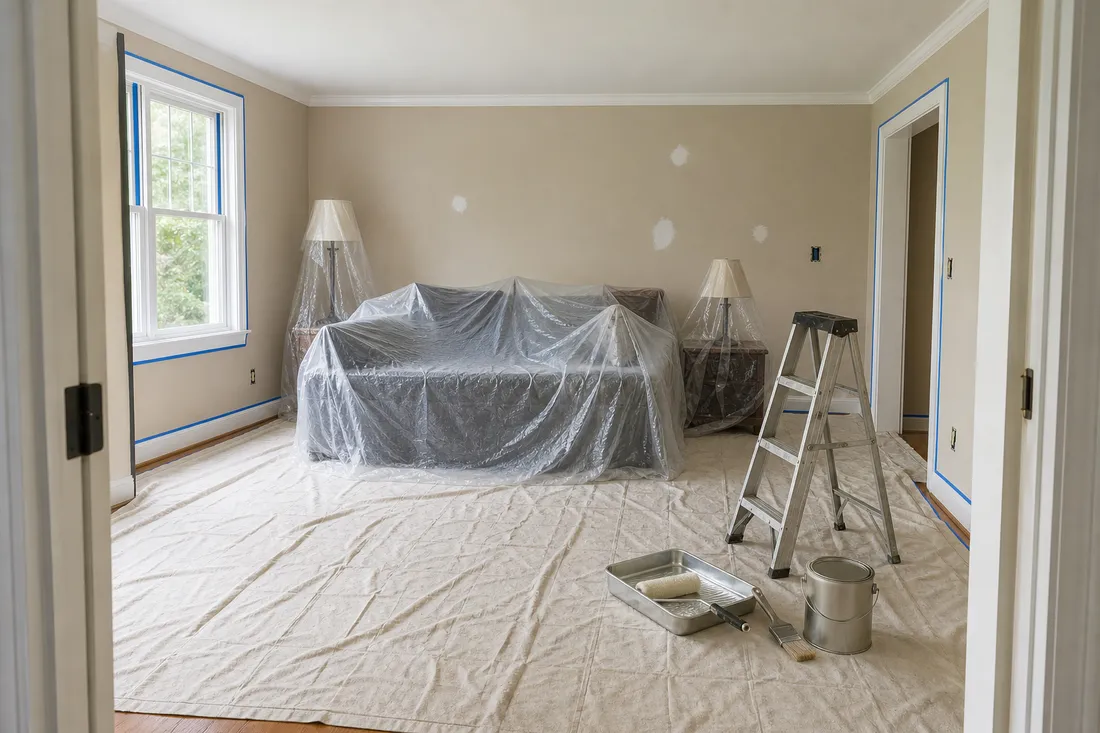
Prep is the stage a crew is most tempted to shorten. Benjamin Moore calls room preparation the most important place to start, and its sequence is cleaning, mildew removal, sanding and priming.
INTERIOR PREP: [Room]              [Date]
Crew: [Names]

PROTECT
[ ] Furniture moved to the center and covered
[ ] Floors covered wall to wall
[ ] Outlet and switch covers removed, screws bagged
[ ] Fixtures, vents and hardware masked or removed
[ ] Trim, windows and edges taped where needed

CLEAN
[ ] Walls washed with a sponge and warm water
[ ] Kitchen and greasy walls washed with detergent, then rinsed
[ ] Mildew treated, scrubbed and rinsed
[ ] All surfaces fully dry before the next step

REPAIR
[ ] Loose and flaking paint scraped
[ ] Holes and dents filled, left to dry
[ ] Cracks filled
[ ] Gaps at trim and casings caulked

SAND
[ ] Patches sanded flush
[ ] Glossy surfaces dulled
[ ] Dust wiped off with a damp cloth, left to dry

PRIME
[ ] Patches and bare spots spot primed
[ ] Stains sealed with stain-blocking primer
[ ] Full prime coat where agreed: [Areas]
[ ] Primer dry time checked on the can: [Hours]
Benjamin Moore says most walls can be washed with a sponge and warm water. Kitchen walls with oil or grime need a grease-cutting detergent followed by clean water. Paint applied to walls that are still damp can blister, which is why the dry check has its own box.
Never paint over mildew, because it will grow through the new paint. Benjamin Moore's mix for cleaning it is three to four parts water to one part bleach. Let it sit for a few minutes, scrub, rinse with clean water, and wear gloves and goggles.
Sanding depends on what is already on the wall. For a surface previously painted with water-based paint, Benjamin Moore recommends a fine-grit paper. For old oil-based paint it recommends a medium grit, 100 to 150.
Primer choice follows the stains you recorded in Template 1. KILZ notes that oil-based primers are often better at sealing water-soluble stains and tannin bleed, and it suggests them for fresh or knotty wood.
Template 5: Interior painting
A fixed order keeps drips off finished work. The order below runs from the top of the room down.
INTERIOR PAINTING: [Room]          [Date]
Product: [Brand, product, color, sheen]
Recoat time on the can: [Hours]

BEFORE OPENING A CAN
[ ] Color and sheen checked against the color sheet
[ ] Cans of the same color mixed together in one bucket
[ ] Paint stirred

FIRST COAT
[ ] Ceiling cut in, then rolled
[ ] Walls cut in, one 3 to 4 ft section at a time
[ ] Each section rolled while the cut line is still wet
[ ] Walls rolled from painted into unpainted areas
[ ] First coat time noted: [Time]

SECOND COAT
[ ] Recoat time passed: [Time]
[ ] First coat checked for misses, runs and lint
[ ] Second coat cut in and rolled in the same order

TRIM AND DOORS
[ ] Trim sanded, dusted and caulked
[ ] Trim and doors painted: [Coats]

END OF DAY
[ ] Tape pulled before the paint is completely dry
[ ] Lids sealed, brushes and rollers cleaned or wrapped
[ ] Floor checked for drips before the cloths come up
The cutting-in lines come from the Home Depot checklist. It advises cutting in three to four foot segments at a time and then rolling that area, because cutting in an entire room first yields an uneven look. It also recommends rolling in a three by three foot "W" pattern and keeping a wet edge, which means rolling from just-painted surfaces toward unpainted ones.
Write the recoat time on the sheet from the can, and do not guess it. Benjamin Moore puts the typical recoat time at one to two hours for most waterborne interior paints.
Benjamin Moore also says to remove tape before the paint is completely dry, because waiting too long can peel paint off with it.
Template 6: Exterior painting
Exterior work adds weather and height. Check both before the first ladder comes off the rack.
EXTERIOR PAINTING: [Client name]   [Date]
Elevation: [North / south / east / west]
Product: [Brand, product, color, sheen]

WEATHER
[ ] Forecast high and low: [°F]
[ ] Inside the temperature range on the product data sheet
[ ] No rain forecast for: [Hours after the last coat]
[ ] Surface dry, no dew or frost

LADDERS AND ACCESS
[ ] Each ladder inspected, damaged ladders tagged out
[ ] Overhead power lines located
[ ] Ladder on stable, level ground
[ ] Base set a quarter of the working length from the wall
[ ] Ladder extends 3 ft above the roof edge where used for access
[ ] Extension locks engaged

PROTECT
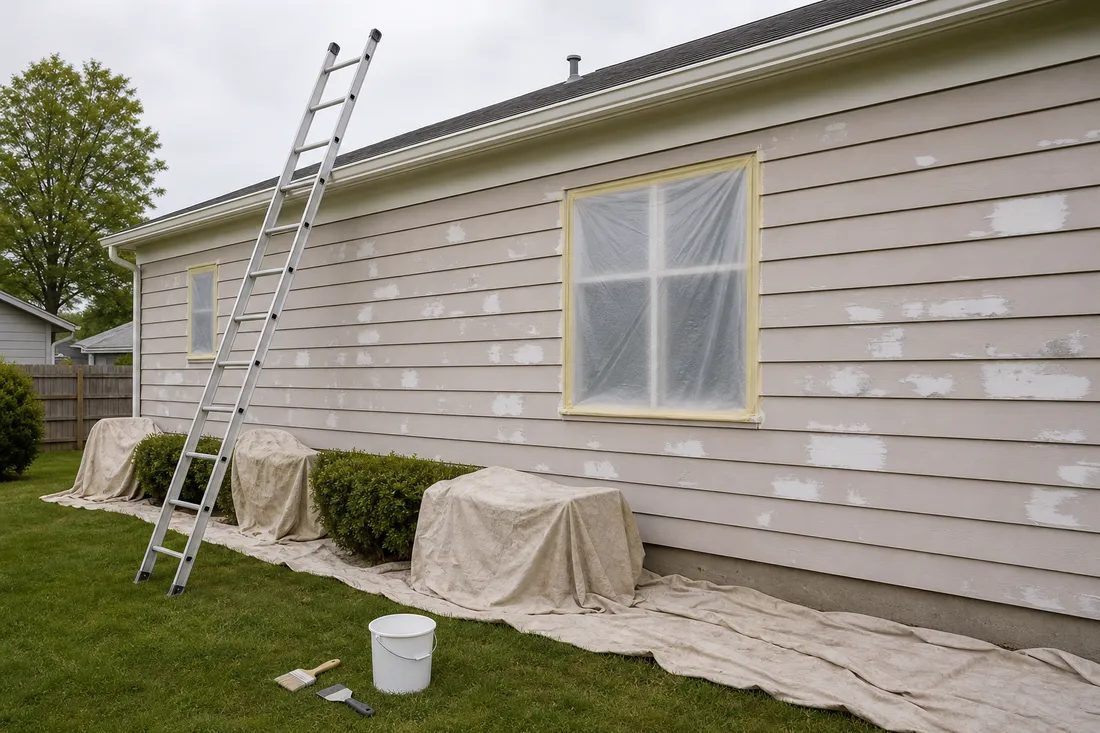
[ ] Plants and shrubs covered
[ ] Windows, fixtures and hardware masked

WASH AND REPAIR
[ ] Siding washed to remove dirt and mildew
[ ] Wash date: [Date]   Dry time allowed: [Hours]
[ ] Loose and peeling paint scraped, edges sanded smooth
[ ] Bare wood and repairs spot primed
[ ] Cracks and gaps at windows and doors caulked

PAINT
[ ] Shaded side started first
[ ] First coat applied: [Time]
[ ] Time between coats allowed: [Hours]
[ ] Second coat applied: [Time]

END OF DAY
[ ] Masking removed
[ ] Ladders down and secured
Manufacturers disagree on the temperature floor, so the checklist points to the data sheet for the product you are using. Sherwin-Williams' general guidance is to avoid painting when temperatures are below 50°F or above 90°F. Benjamin Moore says to refrain when the temperature drops below 40°F.
Dry time appears three times in an exterior job. Sherwin-Williams says to allow at least 24 to 48 hours for a house to dry after pressure washing. It suggests four to six hours between coats, and it says exterior paint typically needs at least 24 hours before it is exposed to rain. Benjamin Moore adds a number for wood, which should have a moisture content below 15% before you paint it.
Benjamin Moore recommends priming before caulking and patching. It also advises starting on the side of the house that will stay in the shade, because direct sunlight can make paint dry too quickly and cause lap marks and blistering.
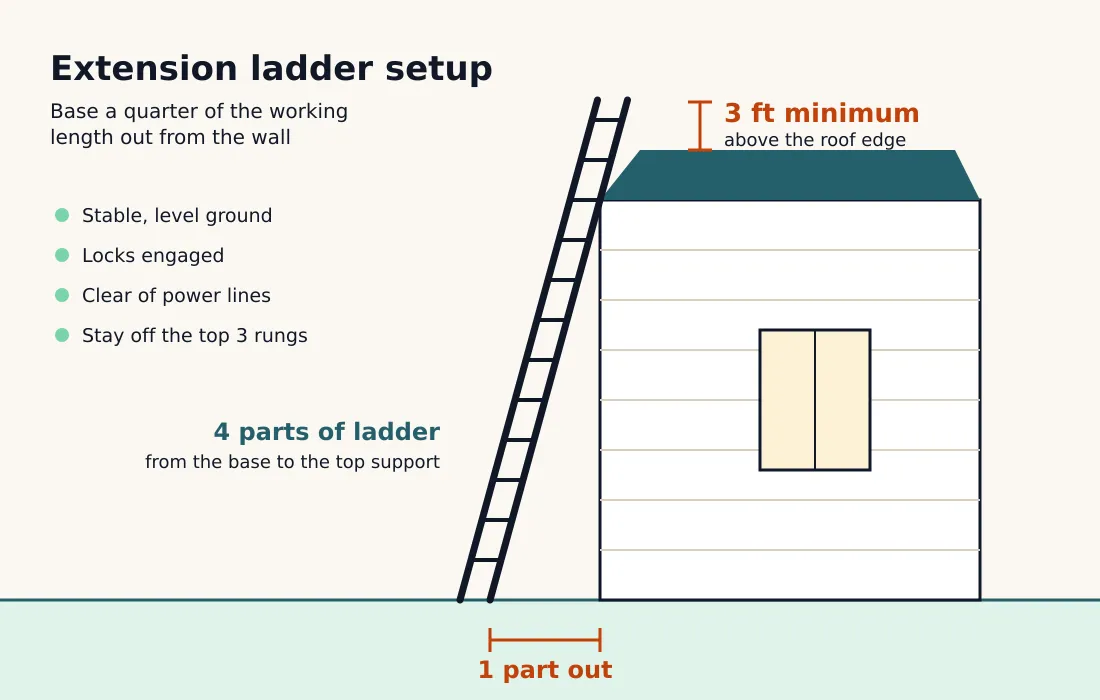
The ladder lines come from OSHA's portable ladder safety card. The setup angle is a base placed a quarter of the working length of the ladder from the wall. A ladder used to reach an elevated surface must extend at least three feet above the point of support, and nobody stands on the top three rungs of an extension ladder.
On a pre-1978 house, exterior scraping brings Template 3 back into play. Pressure washing is not a prohibited practice under the RRP Rule, but the EPA says it is subject to the same containment requirements as other work, wastewater included.
Template 7: Final walkthrough and closeout
Inspect your own work before the client does, and use a standard that both of you can apply. The Painting Contractors Association publishes one in its standard P1.
FINAL WALKTHROUGH: [Client name]   [Date]
Lead painter: [Name]

INSPECT (from about 39 inches, room lights on)
[ ] Color, sheen and texture uniform on every surface
[ ] No misses, thin spots or show-through
[ ] No runs, sags or drips
[ ] No lint, grit or brush hairs in the finish
[ ] Cut lines straight at ceilings, trim and corners
[ ] No paint on floors, glass, hardware or fixtures

TOUCH UP
[ ] Touch-up list written: [Items]
[ ] Each item corrected and checked again

PUT BACK
[ ] All tape and masking removed
[ ] Outlet and switch covers back on
[ ] Fixtures, vents and hardware reinstalled
[ ] Furniture returned to place
[ ] Floors vacuumed or swept

CLEAN UP
[ ] Trash and empty cans removed

HAND OVER
[ ] Leftover paint sealed and labeled: brand, product,
    color, sheen and room
[ ] Color sheet left with the client
[ ] Client walked through every room or elevation
[ ] Client items noted: [Items]    Corrected: [Date]

Painter signature: ______________  Date: ________
Client signature: _______________  Date: ________
The 39 inches comes from PCA standard P1. It says a surface is examined without magnification at a distance of 39 inches or more, under finished lighting conditions and from a normal viewing position. A work light held flat against the wall shows flaws that the room's own lights never will, and the standard does not call for one.
The same standard defines what you are checking for. A properly painted surface is uniform in appearance, color, texture, hiding and sheen. It is virtually free of runs, sags, misses and insufficient coverage, and free of drips, spatters and overspray caused by the painter.
Benjamin Moore suggests labeling each can with the brand of paint, the color, the product name and the sheen, so touch-ups match later. It says most opened paint has a shelf life of two years when stored well.
Get the client's signature before you send the final painting invoice.
Questions painters ask about painting checklists
What should a painting checklist include?
It should include the scope, the supplies, the prep steps, the painting order and the final inspection. A contractor's version adds the agreed areas, the lead check for older homes and a signed walkthrough.
How much paint do you need for one room?
Plan on roughly one gallon per 350 to 400 square feet of wall for each coat. That is the typical coverage Sherwin-Williams gives, and it puts primer lower at about 200 to 300 square feet. Wall texture changes the number, so check the coverage on the can.
Do painters need lead certification?
Yes, when you are paid to disturb paint in a home or child-occupied facility built before 1978. The EPA says this covers all firms, including sole proprietorships, and it names painting preparation as a covered activity. The main exemption is minor work that disturbs six square feet or less per room inside, or 20 square feet or less outside.
What temperature is too cold to paint outside?
It depends on the product, so read the data sheet for the coating you are applying. Sherwin-Williams' general guidance is to avoid painting below 50°F or above 90°F. Benjamin Moore says to refrain when the temperature drops below 40°F.
Let homeowners request a paint job online
A homeowner who decides to repaint the bedrooms usually starts looking in the evening, after your phone is off. Kejoola gives a painter a four-page website with Home, Services, Blog and Contact pages and an online booking form. The form asks for a name, email, phone number and a notes box, so the homeowner can say which rooms, what year the house was built, and when they want the work done. You read the request the next morning, call back, and bring Template 1 to the visit.
Sources
- Sherwin-Williams: Painting Project Checklist
- Sherwin-Williams: Paint Calculator
- Sherwin-Williams: How to Paint a House Exterior
- The Home Depot: Paint Project Checklist
- Benjamin Moore: Essential House Painting Supplies
- Benjamin Moore: Preparing Walls for Painting
- Benjamin Moore: 11 Painting Mistakes to Avoid
- Benjamin Moore: How to Paint Your Home Exterior
- Benjamin Moore: Storing Leftover Paint
- KILZ: The Ultimate Painting Checklist for Any Project
- EPA: Lead Renovation, Repair and Painting Program
- EPA: Renovation, Repair and Painting Program for Contractors
- EPA: Work Practice Standards Under the RRP Rule
- OSHA: Portable Ladder Safety Quick Card
- PCA: Industry Standard P1