How to Start a Carpet Cleaning Business: Step-by-Step Guide
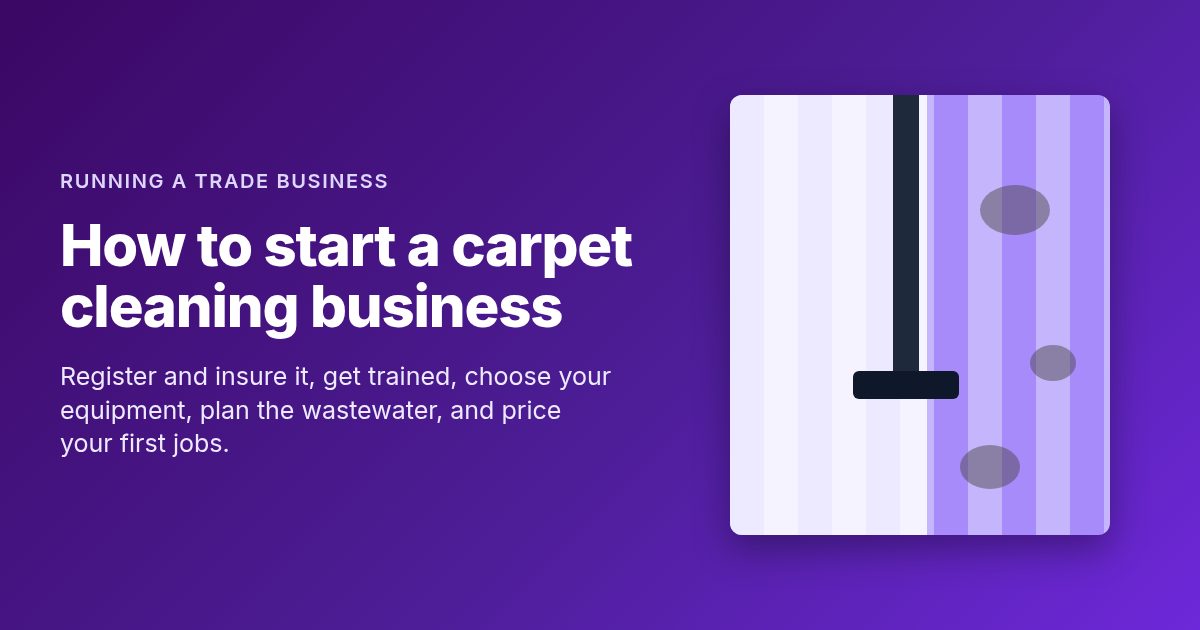
How to start a carpet cleaning business: register and insure it, get IICRC training, choose a portable or truck-mount setup, plan your wastewater, price by room, and book first jobs.
Josh · Oct 28, 2026 · 14 min read
- how to start a carpet cleaning business
- carpet cleaning business
- carpet cleaning equipment
- carpet cleaning pricing
- iicrc certification
- small business
To start a carpet cleaning business, register the company, check your local license and tax rules, and buy insurance that covers the carpet and furniture you work on. Then get trained, choose a portable or truck-mounted setup, plan where your dirty water goes, price by the room or square foot, and win your first jobs from nearby homes, landlords, and real estate agents.
These steps are written for a U.S. owner starting solo or with one helper. Rules and taxes differ by state and city, so confirm each one with your own local offices.
Why your first decisions matter in carpet cleaning
Carpet cleaning is one of the easier trades to start. You don't need a state trade license in most places, and you can begin with one machine and a van. Three early decisions still shape the whole business.
The first is equipment. A portable extractor and a truck mount lead to different vans, different budgets, and different jobs. Buying the wrong one early can tie up your cash for years.
The second is water. Every job ends with a tank of dirty water full of soil, fibers, and cleaning chemicals. Where you dump it is regulated, and a careless dump into a street drain can bring fines and a bad local reputation.
The third is damage. You work on rugs, stairs, and furniture that belong to someone else. A shrunk wool rug, a bleached spot, or a carpet that stays wet long enough to smell can cost you more than the job paid. Training and the right insurance cover most of that risk, so they come before your first paid job.
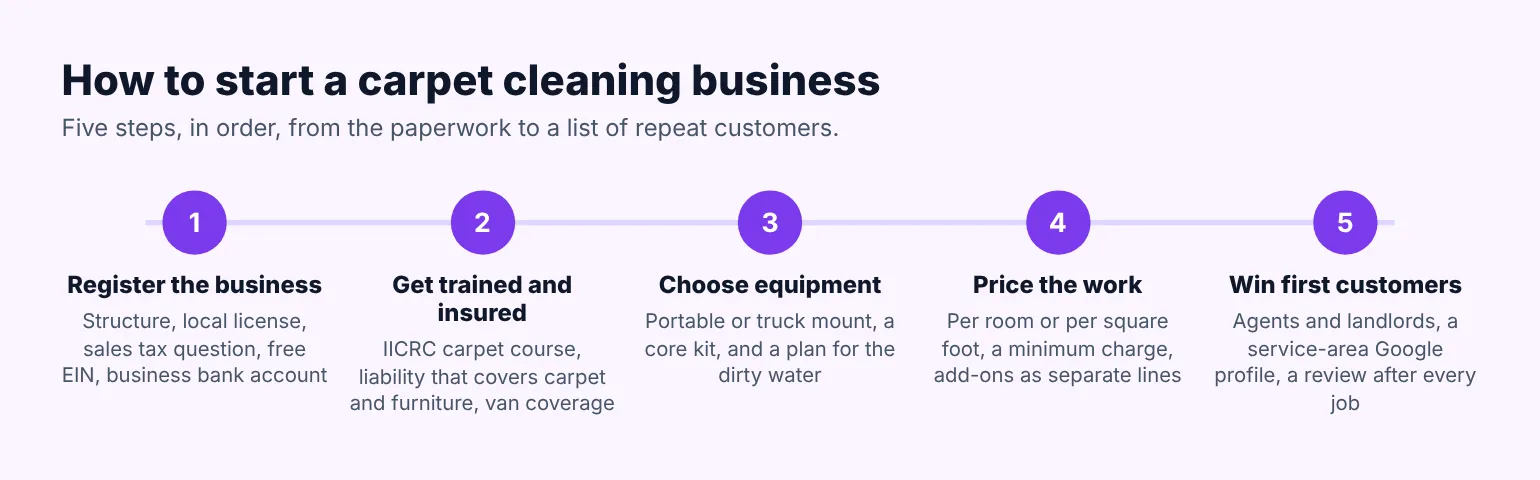
The order to work through, from paperwork to repeat customers. Diagram only.
Step 1: Register the business and check local rules
Most places don't require a special license to clean carpets. What you usually need is a business registration, a local business license, and a tax setup that fits your state.
Choose a structure and register it
The SBA explains that a sole proprietor can be held personally liable for the debts and obligations of the business. An LLC protects personal assets like your vehicle, house, and savings in most instances. Ask an accountant before you file, because the choice also affects your taxes. The SBA says the total cost to register is less than $300 in most cases, though fees vary by state and structure.
Pick a name that's easy to say on the phone and read on the side of a van. Use the same legal name on your registration, insurance, and bank account. If you're stuck, the list of cleaning business name ideas is a good place to start.
Ask your city, county, and state what they require
Call your city or county business license office and ask four questions:
- Do I need a general business license to clean carpets here, and in each town I plan to cover?
- Do I need a permit to park a work van at home or run equipment from it?
- Who is the local wastewater authority, and do they need to approve how I dispose of cleaning water?
- Does commercial work, like offices or apartment turnovers, change what I need?
Then check with your state's revenue department. The SBA notes that income, sales, and other taxes vary a lot from place to place. Some states tax carpet cleaning services and some don't, and products you sell, like spot removers, may be taxed differently. Ask before you send your first invoice.
Get a free EIN and keep the money separate
Apply for an EIN directly from the IRS. It's free, and the IRS warns that you never have to pay a fee for one, so skip the websites that charge.
Open a business bank account the same week. Run every chemical order, fuel stop, and customer payment through it. Move a share of each payment into a separate account for taxes, since nobody withholds tax from an owner's pay.
Step 2: Get trained and insure the work
Training teaches you how to clean each fiber without damaging it. Insurance pays when something goes wrong anyway. Get both before you clean a stranger's carpet for money.
Take an IICRC carpet cleaning course
The IICRC Carpet Cleaning Technician (CCT) certification is the usual starting point for this trade. It covers fiber and yarn identification, carpet construction, soiling conditions, cleaning chemistry, and pre-inspection, with a residential and light commercial focus. There are no prerequisites, and it's offered both in person and by live stream.
The IICRC FAQ lists the details you'll want before you sign up:
- The exam fee is $80, and a retest costs the same.
- You have 45 days from the last day of the course to take the exam, and two chances to retest if you fail.
- Certification takes 4 to 6 weeks to process after the exam.
- You pay a renewal fee every year and complete 14 continuing education hours every four years.
Certification isn't a government license. It still helps with property managers and commercial clients, who often ask for it before they hire you. Before your first paid job, practice on your own carpets and a few friends' homes, and keep notes on what each fiber did.
Insure the carpets and furniture you work on
Buy general liability coverage before your first paid job, then read what it actually covers. Ask a commercial insurance agent these questions:
- Does the policy cover damage to the carpet, rugs, and furniture I'm working on, or only damage to other property?
- Does it cover water damage, like a leak from my hose or a ceiling stain below a wet floor?
- Is my van covered for business use, and is the equipment inside it covered?
- What changes when I hire my first helper, and when do I need workers' compensation?
Keep a copy of your certificate of insurance on your phone. Property managers and office buildings often ask for one before you start.
Decide later whether to become a Certified Firm
The IICRC also certifies companies. The FAQ says a Certified Firm needs current liability insurance, at least one active certified technician, and a completed application. The firm pays a $25 application fee plus a prorated first-year fee, then $199 a year to renew. Most new owners wait until they want listings or commercial contracts that ask for firm status.
Step 3: Choose your equipment and plan your water
Buy for the jobs you'll take in the next six months. A new owner doesn't need the biggest machine on day one. What matters is that the setup fits your budget, your vehicle, and your first customers.
Pick portable, truck mount, or low-moisture
| Setup | Best for | Trade-off |
|---|---|---|
| Portable hot water extractor | Starting on a small budget, apartments and condos, upper floors | Slower on big jobs, and you carry it up every flight of stairs |
| Truck-mounted extractor | Larger homes, heavy soil, steady volume | Big upfront cost, needs a dedicated van, and hoses must reach from the street |
| Low-moisture or encapsulation machine | Commercial maintenance on a schedule | Less effective on heavily soiled residential carpet, so most owners add it later |
Many owners start with a good portable extractor, a vacuum, and a small van or SUV. They move to a truck mount once they have enough repeat work to keep it busy every week. If you plan to work high-rise condos, a portable may stay in your kit even after you buy a truck mount.
Build the core kit
Most of the starter kit fits in one vehicle:
- An extractor (portable or truck mount) with hoses long enough for two-story homes
- A commercial upright or canister vacuum for pre-vacuuming
- A pump sprayer for pre-spray and a separate one for rinse
- A carpet rake or grooming brush
- Spot removers for common stains, like coffee, pet urine, and red dye
- An upholstery tool and a stair tool
- Air movers to speed up drying
- Corner guards, furniture blocks, and plastic tabs for lifted furniture
- Floor runners and shoe covers to protect the customer's home
- A moisture meter and a urine detection light for pet odor jobs
Keep the safety data sheet for every chemical you carry. OSHA's Hazard Communication Standard requires employers to have labels and safety data sheets for hazardous chemicals and to train workers to handle them. Start that habit before your first hire, so your helper can find the right sheet in the van.
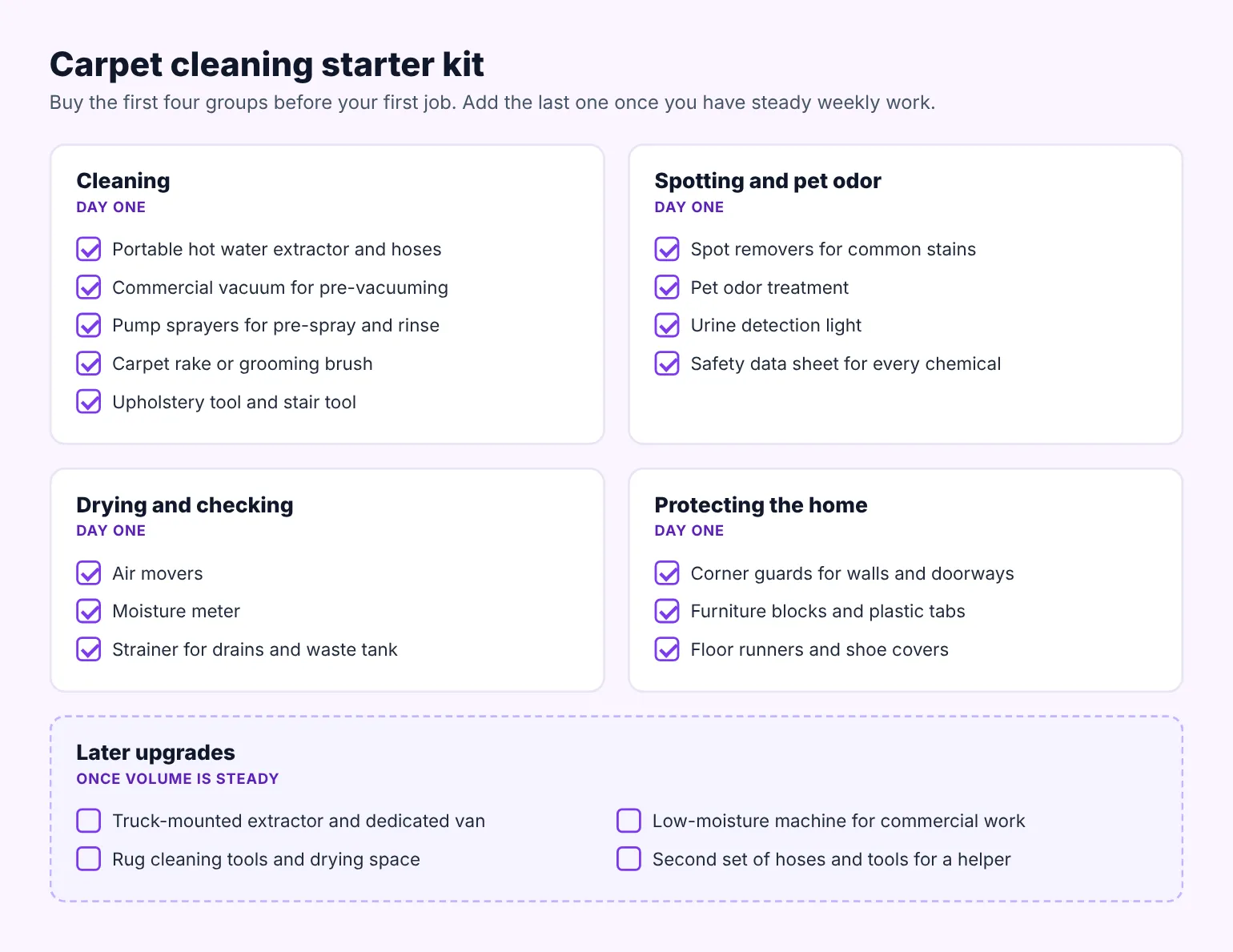
A starter kit sorted by job. Checklist only, not a shopping list for any one brand.
Plan where your dirty water goes
Decide where the waste water will go before you start each job. The Indiana Department of Environmental Management's carpet cleaning fact sheet is a clear example of how state and local rules work:
- It is illegal to discharge carpet cleaning wastewater into storm sewers, which carry water to lakes and streams untreated.
- With permission from the local wastewater treatment authority, cleaners may discharge into a sanitary sewer connection, after filtering out fibers and debris.
- Businesses on a septic system should ask the local health department before using it.
- Wastewater can also be containerized and taken to the treatment plant with permission, or picked up by a licensed septic hauler.
- Non-toxic and biodegradable products still harm aquatic life and still need proper disposal.
Rules differ by state and city, so call your own wastewater authority. On the job, ask the customer before you use their toilet, utility sink, or sewer cleanout. Carry a strainer so carpet fibers don't clog their drain.
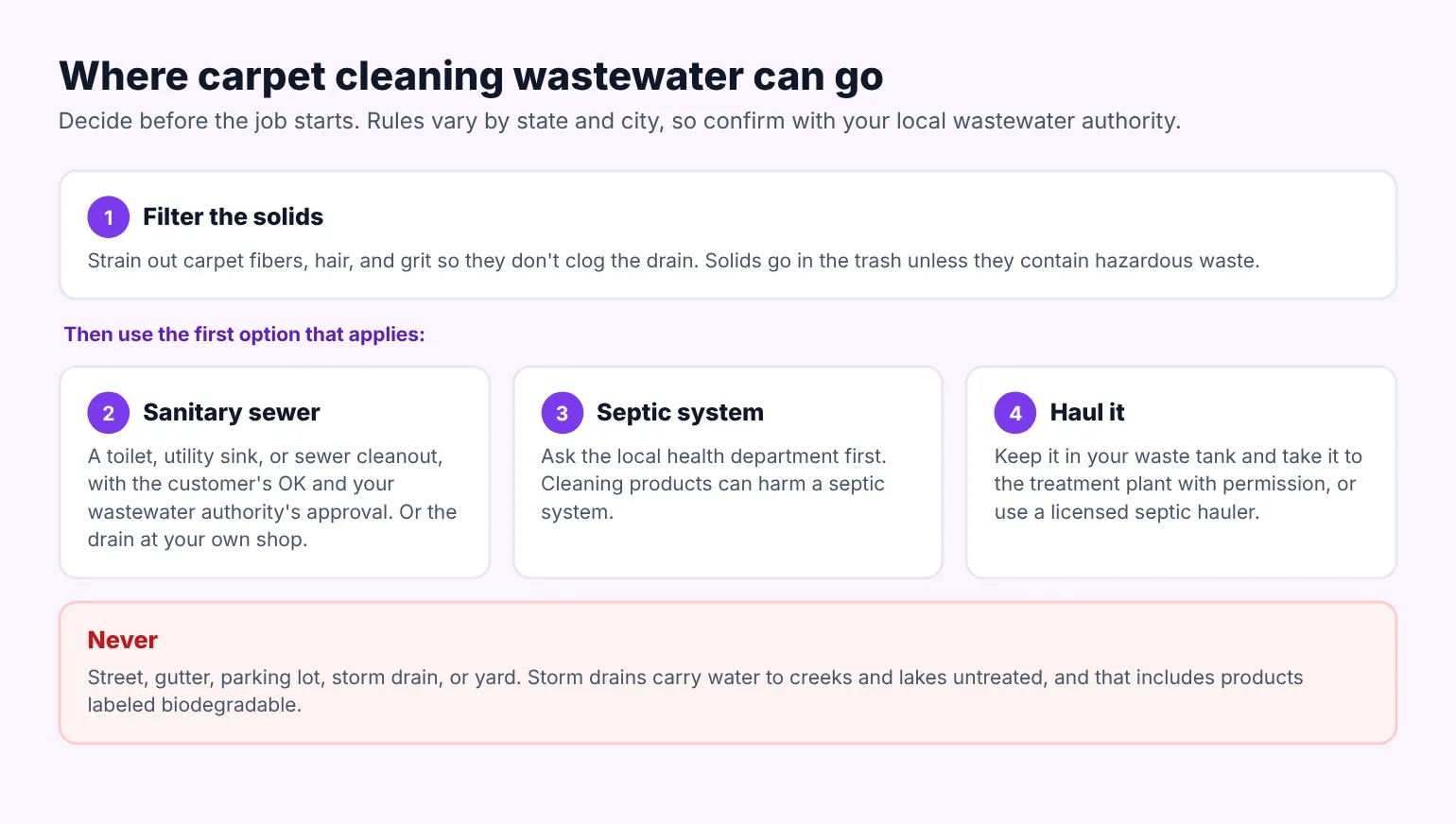
Where the dirty water can go, in order. Check your own city's rules before each new area.
Step 4: Price by the room or the square foot
Your price has to cover your time in the home, the drive, chemicals, fuel, insurance, and the quotes that never book.
Choose a pricing method
| Pricing method | Best for | Trade-off |
|---|---|---|
| Per room | Most homes, quick phone quotes | Room sizes vary, so define a standard room size and charge extra above it |
| Per square foot | Large open areas, commercial floors | You need a measurement, so ask for a floor plan or measure on site |
| Flat package (for example, three rooms and a hallway) | Easy marketing, fast booking | A big great room can turn a package into a losing job |
| Hourly | Restoration, heavy pet damage, unknown conditions | Customers worry about the total, so give a written range |
Write down a few rules before your first quote. Decide what counts as one room, whether hallways and closets are included, and how you price stairs. Use the same rules on every quote so two neighbors with the same house get the same price.
Check every quote against your day
Before you settle on rates, work out what a working day has to bring in. Add up your monthly fixed costs, like insurance, the van payment, your phone, and software. Divide by the days you plan to work, then add the pay you want for each day. That's your day target.
Then check each job against it. If a job takes half your day, drive time included, it should bring in at least half your day target. The same rule helps when you send written quotes, and these cleaning estimate templates give you wording to start from.
Set a minimum charge and price the add-ons
A minimum charge keeps a one-room job from costing you money once setup and travel are counted. Price these as separate lines, so a customer can see why one home costs more than another:
- Stairs, priced per step or per flight
- Pet odor treatment and heavy spotting
- Upholstery, by piece or by seat
- Area rugs, by size, with fiber checked first
- Carpet protector after cleaning
- Moving heavy furniture
Step 5: Win your first carpet cleaning customers
Start with people who need clean carpet on a deadline
Move-outs create urgent work. Introduce yourself to local real estate agents, property managers, and small landlords who turn over rentals. Leave a short price sheet and a certificate of insurance. One property manager with several rentals can keep your slow weeks busy.
Set up a Google Business Profile as a service-area business
You go to the customer, so set up the profile as a service-area business with the towns you actually cover. If you work from home, the steps to hide your address on Google Business Profile keep your house off the map. Add your services and before-and-after photos from real jobs.
Ask for a review before you leave
Ask while the customer is looking at the clean carpet. The steps to get Google reviews from happy customers take a few minutes once your review link is saved on your phone.
Build a list of repeat customers
Carpets get dirty again, and pet owners and families with young kids often clean on a regular cycle. After each job, note the customer's name, the rooms, and anything special, like a wool rug or a stubborn stain. Set a reminder in your own calendar to contact them when their next cleaning is likely due. A repeat customer costs nothing to find.
Common problems and how to fix them
A spot comes back after the carpet dries
This is usually wicking, where soil deep in the pad or backing rises to the surface as the carpet dries. Use less water on that spot, extract more, and set a weight of towels on it while it dries. Tell the customer it may happen on old spills, and offer a free return visit for that spot.
The carpet stays damp too long
Long drying times usually mean too much water or too little extraction. Make extra dry passes, run air movers, and ask the customer to turn on the air conditioning or open windows. Write a short drying note to leave behind, and keep a moisture meter on the van to check before you go.
A customer blames you for an old stain or worn traffic lane
Walk every room with the customer before you start. Point out stains, wear, and loose seams, and note any that may not come out. Take photos. A short pre-inspection prevents most arguments at the end of the job.
There's no sewer connection you can use
Some homes are on septic and some offices won't let you use their drains. Keep the water in your waste tank, and take it to an approved disposal point. Never dump it in a street drain, a yard, or a parking lot, even if the product says it's biodegradable.
Where a bookable site fits
Once reviews and referrals start, many homeowners will look you up before they call. A Kejoola site, for example, is four pages (Home, Services, Blog, Contact) with online booking. A homeowner picks a time and types the address, the rooms, and any pet stains or stairs in the notes box, and the booking lands in your bookings. You can confirm the room count and the price before you show up. The post on carpet cleaning websites covers what that site should include.
Questions owners ask about starting a carpet cleaning business
How much does it cost to start a carpet cleaning business?
It depends mostly on your equipment choice. The SBA says registering a business usually costs less than $300, the IRS issues EINs for free, and the IICRC exam fee is $80. A portable extractor keeps your startup cost low. A truck mount and a dedicated van cost far more, so get real quotes before you commit.
Do you need a license to start a carpet cleaning business?
Usually you need a general business license, not a trade license. Ask your city or county business license office, and check each town you plan to work in. Also ask your wastewater authority about disposal rules, and your state's revenue department about sales tax on cleaning services.
Is IICRC certification required to clean carpets?
No, it's not a legal requirement in most places. It's still worth taking early. The CCT course has no prerequisites and teaches fiber identification and pre-inspection, which prevent most damage claims. Property managers and commercial clients often ask for it before they hire you.
Should you start with a portable machine or a truck mount?
Many new owners start with a portable. It costs far less, fits in a smaller vehicle, and works in apartments and upper floors where truck mount hoses are hard to run. Move to a truck mount once you have steady weekly volume in larger homes.
How do carpet cleaners charge for their work?
Most charge per room for homes, with separate prices for stairs, upholstery, rugs, pet treatment, and protector. Commercial jobs are often priced per square foot. Set a minimum charge so small jobs still cover setup and travel, and use the same room rules on every quote.
Give homeowners a way to book your first carpet cleaning jobs
If you want a site where customers can see your services and book a time, you can get a site customers can book from with Kejoola. Already have a Google Business listing? Paste your listing link to get a first draft of your site, then finish it with your own services, towns, and photos.
14-day free trial, no card needed. Online booking starts on the Starter plan.
Sources
- Launch your business: structure and registration (U.S. Small Business Administration)
- Get an employer identification number (IRS)
- Carpet Cleaning Technician certification (IICRC)
- Certification FAQs (IICRC)
- Hazard Communication (OSHA)
- Environmental aspects of carpet cleaning (Indiana Department of Environmental Management)