Pest Control Invoice: 8 Free Templates for Exterminators
Eight copy-paste pest control invoice templates for one-time treatments, recurring plan visits, termite jobs with a deposit, inspections, commercial accounts, and no-charge re-services, plus the invoice email and a past-due reminder.
Josh · Nov 14, 2026 · 16 min read
- pest control invoice
- pest control invoice template
- exterminator invoice
- termite invoice
- pest control business
A pest control invoice is the bill you give a customer after an inspection or treatment. It names the target pest, the areas you treated and the products you applied, then lists the service charge, tax where your state requires it, and the balance due. The eight templates below cover a one-time treatment, a recurring plan visit, a termite job with a deposit, an inspection, a commercial account, a no-charge re-service, the email that carries the invoice, and a past-due reminder.
Write the invoice before you leave the property. A bill that says what you found and where you treated answers most questions before the customer has to call.
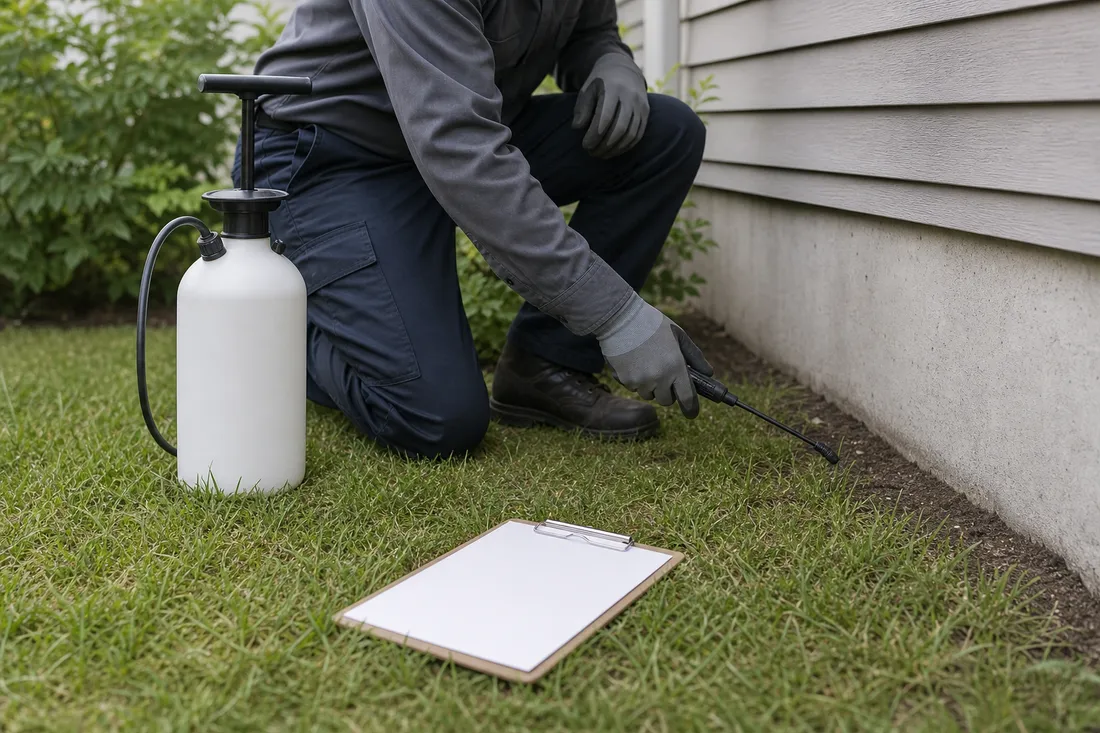
Fill in the invoice on site, while the treated areas and the product labels are still in front of you.
What every pest control invoice needs
An invoice is the customer's record of the visit and your record of the sale. The IRS lists invoices among the supporting documents that back up the entries in your books and on your tax return. Write each one for two readers: the customer who pays it and you at tax time.
Pest control bills carry details that other trades skip. The customer cannot see most of what you did, so the invoice has to say it: which pest, which rooms or zones, which product. The EPA's advice to homeowners says a reliable applicator will show credentials and provide copies of pesticide labels, so expect customers to ask what was applied. A license number in the header and a product line on the bill answer both questions.
| Part | What to write | Example line |
|---|---|---|
| Header | Business name, phone, email, license number, invoice number, date | "Lic. #[Number] · INV-2217" |
| Customer and site | Bill-to name and address, service address, PO number if any | "Service at: 18 Birch Ct" |
| Target pest | What you were called for and what you found | "German cockroaches, kitchen" |
| Areas treated | Rooms, zones or linear feet | "Kitchen, both baths, garage" |
| Products applied | Product name, EPA registration number, amount | "[Product] · EPA Reg. [No.]" |
| Line items | Service charge, add-ons, devices installed | "Rodent stations × 4" |
| Totals | Discounts, tax if required, deposit received, balance due | "Deposit received: -[Amount]" |
| Terms | Due date, payment methods, guarantee, next visit | "Next service: week of [Date]" |
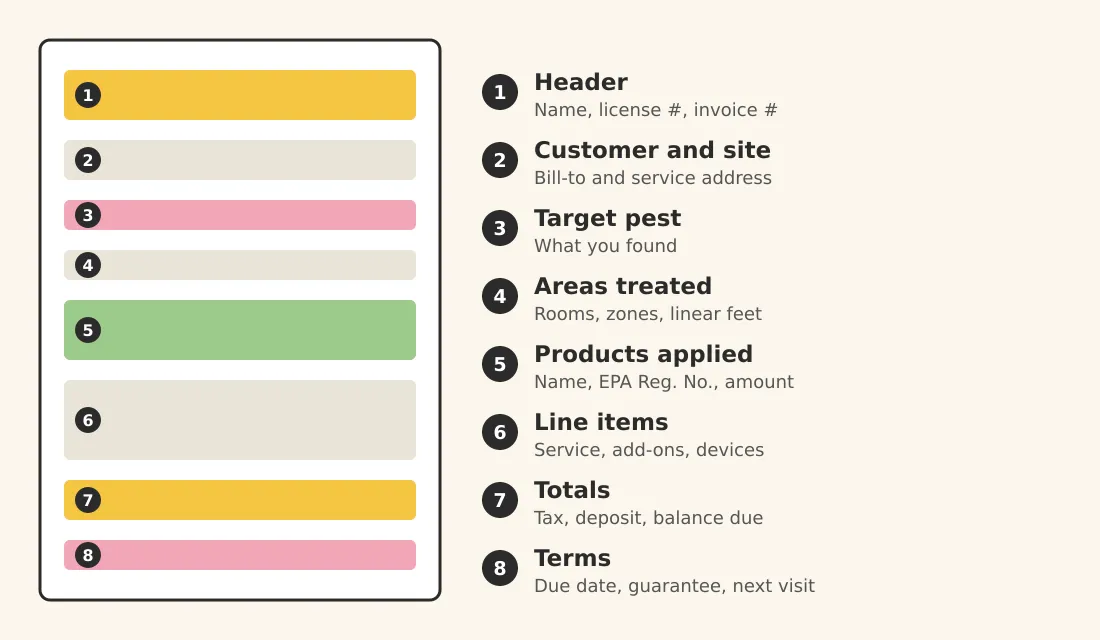
The parts a pest control invoice can carry. Skip the ones a job does not need. Diagram only.
Number invoices in order and never reuse a number. "INV-" plus a running count is enough. When a customer calls in March about a charge, the number takes you straight to the October visit.
Product details, use records, and notices
Your state decides what you must record about each application and what you must hand the customer. The invoice is a convenient place to keep much of it, because you already write one for every visit.
Texas shows how detailed the record can be. Its rule on pest control use records says records of pesticide use must be kept for two years. They must include the customer's billing name and address, the service address, the pesticide names and EPA registration numbers, the amounts applied, the target pest, the date, and the name and license number of the applicator. If your invoice or service ticket carries those fields, one document covers billing and the record.
California handles the customer side with a notice. A registered structural pest control company must give the owner and any tenant a written notice naming the pest to be controlled, the pesticides proposed and their active ingredients. On a periodic contract, the notice also states how often treatment will be done. That notice is a separate requirement from the bill, so an invoice does not replace it.
Other states set their own lists and retention periods. Ask your state's pesticide regulator which fields your records need, then build those fields into your invoice once.
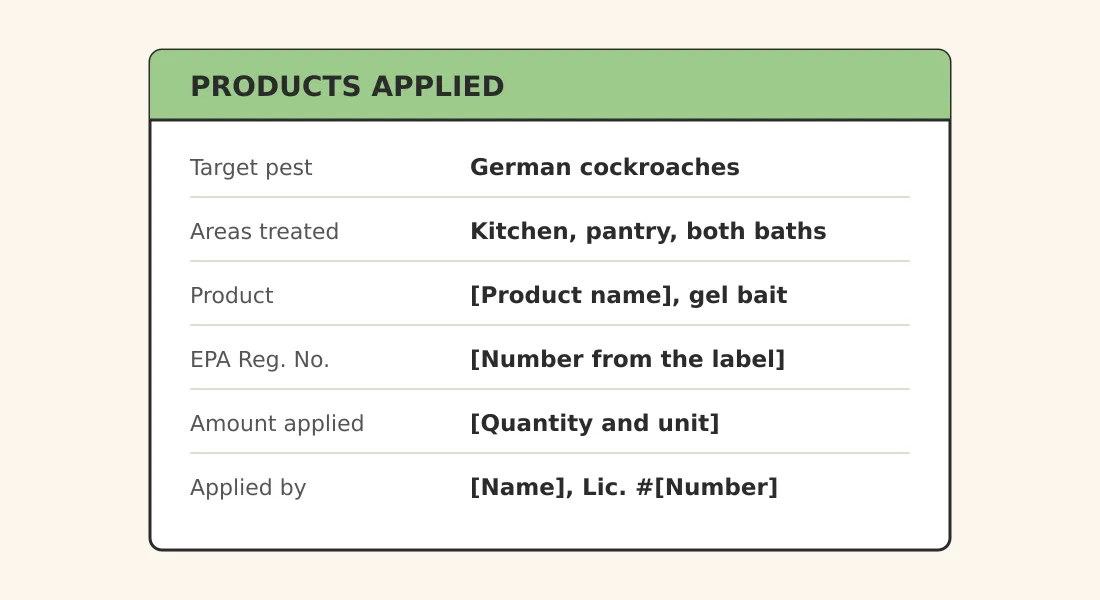
A product block that records what was applied, where, and by whom. Values are placeholders. Diagram only.
Sales tax on a pest control invoice
Whether you charge sales tax depends on your state, and the answers differ widely. Texas is a clear example of a state that taxes the service. The Texas Comptroller says structural pest control providers must collect sales tax on the total amount charged, including any additional fees, even when pests are not found. The same page gives the rate as 6.25 percent state tax plus up to 2 percent local tax.
That page also explains why line items matter. If you perform both taxable and nontaxable services in Texas, your invoice must state the charges for each separately, and you collect tax only on the taxable ones. It lists live trapping of an animal as nontaxable, for example, while inspection and treatment are taxable.
Other states treat pest control differently. Check with your state revenue department before you print a tax line on every bill.
When to send each pest control invoice
| Situation | Send when | Channel |
|---|---|---|
| One-time treatment | Before you leave the property | Printed copy or email from your phone |
| Recurring plan visit | Same day as the visit | |
| Termite job with deposit | Deposit invoice at signing, final invoice at completion | |
| Inspection | With the written report | |
| Commercial account | Per the customer's billing terms, with the PO number | Email to accounts payable |
| No-charge re-service | Same day, showing a zero balance | |
| Past due | The day after the due date, then 7 days later | Email first, then a call |
1. One-time treatment invoice
This is the everyday invoice for a single visit, such as ants in a kitchen, a wasp nest under an eave, or a flea treatment after a tenant moves out. Write what you found as well as what you did. Customers accept the charge more easily when the bill describes the problem they saw.
INVOICE
[Business name] · [Phone] · [Email]
License #: [Number]
Invoice #: INV-[Number]    Date: [Date]
Due date: [Date or "Due on completion"]

BILL TO
[Customer first name] [Last name]
[Billing address]

SERVICE ADDRESS
[Address, unit, gate code if any]

SERVICE SUMMARY
Target pest: [e.g. "Odorous house ants"]
Found: [e.g. "Trail from back door to
pantry. Nest in mulch bed by patio."]
Done: [e.g. "Baited kitchen and pantry.
Treated exterior perimeter and patio."]

AREAS TREATED
Interior: [Rooms]
Exterior: [Perimeter / zones]

PRODUCTS APPLIED
Product: [Name]   EPA Reg. No.: [Number]
Amount: [Quantity and unit]
Applied by: [Name], Lic. #[Number]

CHARGES
Qty  Description               Rate      Amount
1    [Pest] treatment, one-time [Rate]   [Amount]
[X]  [Add-on, e.g. nest removal] [Rate]  [Amount]

Subtotal:                                [Amount]
Sales tax (if required):                 [Amount]
BALANCE DUE:                             [Amount]

PAYMENT
Accepted: [Cash / check / card]
Checks payable to: [Business name]

GUARANTEE
[e.g. "Free re-service within [X] days if
the same pest returns."]

CUSTOMER NOTES
[Re-entry time, pets, what to expect]
Use the customer notes box for the precautions on the product label and anything the customer should do, like leaving bait placements alone. If you offer a re-service period, print the end date instead of a day count so nobody has to work it out later.
2. Recurring service invoice (monthly or quarterly plan)
Use this for each visit on a service plan. The customer already agreed to the price in the pest control contract, so the invoice stays short. Its job is to show which visit this is, what you saw, and when you will be back.
INVOICE
[Business name] · [Phone] · [Email]
License #: [Number]
Invoice #: INV-[Number]    Date: [Date]
Due date: [Date]

BILL TO
[Customer name]
[Billing address]

SERVICE ADDRESS
[Address]

PLAN
[Plan name]   Frequency: [Monthly / Quarterly]
Visit: [#] of [#]   Service period: [Dates]

THIS VISIT
Activity found: [e.g. "No interior activity.
Spider webs at front eaves."]
Done: [e.g. "Exterior perimeter treatment.
Swept eaves. Checked garage stations."]
Stations checked: [#]   Replaced: [#]

PRODUCTS APPLIED
Product: [Name]   EPA Reg. No.: [Number]
Amount: [Quantity and unit]
Applied by: [Name], Lic. #[Number]

CHARGES
Description                              Amount
[Plan name], [period] service            [Amount]
[Add-on outside the plan, if any]        [Amount]

Subtotal:                                [Amount]
Sales tax (if required):                 [Amount]
BALANCE DUE:                             [Amount]

NEXT SERVICE
Week of [Date]. [How you will confirm]

PAYMENT
[Autopay on file / pay by check or card]
Record activity even when there is none. "No interior activity" tells a plan customer the service is working, which is the reason they keep paying for it. Bill anything outside the plan on its own line so the plan price never appears to change.
3. Termite treatment invoice with a deposit
Termite work is larger, often sold with a written estimate and a diagram, and usually paid in two parts. Send a deposit invoice when the customer signs and a final invoice when the treatment is done. Both should point back to the estimate number so the three documents read as one job.
INVOICE: [DEPOSIT / FINAL]
[Business name] · [Phone] · [Email]
License #: [Number]
Invoice #: INV-[Number]    Date: [Date]
Estimate ref: EST-[Number]
Due date: [Date]

BILL TO
[Customer name]
[Billing address]

SERVICE ADDRESS
[Address]

TREATMENT
Target pest: [Subterranean / drywood termites]
Method: [Liquid / bait system / fumigation]
Area treated: [Linear or square feet]
Treatment date(s): [Dates]
Diagram: [Attached / on estimate]

PRODUCTS APPLIED
Product: [Name]   EPA Reg. No.: [Number]
Amount: [Quantity]   Mix rate: [Rate]
Bait stations installed: [#]
Applied by: [Name], Lic. #[Number]

CHARGES
Description                              Amount
Termite treatment per EST-[Number]       [Amount]
[Approved change, if any]                [Amount]

Contract total:                          [Amount]
Sales tax (if required):                 [Amount]
Deposit received [Date]:                -[Amount]
BALANCE DUE:                             [Amount]

WARRANTY
[Term, what it covers, renewal fee and date]
Texas requires its termite records to include the area treated per application site, which is why the template has a line for it. Put the warranty renewal date on the final invoice. It is the line the customer looks for a year later, and it gives you a reason to get back in touch.
4. Inspection invoice
Use this when the visit is an inspection with a written report and no treatment, such as a pre-purchase termite inspection or a rodent entry-point survey. If you credit the inspection fee toward treatment, say so on the bill.
INVOICE
[Business name] · [Phone] · [Email]
License #: [Number]
Invoice #: INV-[Number]    Date: [Date]
Due date: [Due on delivery of report]

BILL TO
[Customer / agent / buyer name]
[Billing address]

PROPERTY INSPECTED
[Address]

INSPECTION
Type: [Termite / rodent / general pest]
Requested by: [Name and role]
Inspector: [Name], Lic. #[Number]
Areas inspected: [Interior, attic, crawl
space, exterior, outbuildings]
Areas not accessible: [List, or "None"]
Report: [Attached / report number]

CHARGES
Description                              Amount
[Type] inspection and written report     [Amount]

Subtotal:                                [Amount]
Sales tax (if required):                 [Amount]
BALANCE DUE:                             [Amount]

NOTE
[e.g. "This fee is credited toward treatment
booked within [X] days."]
List the areas you could not reach. A locked crawl space or a blocked attic hatch belongs on the invoice as well as in the report, so the bill matches what was actually inspected.
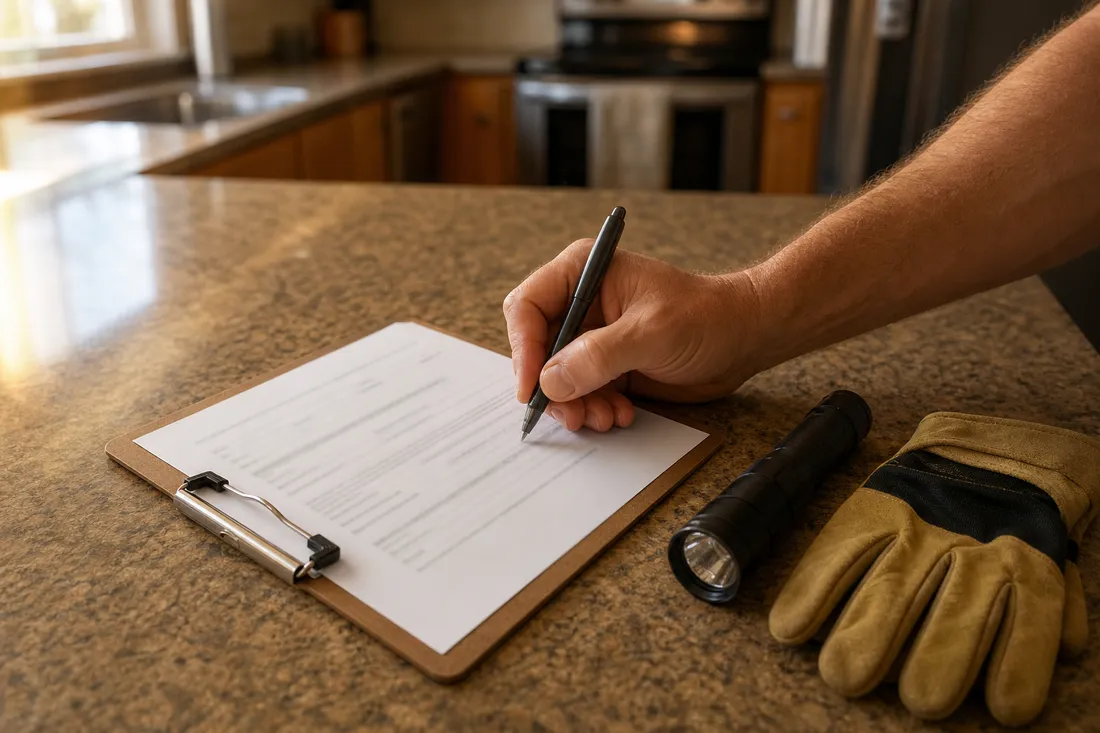
A signed copy at the end of the visit gives both sides the same record of what was done.
5. Commercial pest control invoice with PO number
Restaurants, warehouses and property managers pay through an accounts payable desk, and that desk rejects bills it cannot match. Lead with the purchase order number and the site name. Reference the service log you left on site so the manager and the bookkeeper see the same visit.
INVOICE
[Business name] · [Phone] · [Email]
License #: [Number]
Invoice #: INV-[Number]    Date: [Date]
PO #: [Number]   Terms: [Net 15 / Net 30]
Due date: [Date]

BILL TO
[Company name], Accounts Payable
[Billing address]   [AP email]

SERVICE LOCATION
[Site name and address]
Site contact: [Name, phone]

SERVICE
Agreement: [Number]   Period: [Month]
Visits this period: [Dates]
Service log: [Log sheet numbers]

SUMMARY
Devices checked: [#] interior, [#] exterior
Activity: [e.g. "Capture in station 14,
loading dock. No activity in kitchen."]
Recommendations: [e.g. "Seal gap under
dock door. Move dumpster off wall."]

PRODUCTS APPLIED
Product: [Name]   EPA Reg. No.: [Number]
Amount: [Quantity]   Area: [Location]
Applied by: [Name], Lic. #[Number]

CHARGES
Description                              Amount
Monthly service per agreement            [Amount]
[Extra visit or device, approved by Name] [Amount]

Subtotal:                                [Amount]
Sales tax (if required):                 [Amount]
BALANCE DUE:                             [Amount]

REMIT TO
[Payment address or bank details]
Name who approved any extra visit. An accounts payable clerk who sees "approved by [Name]" pays the line. One who sees an unexplained charge sends the invoice back, and the payment clock starts again.
6. No-charge re-service invoice
When pests return inside your guarantee period, you go back for free. Write an invoice anyway. A zero-balance bill records the visit and the product you applied, and it shows the customer what the guarantee was worth.
INVOICE: RE-SERVICE (NO CHARGE)
[Business name] · [Phone] · [Email]
License #: [Number]
Invoice #: INV-[Number]    Date: [Date]
Original invoice: INV-[Number], [Date]

BILL TO
[Customer name]
[Service address]

RE-SERVICE
Reported: [e.g. "Ants back at kitchen
window, 3 weeks after treatment."]
Found: [What you saw]
Done: [What you treated]

PRODUCTS APPLIED
Product: [Name]   EPA Reg. No.: [Number]
Amount: [Quantity and unit]
Applied by: [Name], Lic. #[Number]

CHARGES
Description                              Amount
Re-service visit                         [Amount]
Covered by guarantee                    -[Amount]

BALANCE DUE:                             $0.00

Guarantee period ends: [Date]
Show the normal price and a matching credit instead of a blank total. The customer sees the value, and your books still show the visit happened. Keep the invoice number sequence going, even for a zero bill.
7. Invoice email to the customer
Use this every time you send an invoice by email. A short, plain note gets the attachment opened and paid. Send it from your business email address so replies reach you.
Subject: Invoice INV-[Number] for pest
service at [street name]

Hi [Customer first name],

Thanks for having us out on [Date]. Your
invoice for [short service description] is
attached.

Amount due: [Amount]
Due date: [Date]

You can pay by [method 1] or [method 2]. If
you pay by check, please make it out to
[Business name].

What to expect: [e.g. "You may see more ant
activity for a few days as the bait works."]
If the problem is not improving by [Date],
call me at [Phone] and we will come back.

Thanks again,
[Your name]
[Business name] · [Phone]
Put the invoice number and the street in the subject line, because landlords and property managers search their inbox by address. The "what to expect" line prevents the day-two call from a customer who sees more ants at the bait and assumes the treatment failed. A text version can stay short: "Hi [Name], your invoice for today's service is in your email. [Amount] due [Date]. Thanks, [Business name]."
8. Past-due pest control invoice reminder
Send this the day after the due date passes with no payment. Keep the first one friendly. Send the second a week later, firmer, then call.
Subject: Reminder: invoice INV-[Number] was
due [Date]

Hi [Customer first name],

A quick reminder that invoice INV-[Number]
for pest service at [street name] was due on
[Date]. I have attached it again here.

Amount due: [Amount]

If you have already paid, thank you, and
please reply with the date so I can match it.
If something about the service or the bill is
holding it up, let me know and we can sort it
out.

You can pay by [method 1] or [method 2].

Thanks,
[Your name]
[Business name] · [Phone]

--- SECOND REMINDER (7 days later) ---

Subject: Second reminder: INV-[Number],
[Amount] past due

Hi [Customer first name],

Invoice INV-[Number] is now [#] days past
due. Please send payment by [Date]. Per your
service agreement, [late fee policy, if any]
applies after that date.

Please reply or call me at [Phone].

[Your name]
Mention a late fee only if it was in the agreement or estimate the customer signed. For a plan customer, say plainly whether the next scheduled visit goes ahead while the bill is open. Collection rules differ by state, so check yours before the next step.
Mistakes that slow down pest control payments
- A total with no service summary. "Pest control: [Amount]" invites a call. Three lines on what you found and treated answer it first.
- No product line. Customers with children or pets ask what was applied. A product name and EPA registration number on the bill settle it.
- Vague areas. "Treated house" does not help when ants show up in a room you never entered. Name the rooms and zones.
- Skipping the invoice on free visits. A re-service with no paperwork leaves a gap in your application records and hides the value of your guarantee.
- Losing the paper trail. The IRS says to keep records for 3 years in most cases, and longer in some situations. Your state's pesticide record rule may set its own period as well. Save every invoice in one folder per year.
Once a bill is paid and the customer is happy, that is a good moment to ask for a Google review. If you also bill other kinds of service work, the general service invoice template covers the formats that are not specific to pest control.
Questions pest control operators ask about invoices
What should a pest control invoice include?
Your business name, contact details and license number, then an invoice number and date, the customer's name and billing address, and the service address. Add the target pest, the areas treated, each product with its EPA registration number and amount, the applicator's name, the charges, tax if your state requires it, any deposit received, the balance due, the due date, payment methods, and your guarantee.
Do I have to list the pesticides I used on the invoice?
It depends on your state, but listing them is the safer habit. Texas requires use records with pesticide names, EPA registration numbers, amounts and the target pest, kept for two years. California requires a written notice naming the pesticide and active ingredients. Putting the product block on every invoice keeps that information in one place.
Do pest control companies charge sales tax?
In some states, yes. Texas taxes the total charge for structural pest control, including inspections where no pests are found, at 6.25 percent state tax plus up to 2 percent local tax. Other states have their own rules, so confirm with your state revenue department before adding a tax line.
Should I invoice a free re-service?
Yes. Write the visit up at the normal price with a matching guarantee credit and a zero balance. You keep a record of the application, and the customer sees what the guarantee covered.
When should I send a pest control invoice?
Before you leave the property, if you can. For one-time treatments and plan visits, print or email it while the customer can still walk the treated areas with you. Commercial customers may set billing dates in their agreement, so follow those.
Get the next pest call booked
A clear invoice closes out one job. The next step is making the following one easy to book. If you want a website where customers can see your pest services and request a visit, you can get a booking site for your pest control business with Kejoola. It is a four-page site with Home, Services, Blog and Contact pages, and the booking form takes a name, email, phone number and a notes box where customers can describe what they are seeing. For what that site should cover, see what a home service website needs.
14-day free trial, no card needed. Online booking starts on the Starter plan.